
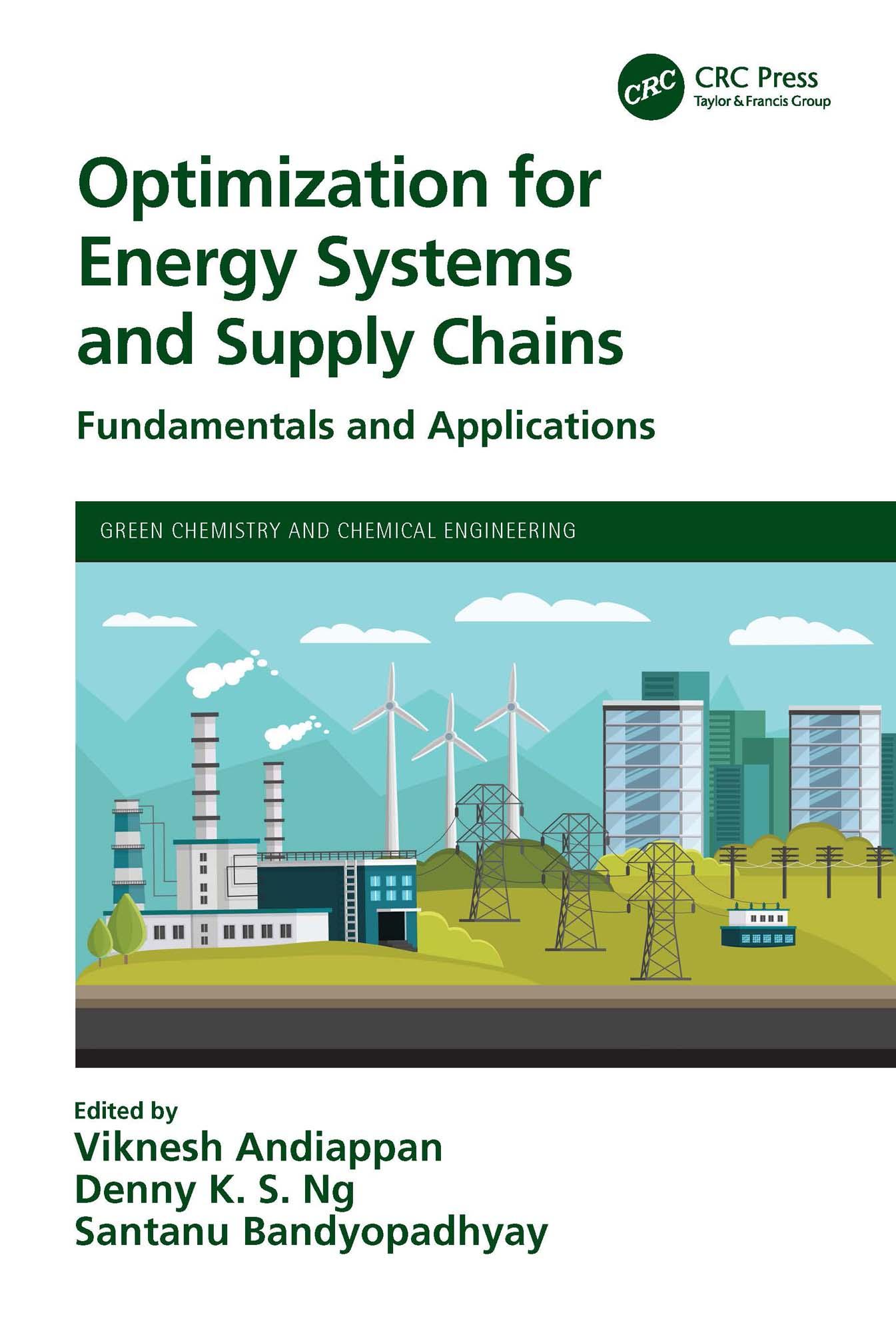
To curb the impacts of rising CO2 emissions, the Intergovernmental Panel on Climate Change report states that a net zero target needs to be achieved by the year 2055. Experts argue that this is a critical time to make important and accurate decisions. Thus, it is essential to have the right tools to efficiently plan and deploy future energy systems and supply chains. Mathematical models can provide decision-makers with the tools required to make well-informed decisions relating to development of energy systems and supply chains. This book provides an understanding of the various available energy systems, the basics behind mathematical models, the steps required to develop mathematical models, and examples/case studies where such models are applied. Divided into two parts, one covering basics for beginners and the other featuring contributed chapters offering illustrative examples, this book:
- Shows how mathematical models are applied to solve problems in energy systems and supply chains
- Provides fundamentals of the working principles of various energy systems and their technologies
- Offers basics of how to formulate and best practices for developing mathematical models, topics not covered in other titles
- Features a wide range of case studies
- Teaches readers to develop their own mathematical models to make decisions on energy systems
This book is aimed at chemical, process, mechanical, and energy engineers.
Pay easily by card, Klarna, Apple Pay or Google Pay. Not happy? You always have a 14-day money-back guarantee. Read more in our terms. If you have any questions, email us at hello@memmo.org.
Memmo makes studying easier – wherever you are in the world. We bring your course books and smart study tools together in one place: summaries, quizzes, podcasts and flashcards. Plus Ted, your study buddy who answers anything you wonder. Over 50,000 students already study here – built to help you learn faster and stress less.