
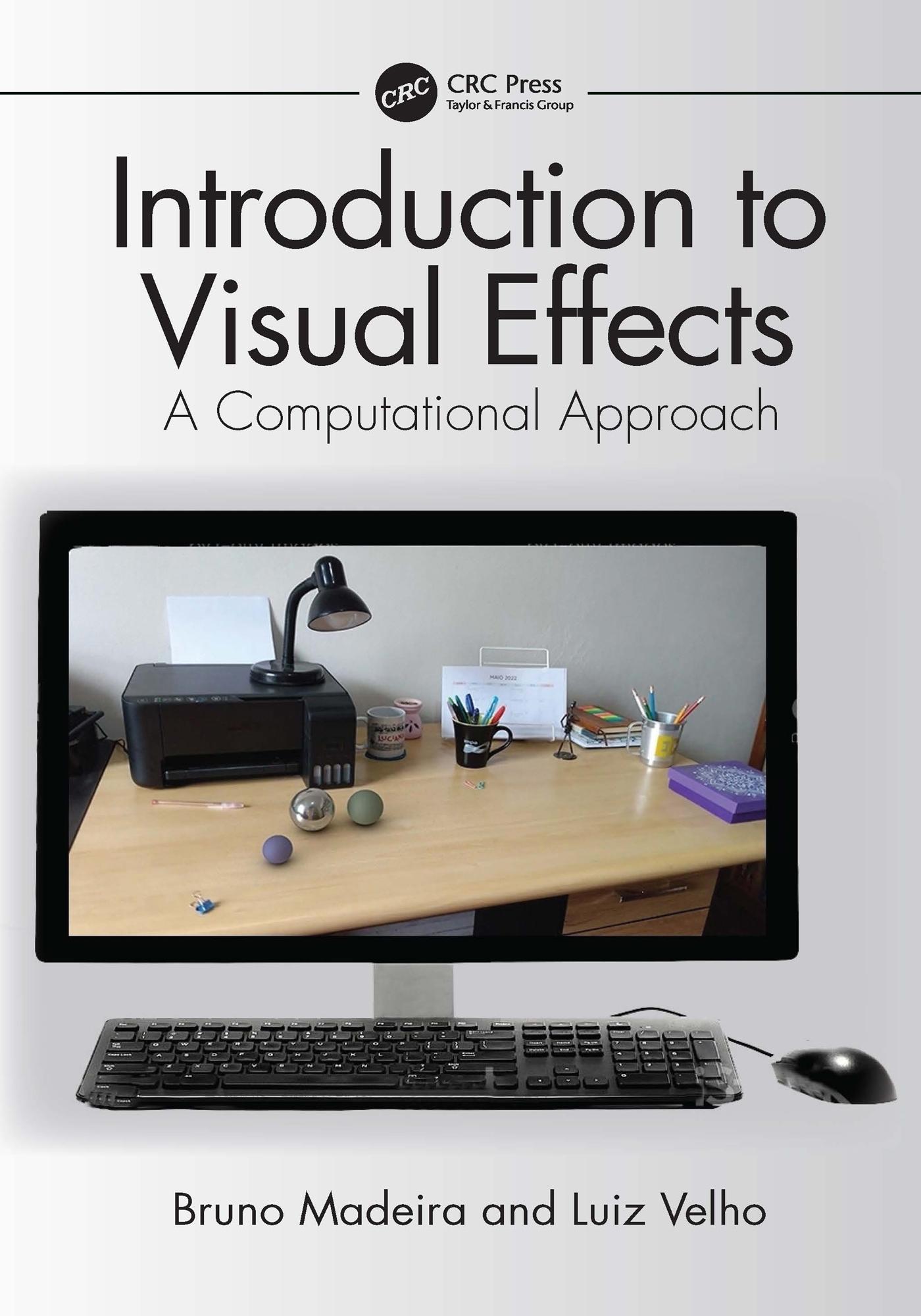
Introduction to Visual Effects: A Computational Approach is the first single introduction to the computational and mathematical aspects of visual effects, incorporating both computer vision and graphics. The book also provides the readers with the source code to a library, enabling them to follow the chapters directly and build up a complete visual effects platform. The book covers the basic approaches to camera pose estimation, global illumination, and image-based lighting, and includes chapters on the virtual camera, optimization and computer vision, path tracing and many more.
Key features include:
- Introduction to projective geometry, image-based lighting (IBL), global illumination solved by the Monte Carlo method (Pathtracing), an explanation of a set of optimization methods, and the techniques used for calibrating one, two, and many cameras, including how to use the RANSAC algorithm in order to make the process robust, and providing code to be implemented using the Gnu Scientific Library.
- C/C++ code using the OpenCV library, to be used in the process of tracking points on a movie (an important step for the matchmove process), and in the construction of modeling tools for visual effects.
- A simple model of the Bidirectional Reflectance Distribution Function (BRDF) of surfaces and the differential rendering method, allowing the reader to generate consistent shadows, supported by a code that can be used in combination with a software like Luminance HDR.
Pay easily by card, Klarna, Apple Pay or Google Pay. Not happy? You always have a 14-day money-back guarantee. Read more in our terms. If you have any questions, email us at hello@memmo.org.
Memmo makes studying easier – wherever you are in the world. We bring your course books and smart study tools together in one place: summaries, quizzes, podcasts and flashcards. Plus Ted, your study buddy who answers anything you wonder. Over 75,000 students already study here – built to help you learn faster and stress less.