
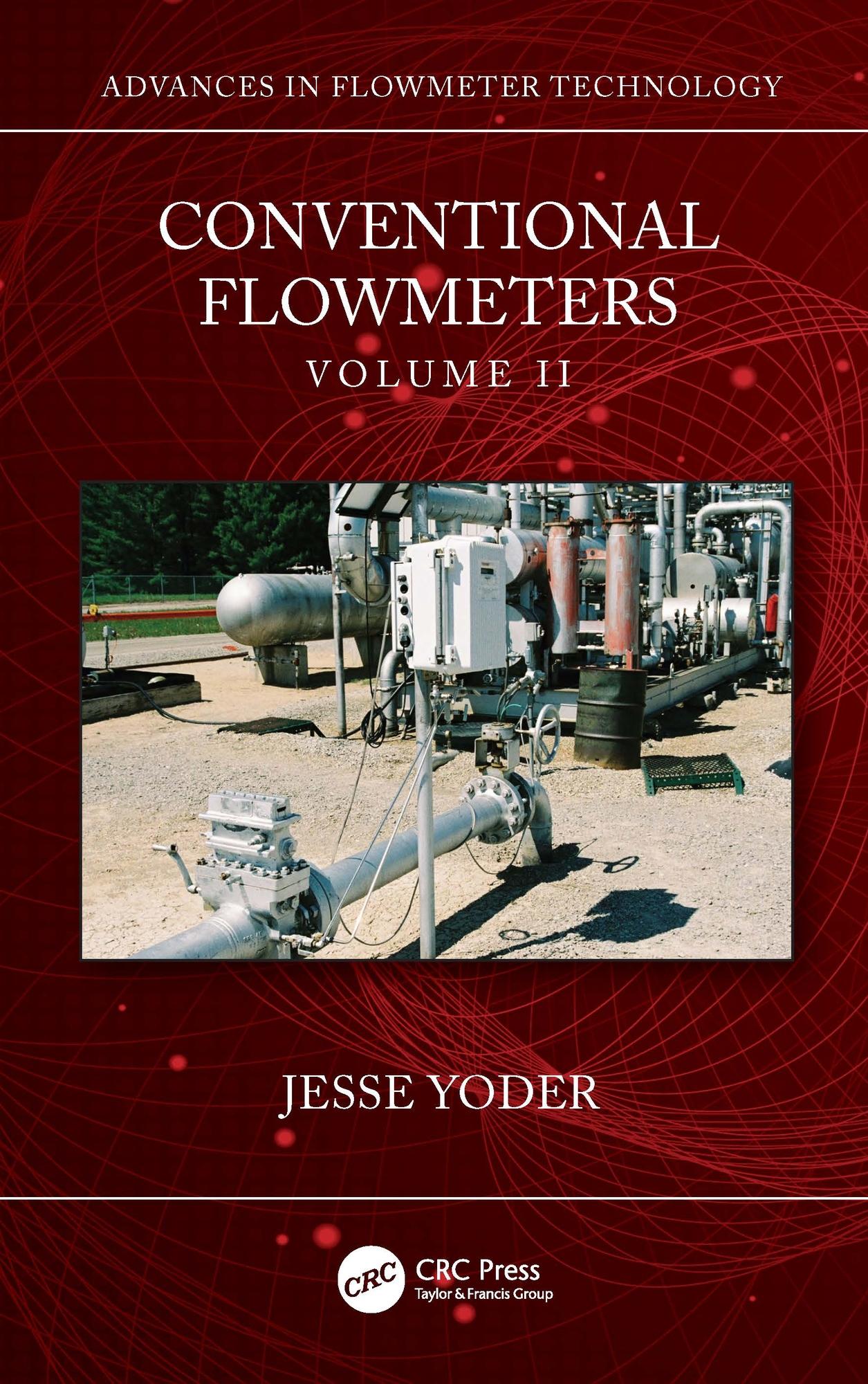
Conventional Flowmeters covers origin, principle of operation, development, advantages and disadvantages, applications, and frontiers of research for conventional technology flowmeters, which include differential pressure and primary elements, positive displacement, turbine, open channel, and variable area.
There are more conventional technology meters being used in the field than new-technology meters. New developments, such as more accurate pressure transmitters, new primary elements such as cone elements, reversible flow, and dual rotor turbine meters, and variable area meters with transmitters and a signal output, are discussed.
Features:
- Offers a working knowledge of the origin and development of the more traditional technology flowmeters: differential pressure and primary elements, positive displacement, turbine, open channel, and variable area
- Describes how these conventional meters still fit into what is being called Industry 4.0
- Discusses the advantages and disadvantages of conventional technology meters and provides a rationale for retaining or replacing these meters
- Focuses on the origin, development operating principles, and applications for the meters
- Explores the development of each conventional flowmeter type, including the roles of companies such as Siemens, ABB, Emerson, Foxboro, KROHNE, and Endress+Hauser
This book is designed for anyone involved with flowmeters and instrumentation, including product and marketing managers, strategic planners, application engineers, and distributors.
Pay easily by card, Klarna, Apple Pay or Google Pay. Not happy? You always have a 14-day money-back guarantee. Read more in our terms. If you have any questions, email us at hello@memmo.org.
Memmo makes studying easier – wherever you are in the world. We bring your course books and smart study tools together in one place: summaries, quizzes, podcasts and flashcards. Plus Ted, your study buddy who answers anything you wonder. Over 50,000 students already study here – built to help you learn faster and stress less.