
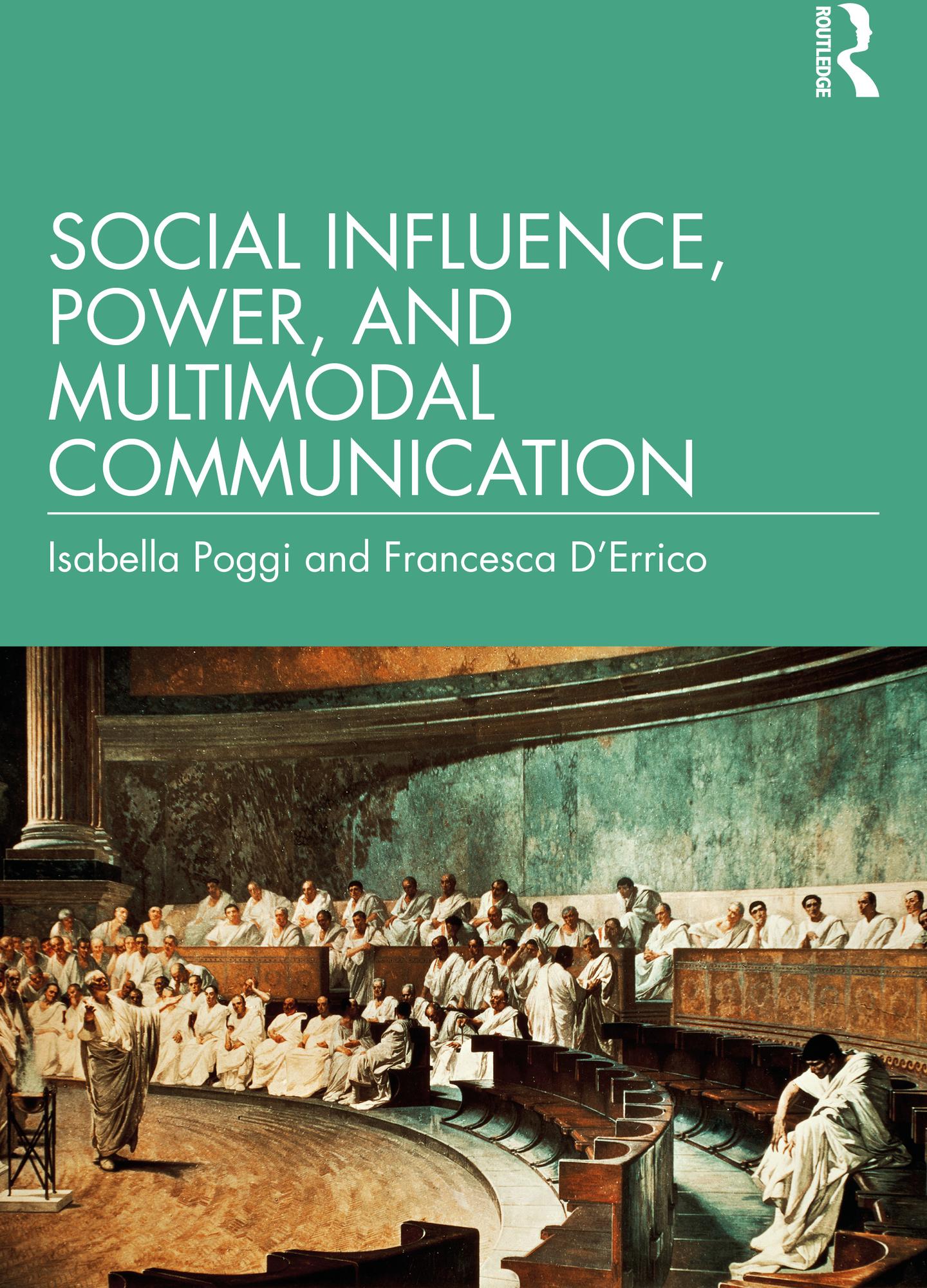
Social Influence, Power, and Multimodal Communication reveals how democratic leaders and dictators exploit multimodal communication to convince or seduce their audiences, using words, voice, gesture, face, gaze, and posture to boast about their merits or insult and ridicule rivals.
Poggi and D'Errico explore questions such as what is charisma, and how do we perceive it in a leader? And how do politicians display their dominance over opponents, or discredit them in TV debates and social media? Starting from a sociocognitive model of social interaction, observational studies reveal the rhetoric of words, hands, and faces, explaining how to see beyond their literal meanings, while experimental studies test their uses and persuasive effects. The authors affirm that multimodality helps others to influence us through displays of dominance, and by undermining our power through comments, insults, irony, ridicule, and parody. The devices of social influence and its multimodal management are illuminated, giving readers insight into how people influence others’ lives by using body language and verbal communication, either explicitly or in subtle but inexorable ways.
This fascinating text is a superb resource for students of psychology, communication, pragmatics, and political sciences, as well as for school teachers, politicians, spin doctors, active citizenship workers, and anyone seeking to understand how communicative power is managed, both in politics and everyday social contexts.
Pay easily by card, Klarna, Apple Pay or Google Pay. Not happy? You always have a 14-day money-back guarantee. Read more in our terms. If you have any questions, email us at hello@memmo.org.
Memmo makes studying easier – wherever you are in the world. We bring your course books and smart study tools together in one place: summaries, quizzes, podcasts and flashcards. Plus Ted, your study buddy who answers anything you wonder. Over 75,000 students already study here – built to help you learn faster and stress less.