
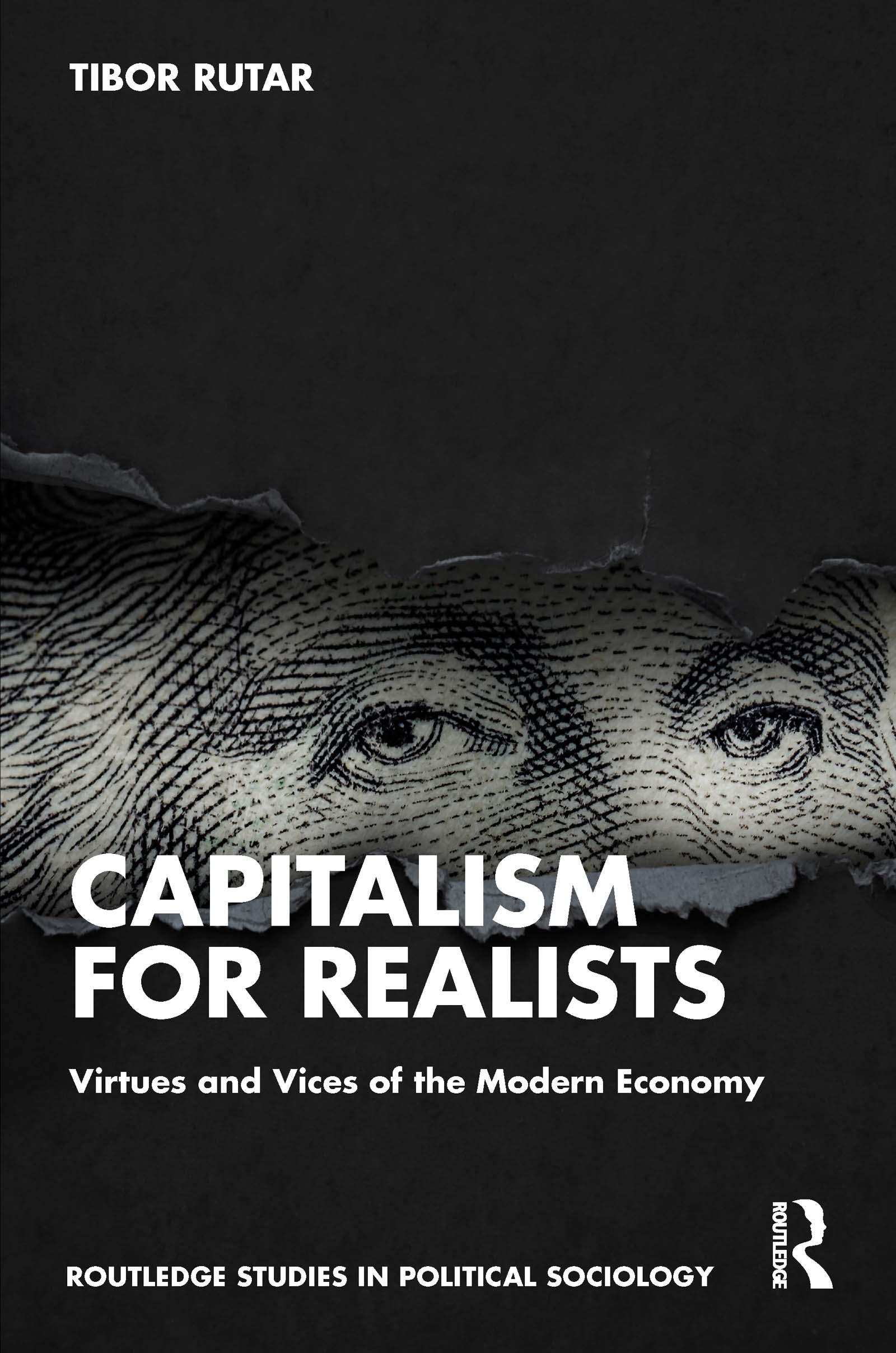
In an age of extreme political polarization and waning of reasoned debate across political divides, Capitalism for Realists carefully explores the inner workings of capitalism in a consciously non-partisan and balanced way. Does the modern capitalist economy alleviate poverty and exploitation, or exacerbate them? What, exactly, is ‘neoliberalism,’ and how well or poorly has it performed in the past 40 years? Does capitalism undermine democracy, or is it rather one of its key necessary conditions? How have altruism, cooperation, tolerance, violence, and trust fared under the influence of the modern market society? Should we analyse capitalism through the mainstream economic lens or a more critical Marxist perspective? This book offers answers to these questions.
Synthesizing decades of research across disciplines, Capitalism for Realists offers an overarching perspective on the modern economy by theoretically unifying many of the claims and conclusions about it offered by various traditionally rivalrous social science paradigms, such as institutional, neoclassical, and public choice economics on the one hand, and Marxist sociology on the other. The book presents and critically assesses the latest data and debates on such crucial contemporary issues as the relationship between poverty, exploitation, inequality, and capitalism, the nature of ‘neoliberalism’ and the successes and failures of both state-led industrial policy and the Washington consensus, capitalist peace theory, historical origins of modern capitalism, and more. What emerges is a clear picture of the merits and demerits of the modern economy too nuanced to be simplified and categorized by the prevailing political discourses.
Rich in empirical detail, this lively, accessible book will appeal to undergraduate and graduate students with interests in sociological theory, political theory, economics, and political and economic sociology.
Pay easily by card, Klarna, Apple Pay or Google Pay. Not happy? You always have a 14-day money-back guarantee. Read more in our terms. If you have any questions, email us at hello@memmo.org.
Memmo makes studying easier – wherever you are in the world. We bring your course books and smart study tools together in one place: summaries, quizzes, podcasts and flashcards. Plus Ted, your study buddy who answers anything you wonder. Over 50,000 students already study here – built to help you learn faster and stress less.