
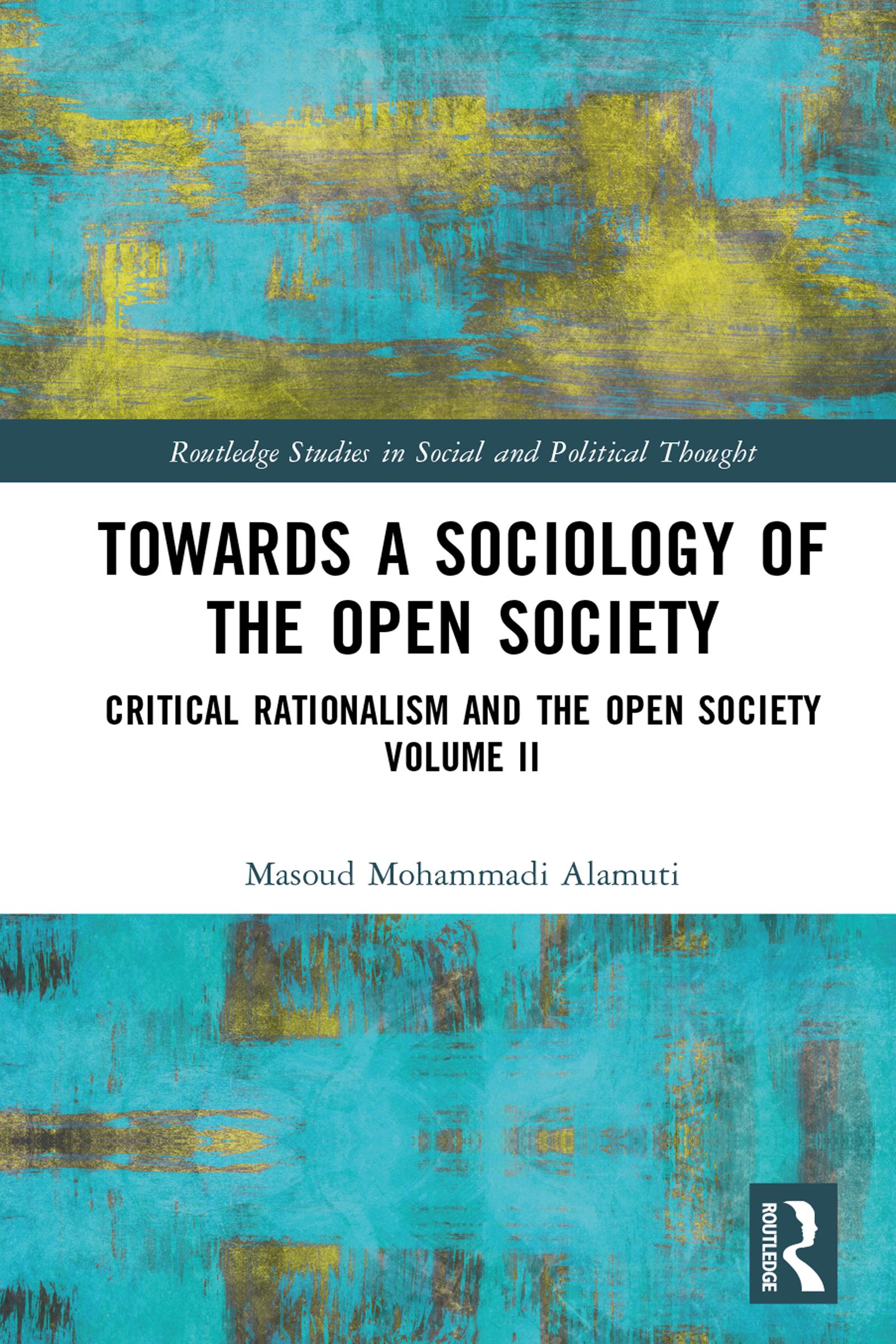
This book applies the general theory of critical rationalism in order to develop a new sociology of the open society, in general, and a new analysis of the transition from a closed society to an open society in particular. It presents a criticism of Karl Popper’s analysis of human action for opening up a closed society, followed by a critical study of the mainstream sociology to show how justificational models of knowledge and rational action have prevented sociology from addressing the contribution of human action to social change.
This book provides new sociologies of closed and open societies. It argues that in the closed society "a low level" of critical rationality is activated by people to define the meaning of the good life and social institutions of law, polity and economy. Masoud Mohammadi Alamuti proposes five mechanisms of opening up closed society through the model of social change, inspired by the philosophy of critical rationalism.
This volume is "the first systematic attempt" to apply the philosophy of critical rationalism in order to present a "normative sociology of the open society". It will be of interest to postgraduate researchers and professional readers in philosophy, sociology, moral science, law, politics and economics. In addition, this book would benefit research centres, policymakers and civil society activists interested in the ideas of critical rationalism and the open society.
Pay easily by card, Klarna, Apple Pay or Google Pay. Not happy? You always have a 14-day money-back guarantee. Read more in our terms. If you have any questions, email us at hello@memmo.org.
Memmo makes studying easier – wherever you are in the world. We bring your course books and smart study tools together in one place: summaries, quizzes, podcasts and flashcards. Plus Ted, your study buddy who answers anything you wonder. Over 50,000 students already study here – built to help you learn faster and stress less.