
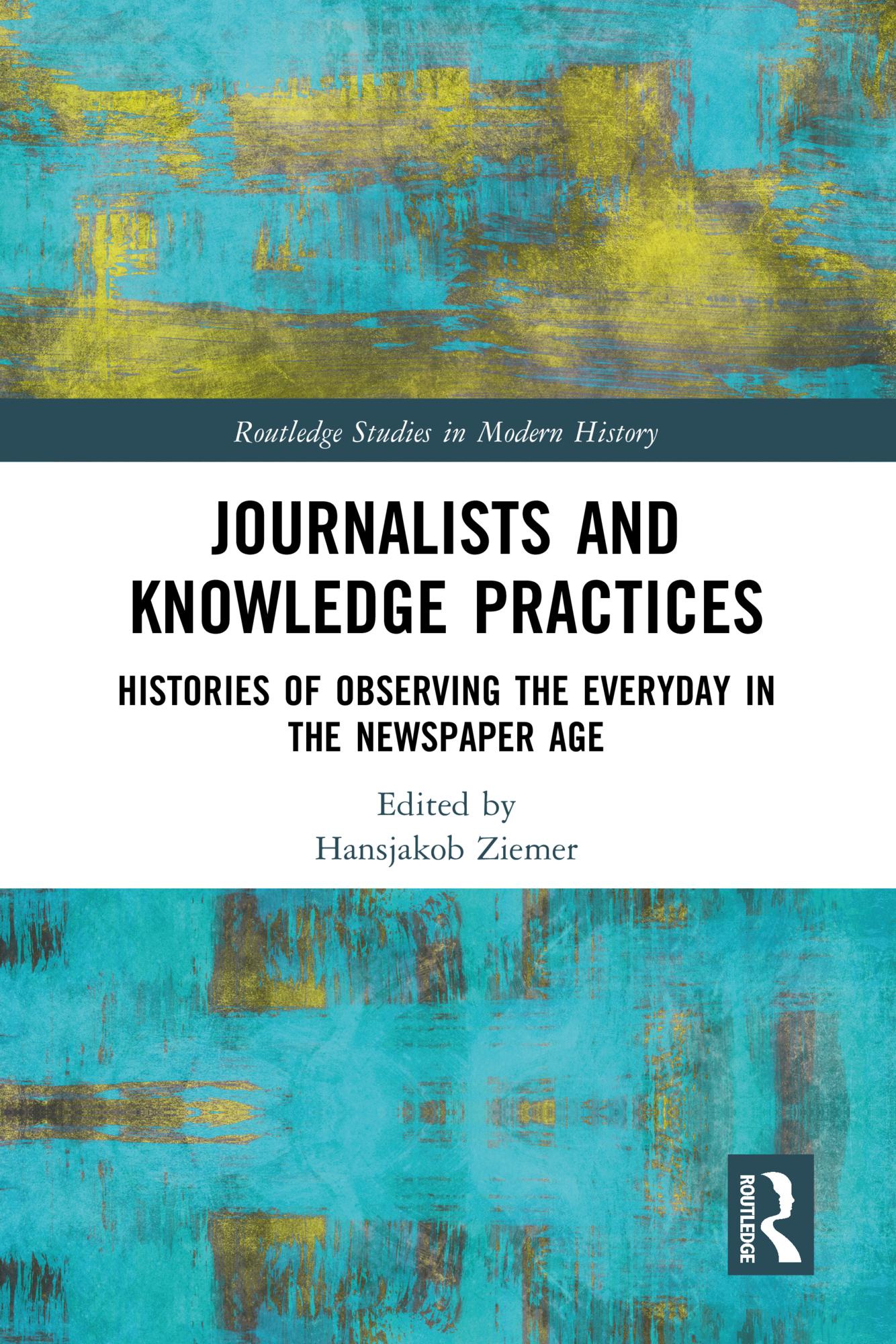
This multi-disciplinary anthology provides new perspectives on the journalist’s role in knowledge generation in the newspaper age—covering diverse topics from fake news to new technologies.
Fake news, journalistic authority, and the introduction of cutting-edge technologies are often viewed as new topics in journalism. However, these issues were prevalent long before the twenty-first century. Connecting for the first time two burgeoning strands of research—a newly perceived history of knowledge and the study of journalism—Journalists and Knowledge Practices provides insights into the journalist’s role in the world of knowledge in the newspaper age (ca. 1860s to 1970s). This multi-disciplinary anthology asks how journalists conducted their work and reconstructs histories of journalistic practices in specific regional constellations in Europe and North America. From fake news writing to inventing psychological concepts, integrating electric telegrams to fabricating photographs, explaining pandemics to creating communities, these case studies written by distinguished scholars from various disciplines in the humanities show how notions of fact and truth were shaped, new technologies integrated, and knowledge transfers arranged. This book is crucial reading for scholars and students interested in the historically changing relationships between journalistic practices and the generation and dissemination of knowledge.
This volume is crucial reading for scholars and students interested in the history of journalistic practice.
Pay easily by card, Klarna, Apple Pay or Google Pay. Not happy? You always have a 14-day money-back guarantee. Read more in our terms. If you have any questions, email us at hello@memmo.org.
Memmo makes studying easier – wherever you are in the world. We bring your course books and smart study tools together in one place: summaries, quizzes, podcasts and flashcards. Plus Ted, your study buddy who answers anything you wonder. Over 75,000 students already study here – built to help you learn faster and stress less.