
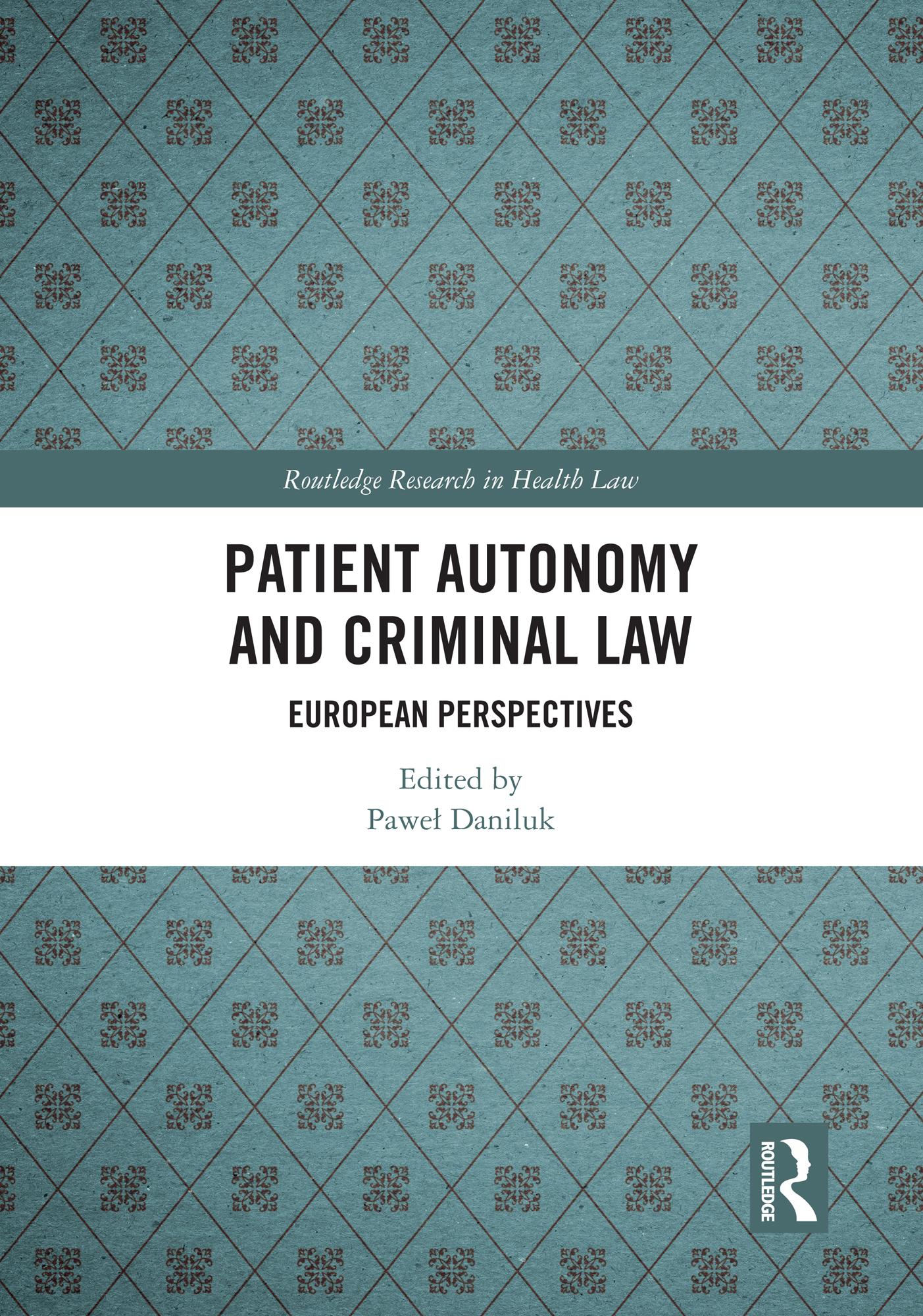
This book shows how the legal systems of individual European countries protect patient autonomy. In particular, it explains the role of criminal law, that is, what criminal law protection of patient autonomy looks like on a European scale in both legal and social dimensions. Despite EU integration processes, the work illustrates that the legal orders of individual European countries are far from uniform in this area. The concept of patient autonomy here is generally in the context of the patient's freedom from unwanted medical activities: the so-called negative freedom. At the same time, in countries where there are no regulations clearly criminalising the performance of a therapeutic activity without the patient's consent, the so-called positive freedom is also discussed. The book will be a valuable reference work for academics, researchers and policy-makers working in Health Law, Medical Ethics, Applied Ethics and Criminal Law.
Pay easily by card, Klarna, Apple Pay or Google Pay. Not happy? You always have a 14-day money-back guarantee. Read more in our terms. If you have any questions, email us at hello@memmo.org.
Memmo makes studying easier – wherever you are in the world. We bring your course books and smart study tools together in one place: summaries, quizzes, podcasts and flashcards. Plus Ted, your study buddy who answers anything you wonder. Over 50,000 students already study here – built to help you learn faster and stress less.
You might also like
Buy the book0