
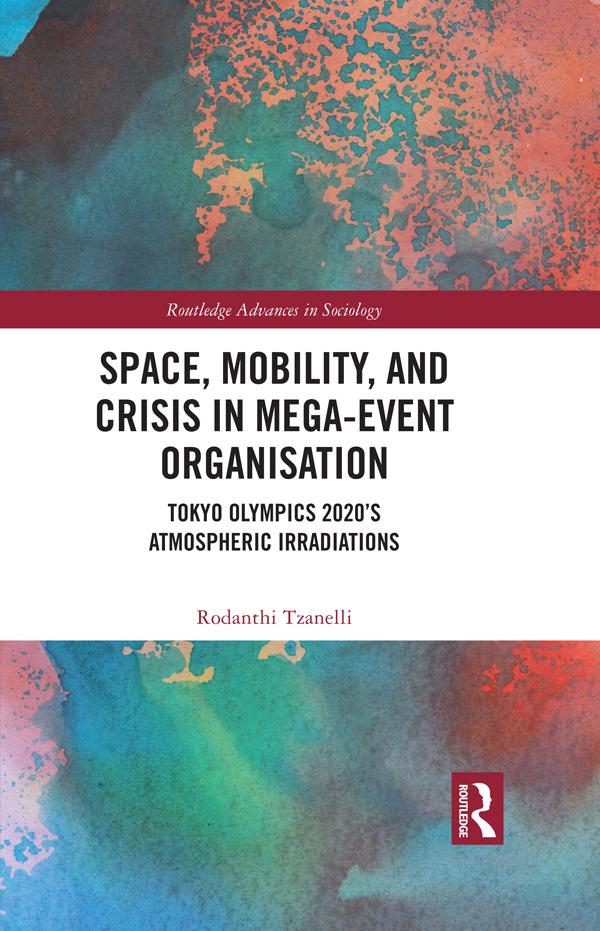
This book advances an alternative critical posthumanist approach to mega-event organisation, taking into account both the new and the old crises which humanity and our planet face. Taking the delayed Tokyo 2020 Olympic Games as a case study, Tzanelli explores mega-event crisis and risk management in the era of extreme urbanisation, natural disasters, global pandemic, and technoscientific control.
Using the atmospheric term ‘irradiation’ (a technology of glamour and transparency, as well as bodily penetration by harmful agents and strong affects), the book explores this epistemological statement diachronically (via Tokyo’s relationship with Western forms of domination) and synchronically (the city as a global cultural-political player but victim of climate catastrophes). It presents how the ‘Olympic enterprise’s’ ‘flattening’ of indigenous environmental place-making rhythms, and the scientisation of space and place in the Anthropocene lead to reductionisms harmful for a viable programme of planetary recovery.
An experimental study of the mega-event is enacted, which considers the researcher’s analytical tools and the styles of human and non-human mobility during the mega-event as reflexive gateways to forms of posthuman flourishing. Crossing and bridging disciplinary boundaries, the book will appeal to any scholar interested in mobilities theory, event and environment studies, sociology of knowledge, and cultural globalisation.
Pay easily by card, Klarna, Apple Pay or Google Pay. Not happy? You always have a 14-day money-back guarantee. Read more in our terms. If you have any questions, email us at hello@memmo.org.
Memmo makes studying easier – wherever you are in the world. We bring your course books and smart study tools together in one place: summaries, quizzes, podcasts and flashcards. Plus Ted, your study buddy who answers anything you wonder. Over 50,000 students already study here – built to help you learn faster and stress less.