
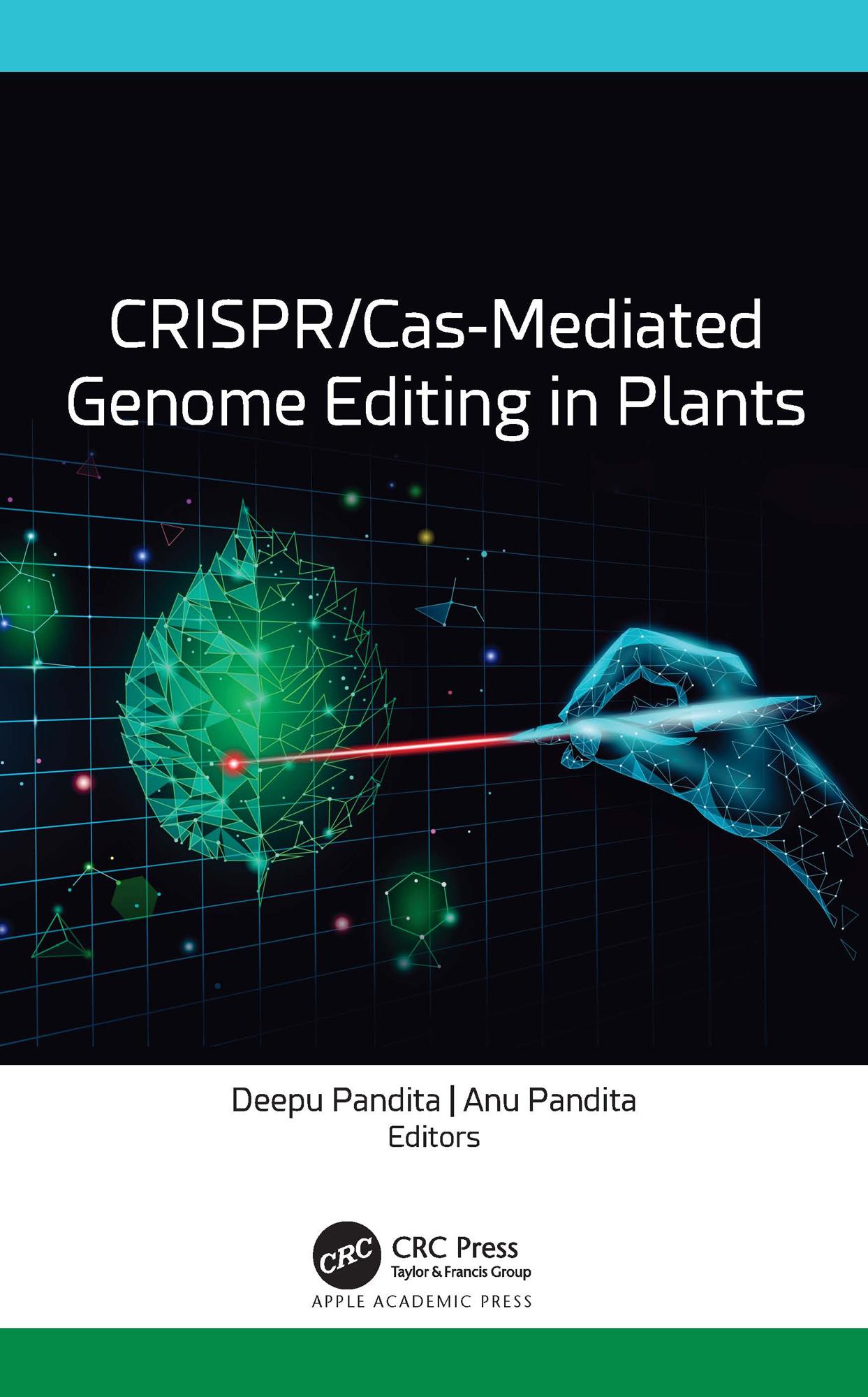
With over 820 million people facing hunger in today’s world, the need of the hour is the design of plant varieties with high yield, improved traits, and resistance properties in order to mitigate the detrimental impacts of biotic and abiotic stress conditions on food crops. This volume highlights the use of Clustered Regularly Interspaced Short Palindromic Repeats (CRISPR) and CRISPR-associated nuclease proteins as a solution for sustainable agriculture. CRISPR/Cas-mediated genome editing (GE) provides a robust, simple, precise, efficient, economical, and revolutionary toolbox that leads to improved plant traits with enhanced yield, quality, and resistance against various stresses, including climate-related stress, insect pests and diseases, pollution-related stresses, etc.
Key features of the book:
- Explains the differences between conventional breeding, genetically modified crops, and genome editing approaches using CRISPR/Cas
- Introduces the tools of genome editing, such as ZFNS (zinc finger nucleases), mega nucleases, and TLENS (transcription activator-like effector nucleases)
- Covers the history, origin, discovery, structure, and classification of CRISPR/Cas
- Examines the databases and computational approaches of CRISPR/Cas
- Highlights genome editing of important crop plants with CRISPR/Cas systems, including wheat, maize. tomato, Brassica crops, rice, fruits
- Explores potential applications of CRISPR/Cas systems for climate smart crops
Pay easily by card, Klarna, Apple Pay or Google Pay. Not happy? You always have a 14-day money-back guarantee. Read more in our terms. If you have any questions, email us at hello@memmo.org.
Memmo makes studying easier – wherever you are in the world. We bring your course books and smart study tools together in one place: summaries, quizzes, podcasts and flashcards. Plus Ted, your study buddy who answers anything you wonder. Over 50,000 students already study here – built to help you learn faster and stress less.