
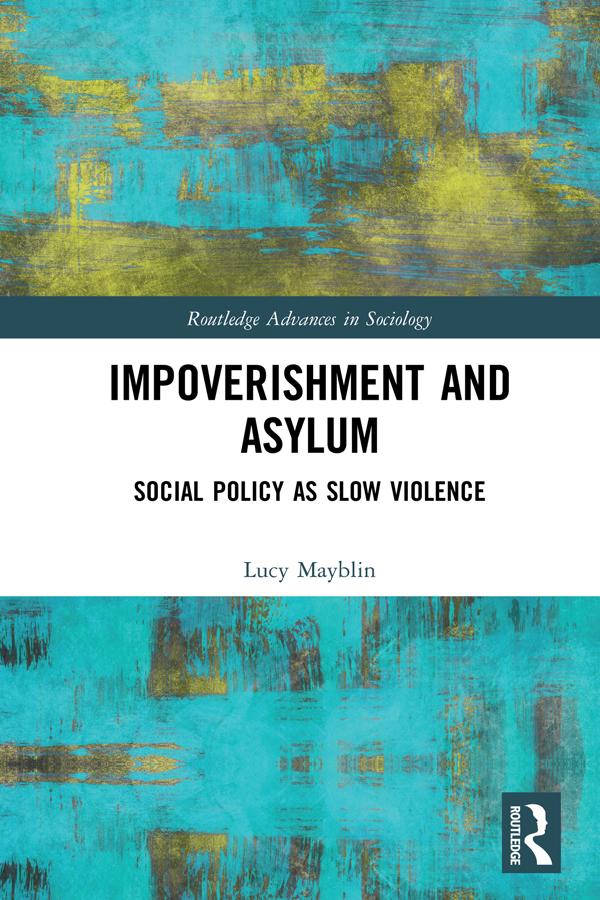
Impoverishment and Asylum argues that a shift has taken place in recent decades towards construing asylum as primarily a political and/or humanitarian phenomenon, to construing it as primarily an economic phenomenon, and that this shift has had led to the purposeful impoverishment, by the state, of people seeking asylum in the UK.
This shift has far-reaching consequences for people seeking asylum, who have been systematically impoverished as part of the effort to strip out any possibility of an economic pull factor leading to more arrivals, but also for those administering their support system, and for civil society organisations and groups who seek to ameliorate the worst effects of the resulting asylum regimes.
This book argues that within this context asylum support policies in the UK which are meant to help and protect, in fact do serious harm to their recipients. It argues that the shift from construing asylum seekers as economically, rather than politically, motivated migrants across the West, is part of a much broader set of historical and philosophical worldviews than has previously been articulated. The book offers a rigorously researched and richly theorised analysis drawing on postcolonial and decolonial perspectives in making sense of the purposeful impoverishment by the state of a particular group of people, and why this continues to be tolerated in the fourth richest country in the world.
Pay easily by card, Klarna, Apple Pay or Google Pay. Not happy? You always have a 14-day money-back guarantee. Read more in our terms. If you have any questions, email us at hello@memmo.org.
Memmo makes studying easier – wherever you are in the world. We bring your course books and smart study tools together in one place: summaries, quizzes, podcasts and flashcards. Plus Ted, your study buddy who answers anything you wonder. Over 50,000 students already study here – built to help you learn faster and stress less.