
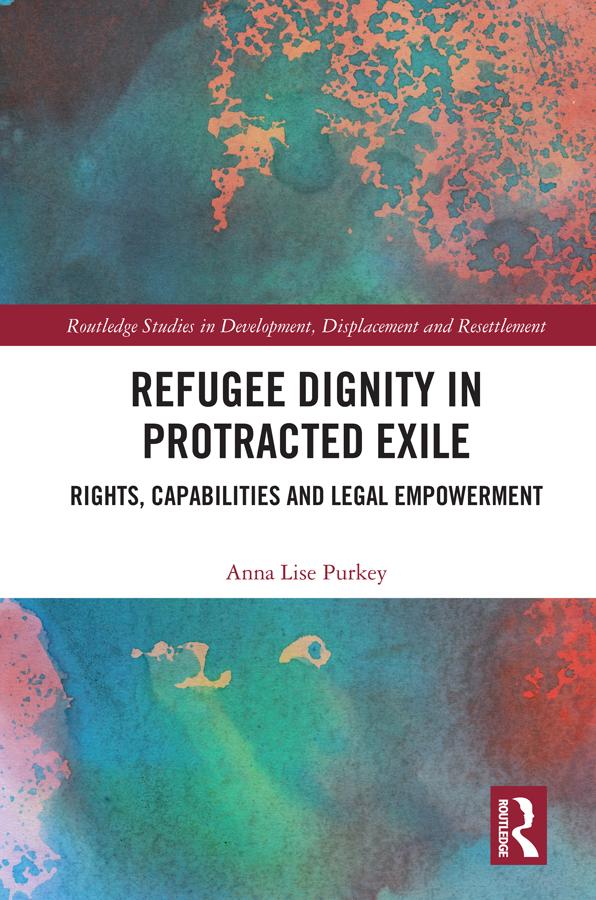
This book investigates how effective human rights and the inherent dignity of refugees can be secured in situations of protracted exile and encampment. The book deploys an innovative human rights-based capabilities approach to address fundamental questions relating to law, power, governance, responsibility, and accountability in refugee camps.
Adopting an original theoretical framework, the author demonstrates that legal empowerment can change the distribution of power in a given refugee situation, facilitating the exercise of individual agency and assisting in the reform of the opportunity structure available to the individual. Thus, by helping to increase the capability of refugees to participate actively in the decisions that most affect their core rights and interests, participatory approaches to legal empowerment can also assist in securing other capabilities, ultimately ensuring that refugees are able to live dignified lives while in protracted exile.
Ultimately, the book demonstrates that legal empowerment of refugees can bring lasting benefits in establishing trust between refugees, the state, and local communities. It will be of interest to researchers within the fields of refugee studies, international law, development studies, and political science, as well as to policy-makers and practitioners working in the fields of refugee assistance and humanitarian intervention.
Pay easily by card, Klarna, Apple Pay or Google Pay. Not happy? You always have a 14-day money-back guarantee. Read more in our terms. If you have any questions, email us at hello@memmo.org.
Memmo makes studying easier – wherever you are in the world. We bring your course books and smart study tools together in one place: summaries, quizzes, podcasts and flashcards. Plus Ted, your study buddy who answers anything you wonder. Over 50,000 students already study here – built to help you learn faster and stress less.