
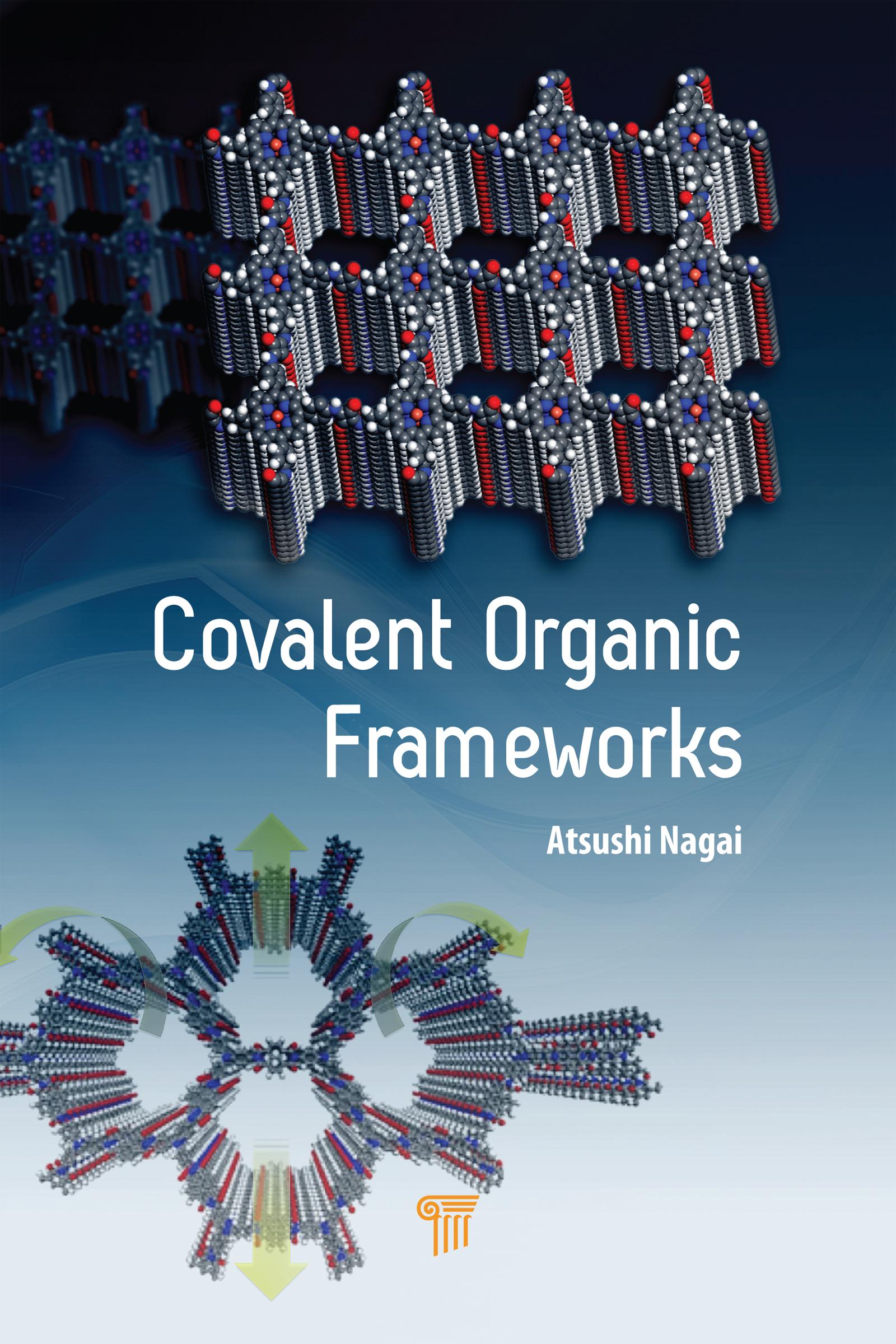
Rational synthesis of extended arrays of organic matter in bulk, solution, crystals, and thin films has always been a paramount goal of chemistry. The classical synthetic tools to obtain long-range regularity are, however, limited to noncovalent interactions, which usually yield structurally more random products. Hence, a combination of porosity and regularity in organic covalently bonded materials requires not only the design of molecular building blocks that allow for growth into a nonperturbed, regular geometry but also a condensation mechanism that progresses under reversible, thermodynamic, self-optimizing conditions. Covalent organic frameworks (COFs), a variety of 2D crystalline porous materials composed of light elements, resemble an sp2-carbon-based graphene sheet but have a different molecular skeleton formed by orderly linkage of building blocks to constitute a flat organic sheet. COFs have attracted considerable attention in the past decade because of their versatile applications in gas storage and separation, catalysis, sensing, drug delivery, and optoelectronic materials development. Compared to other porous materials, COFs allow for atomically precise control of their architectures by changing the structure of their building blocks, whereby the shapes and sizes of their pores can be well-tuned.
Covalent Organic Frameworks is a compilation of different topics in COF research, from COF design and synthesis, crystallization, and structural linkages to the theory of gas sorption and various applications of COFs, such as heterogeneous catalysts, energy storage (e.g., semiconductors and batteries), and biomedicine. This handbook will appeal to anyone interested in nanotechnology and new materials of gas adsorption and storage, heterogeneous catalysts, electronic devices, and biomedical devices.
Pay easily by card, Klarna, Apple Pay or Google Pay. Not happy? You always have a 14-day money-back guarantee. Read more in our terms. If you have any questions, email us at hello@memmo.org.
Memmo makes studying easier – wherever you are in the world. We bring your course books and smart study tools together in one place: summaries, quizzes, podcasts and flashcards. Plus Ted, your study buddy who answers anything you wonder. Over 75,000 students already study here – built to help you learn faster and stress less.