
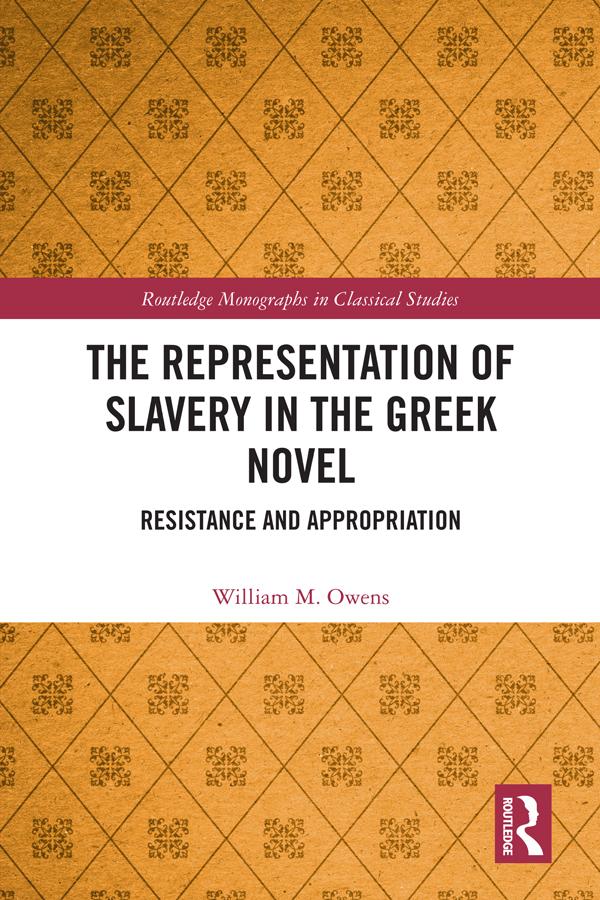
This volume offers the first comprehensive treatment of how the five canonical Greek novels represent slaves and slavery. In each novel, one or both elite protagonists are enslaved, and Owens explores the significance of the genre’s regular social degradation of these members of the elite.
Reading the novels in the context of social attitudes and stereotypes about slaves, Owens argues for an ideological division within the genre: the earlier novelists, Xenophon of Ephesus and Chariton, challenge and undermine elite stereotypes; the three later novelists, Longus, Achilles Tatius, and Heliodorus, affirm them. The critique of elite thinking about slavery in Xenophon and Chariton opens the possibility that these earlier authors and their readers included literate ex-slaves. The interests and needs of these authors and their readers shaped the emerging genre and not only made the protagonists’ slavery a key motif but also made slavery itself a theme that helped define the genre.
The Representation of Slavery in the Greek Novel will be of interest not only to students of the ancient novel but also to anyone working on slavery in the ancient world.
Pay easily by card, Klarna, Apple Pay or Google Pay. Not happy? You always have a 14-day money-back guarantee. Read more in our terms. If you have any questions, email us at hello@memmo.org.
Memmo makes studying easier – wherever you are in the world. We bring your course books and smart study tools together in one place: summaries, quizzes, podcasts and flashcards. Plus Ted, your study buddy who answers anything you wonder. Over 75,000 students already study here – built to help you learn faster and stress less.