
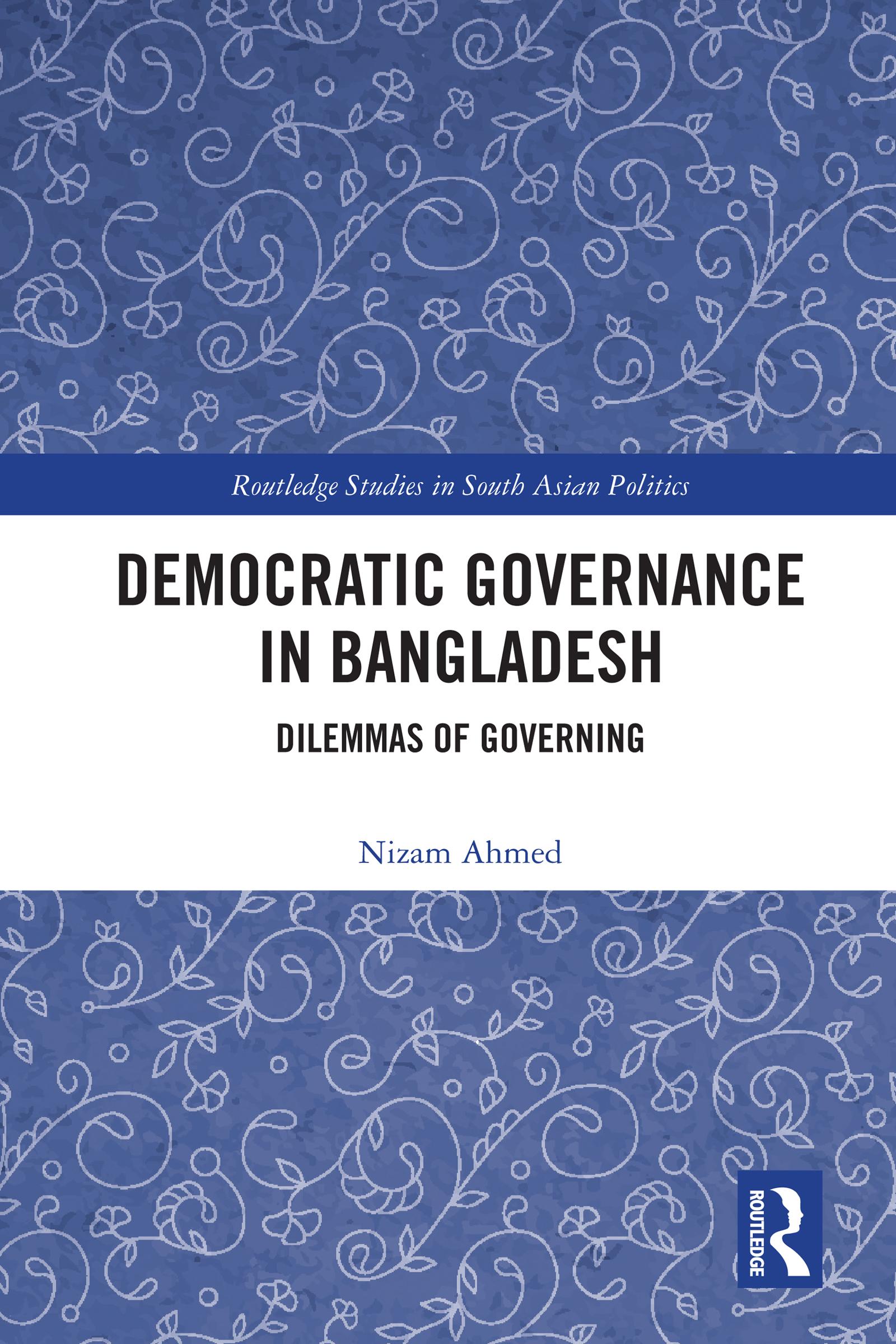
This book explores the role of government in the governing process of Bangladesh. It primarily focuses on the dilemmas and constraints faced by the successive democratic governments elected since the early 1990s.
Bangladesh has had a new democratic beginning since the early 1990s and formally remained a democracy for the last the three decades. Despite impressive performance in the economic and social fields, the country has lagged far behind most of the new democracies in the political realm. This book identifies how representative institutions of governance have gradually declined under democratic governments in Bangladesh, and how disagreements on the ‘basic rules of the game’ have made the task of governing extremely difficult and democratic consolidation problematic.
This book is a significant and comprehensive analysis that identifies and explains the implications of the crises in governance for democratic consolidation in Bangladesh. It will be of interest to academics studying Area Studies, in particular South Asian Studies, and the increasingly researched areas of governance, public policy, and administration.
Pay easily by card, Klarna, Apple Pay or Google Pay. Not happy? You always have a 14-day money-back guarantee. Read more in our terms. If you have any questions, email us at hello@memmo.org.
Memmo makes studying easier – wherever you are in the world. We bring your course books and smart study tools together in one place: summaries, quizzes, podcasts and flashcards. Plus Ted, your study buddy who answers anything you wonder. Over 50,000 students already study here – built to help you learn faster and stress less.