
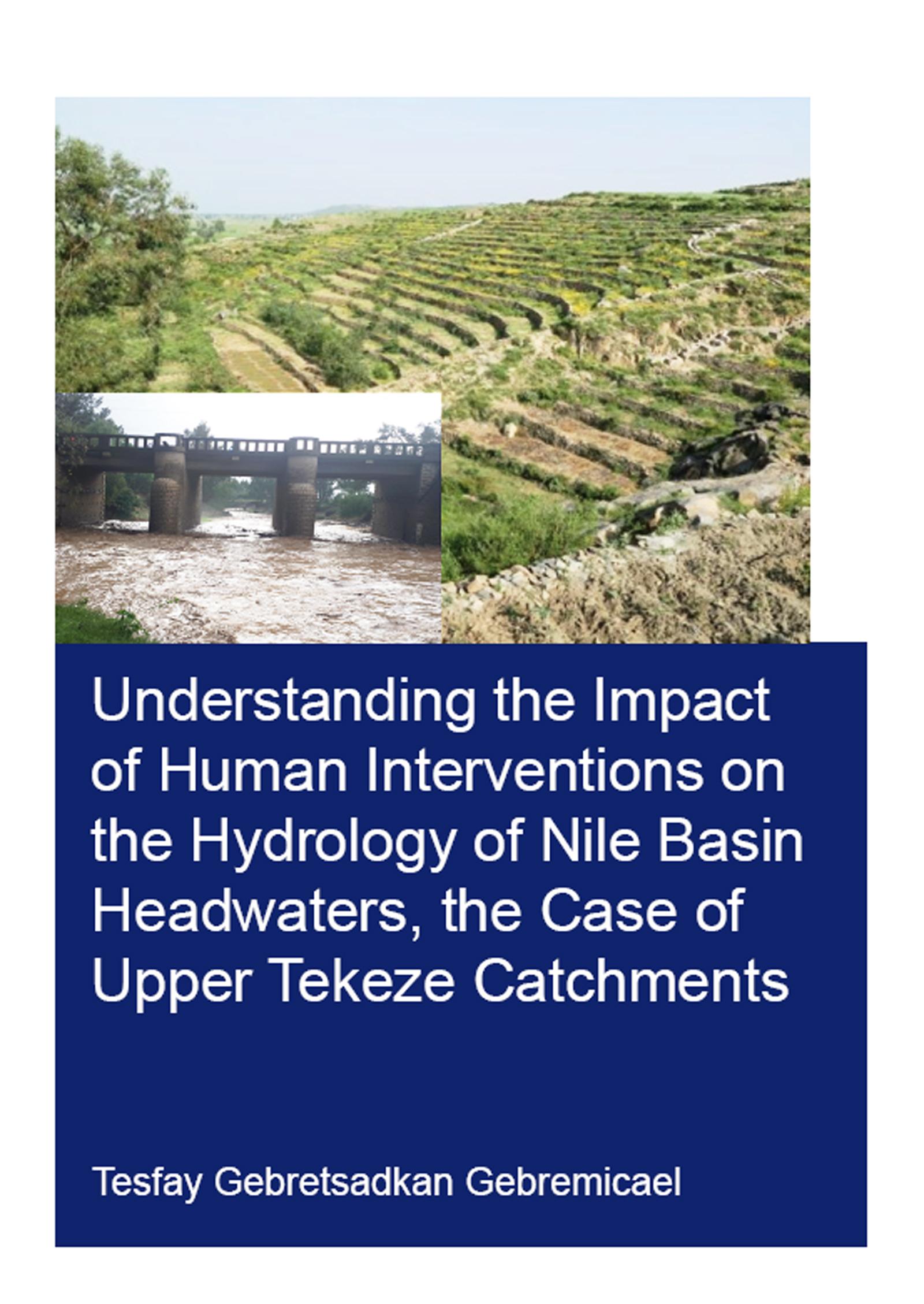
The availability and distribution of water resources in catchments are influenced by various natural and anthropogenic factors. Human-induced environmental changes are key factors controlling the hydrological flows of semi-arid catchments. Land degradation, water scarcity and inefficient utilization of available water resources continue to be important constraints for socio-economic development in the headwater catchments of the Nile river basin in particular over the Ethiopian Catchments. This research investigates the impact of landscape anthropogenic changes on the hydrological processes in the Upper Tekeze basin (A tributary of the Nile). The hydrology of the basin is investigated through analysis of hydro-climatic data, remote sensing techniques, new field measurements and parsimonious hydrological models.
The empirical evidence provided in this book confirms that human-induced environmental changes can significantly change the hydrology of catchments, both in negative (degradation) and in positive (restoration) ways. This book also shows that rainfall-runoff relationships in semi-arid catchments are non-uniform and hence the application of hydrological models in such catchments need special attention. Moreover, parsimonious dynamic hydrological model improves our understanding of the hydrological response to dynamic environmental changes.
Pay easily by card, Klarna, Apple Pay or Google Pay. Not happy? You always have a 14-day money-back guarantee. Read more in our terms. If you have any questions, email us at hello@memmo.org.
Memmo makes studying easier – wherever you are in the world. We bring your course books and smart study tools together in one place: summaries, quizzes, podcasts and flashcards. Plus Ted, your study buddy who answers anything you wonder. Over 50,000 students already study here – built to help you learn faster and stress less.