
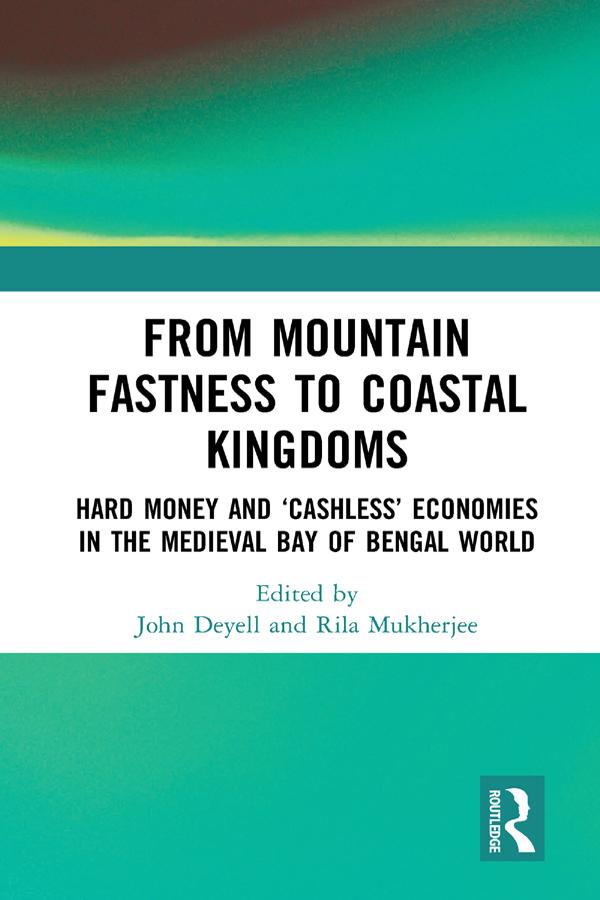
Money is central to the functioning of economies, yet for the pre modern period, our knowledge of monetary systems is still evolving. Until recently, historians of the medieval world have conflated the use of coins with a high degree of monetization. States without coinage were considered under-monetized. It is becoming more evident, however, that some medieval states used money in complex ways without using coinage. Moneys of account supplanted coins wholly or in part. But there is an imbalance of evidence: coins survive physically, while intangible forms of money leave little trace. This has skewed our understanding.
Since coin usage has been well studied in the past, these essays flesh out our consideration of societies that used money but struck no coins. Absence or shortage of coining metals was not the causative factor: some of these societies had access to metal supplies but still remained coinless. Was this a strategic choice? Does it reflect the unique system of governance that developed in each kingdom?
It is surely time to unravel this puzzle. This book examines money use in the Bay of Bengal world, using the case of medieval Bengal as a fulcrum. Situated between mountains and the sea, this region had simultaneous access to both overland and maritime trade routes.
How did such ‘cashless’ economies function internally, within their regions and in the broader Indian Ocean context? This volume brings together the thoughts of a range of upcoming scholars (and a sprinkling of their elders), on these and related issues.
Please note: Taylor & Francis does not sell or distribute the Hardback in India, Pakistan, Nepal, Bhutan, Bangladesh and Sri Lanka
Pay easily by card, Klarna, Apple Pay or Google Pay. Not happy? You always have a 14-day money-back guarantee. Read more in our terms. If you have any questions, email us at hello@memmo.org.
Memmo makes studying easier – wherever you are in the world. We bring your course books and smart study tools together in one place: summaries, quizzes, podcasts and flashcards. Plus Ted, your study buddy who answers anything you wonder. Over 50,000 students already study here – built to help you learn faster and stress less.