
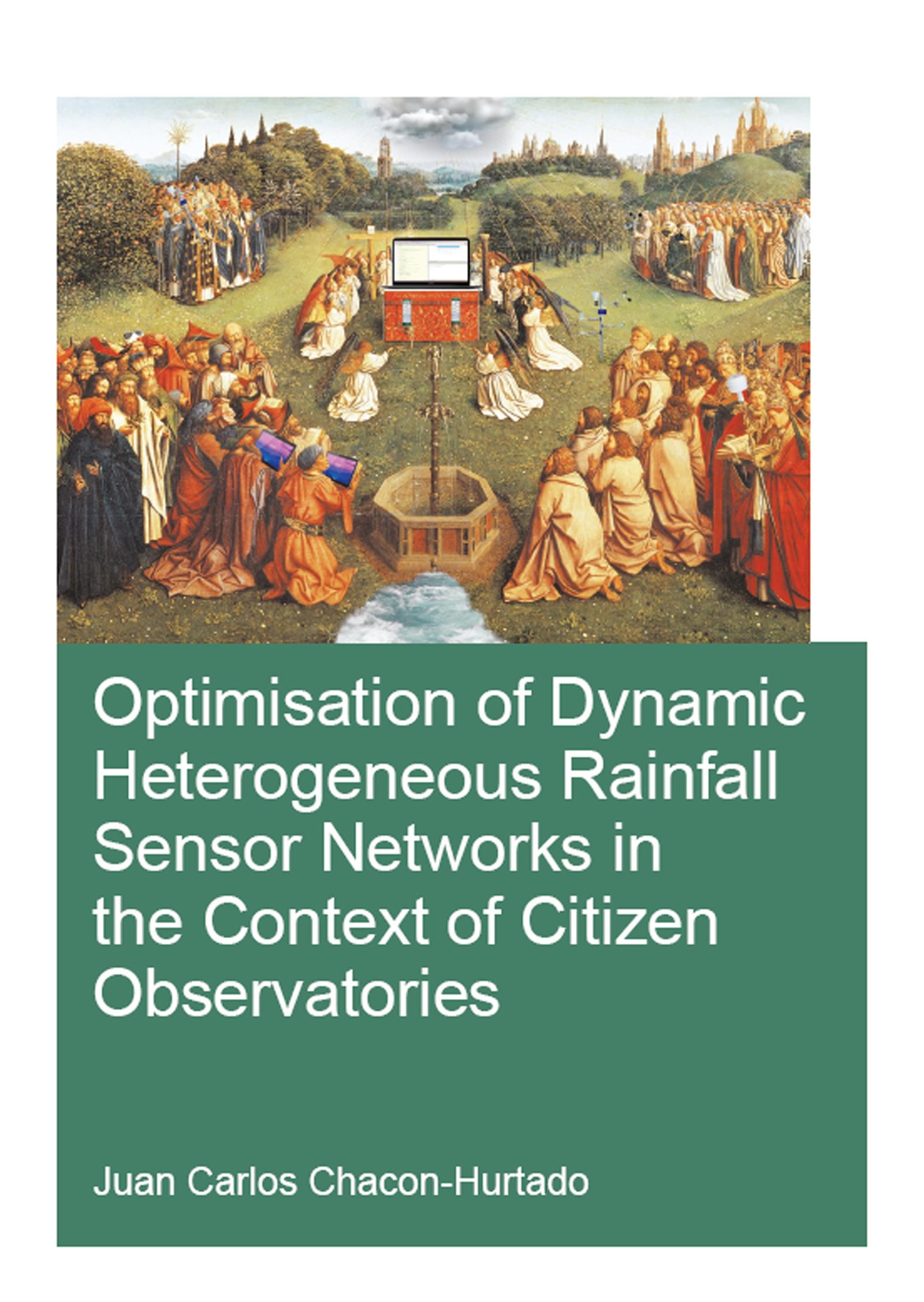
Precipitation drives the dynamics of flows and storages in water systems, making its monitoring essential for water management. Conventionally, precipitation is monitored using in-situ and remote sensors. In-situ sensors are arranged in networks, which are usually sparse, providing continuous observations for long periods at fixed points in space, and due to the high costs of such networks, they are often sub-optimal. To increase the efficiency of the monitoring networks, we explore the use of sensors that can relocate as rainfall events develop (dynamic sensors), as well as increasing the number of sensors involving volunteers (citizens). This research focusses on the development of an approach for merging heterogeneous observations in non-stationary precipitation fields, exploring the interactions between different definitions of optimality for the design of sensor networks, as well as development of algorithms for the optimal scheduling of dynamic sensors. This study was carried out in three different case studies, including Bacchiglione River (Italy), Don River (U.K.) and Brue Catchment (U.K.) The results of this study indicate that optimal use of dynamic sensors may be useful for monitoring precipitation to support water management and flow forecasting.
Pay easily by card, Klarna, Apple Pay or Google Pay. Not happy? You always have a 14-day money-back guarantee. Read more in our terms. If you have any questions, email us at hello@memmo.org.
Memmo makes studying easier – wherever you are in the world. We bring your course books and smart study tools together in one place: summaries, quizzes, podcasts and flashcards. Plus Ted, your study buddy who answers anything you wonder. Over 50,000 students already study here – built to help you learn faster and stress less.