
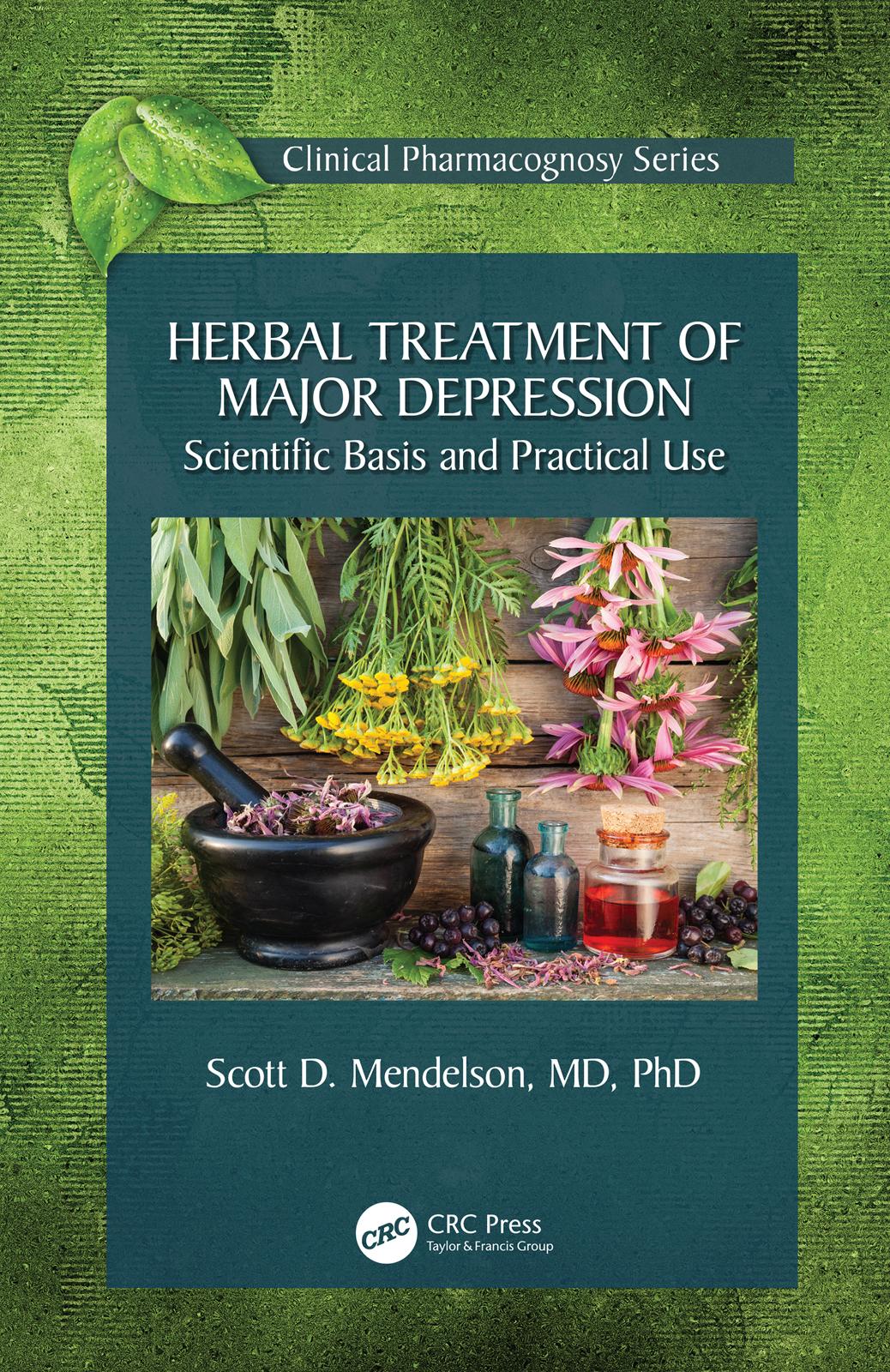
This unique volume presents new understandings of the neurochemical nature of major depression, and how herbs and their constituent flavonoids and terpenes appear to address some of the mechanisms now thought to be involved. It explores how recent studies of the rapid antidepressant effects of ketamine inform neuroscientists about deep intracellular mechanisms of antidepressant action that have little to do with simple enhancement of monoaminergic activity. These mechanisms include actions on PI3K, Akt, mTOR, GSK3, BDNF, and other intracellular pathways. New theories of the pathophysiology underlying major depression, such as oxidative damage, inflammation, stress and insulin resistance are then explored.
Key Features:
- Focuses on oxidative damage, inflammation, and metabolic syndrome.
- Explains that a significant percentage of people treated for major depression obtain little if any relief from standard antidepressant medications.
- These facts lead to discussion of herbs that can be used to treat major depression, as well as consideration of the scientific basis for how these herbs act.
- The antidepressant properties of 66 herbs are discussed, along with dosing and safety information.
Pay easily by card, Klarna, Apple Pay or Google Pay. Not happy? You always have a 14-day money-back guarantee. Read more in our terms. If you have any questions, email us at hello@memmo.org.
Memmo makes studying easier – wherever you are in the world. We bring your course books and smart study tools together in one place: summaries, quizzes, podcasts and flashcards. Plus Ted, your study buddy who answers anything you wonder. Over 75,000 students already study here – built to help you learn faster and stress less.