
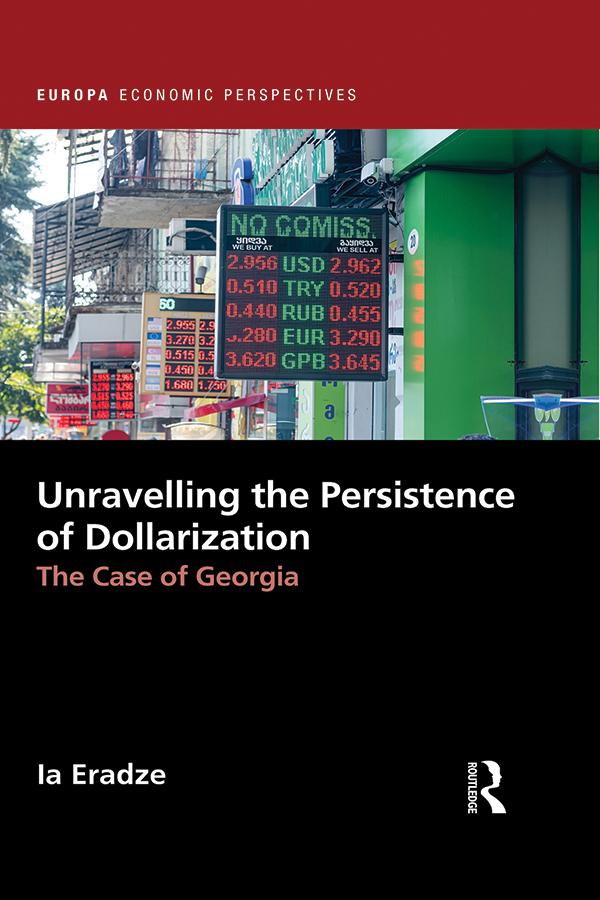
This volume engages with the roots, dimensions, and implications of foreign currency domination in states with a national currency. Referred to as unofficial dollarization in literature, this is a worldwide phenomenon among developing countries and has a long history.
This monograph provides a political economic analysis of dollarization in Georgia and is structured around three themes: the genesis of dollarization (1991–2003), the persistence of dollarization (2003–12) and the politicization of dollarization (2012–19). The case of Georgia is especially representative of the post-socialist transition states, but also has wider applicability.
A high level of dollarization is a significant barrier to economic growth, macroeconomic and political stability, functional monetary policy, as well as social welfare. The Covid-19 crisis and the increasing debt of developing countries in foreign currency exacerbate dollarization-related vulnerabilities for these economies.
This book will be of interest to postgraduate students in global/comparative political economy, development economics or transition economies, researchers in monetary sovereignty, central banking, exchange rate policies, currency hierarchy, money, financialization, and policy makers in dollarized countries and global institutions.
Pay easily by card, Klarna, Apple Pay or Google Pay. Not happy? You always have a 14-day money-back guarantee. Read more in our terms. If you have any questions, email us at hello@memmo.org.
Memmo makes studying easier – wherever you are in the world. We bring your course books and smart study tools together in one place: summaries, quizzes, podcasts and flashcards. Plus Ted, your study buddy who answers anything you wonder. Over 50,000 students already study here – built to help you learn faster and stress less.