
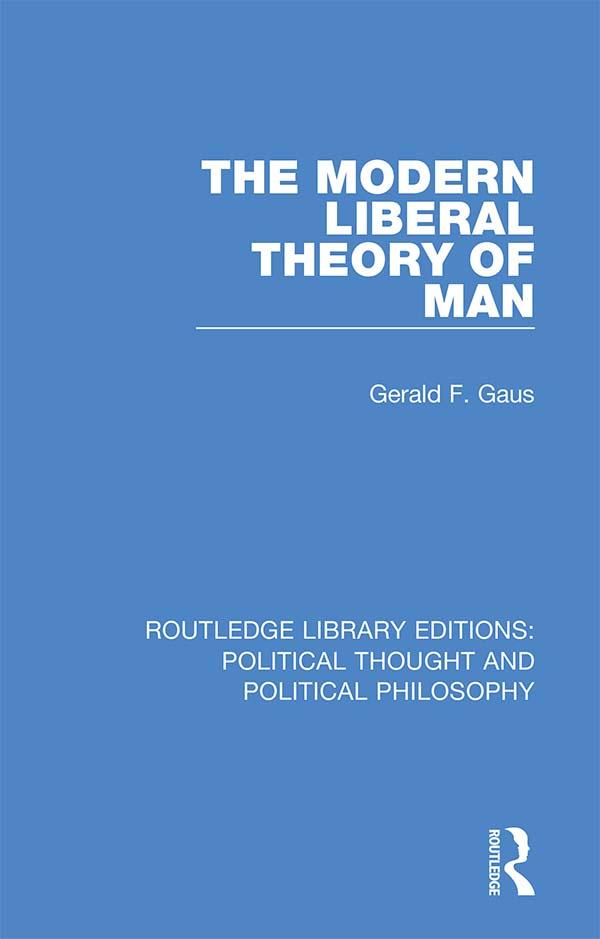
First published in 1983. The primary argument of this book is that there is a coherent tradition of liberal thinking that extends from L. S. Mill, through liberals like T. H. Green, Bernard Bosanquet, L. T. Hobhouse and John Dewey to John Rawls. The author places Rawls within a longstanding tradition of liberal thinking, while also arguing that Green and Hobhouse are not simply of historical interest but represent genuine and interesting attempts to develop a modern liberal theory.
It is argued that modern liberal theory centres on a conception of human nature; that modern liberals have sought to harmonise the pursuit of individuality with participation in social and communal life. Although the book focuses on six modern liberals, the discussion proceeds topically rather than according to author, thus highlighting similarities and disagreements and providing a comprehensive study of modern liberalism.
Pay easily by card, Klarna, Apple Pay or Google Pay. Not happy? You always have a 14-day money-back guarantee. Read more in our terms. If you have any questions, email us at hello@memmo.org.
Memmo makes studying easier – wherever you are in the world. We bring your course books and smart study tools together in one place: summaries, quizzes, podcasts and flashcards. Plus Ted, your study buddy who answers anything you wonder. Over 50,000 students already study here – built to help you learn faster and stress less.