
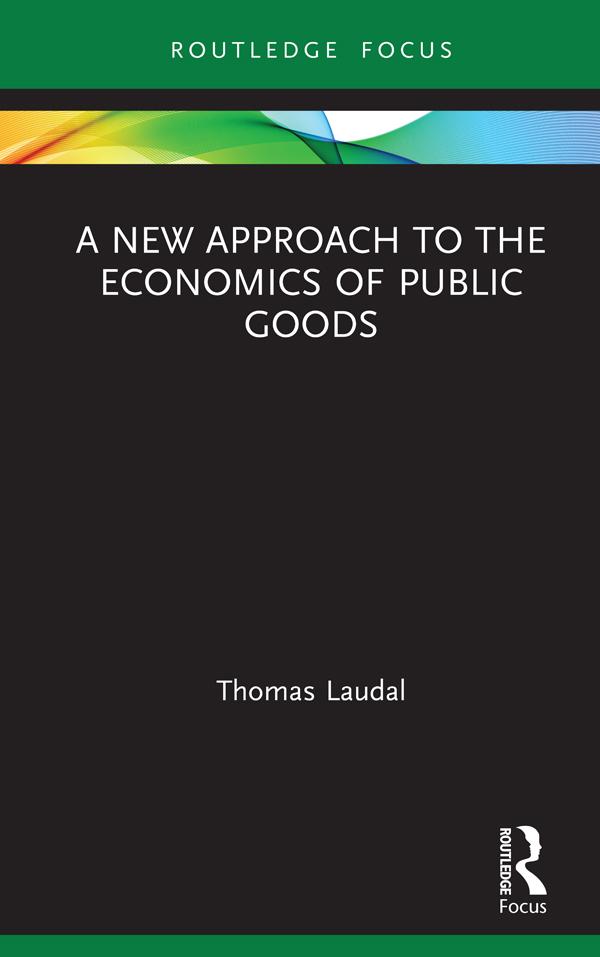
Public goods are typically defined only in reference to the good itself but, as this book argues, the public goods can be better understood if contextual variables are incorporated. This book discusses the production and provision of public goods. It asserts that changes related to public goods are better understood if the category of goods are not decided solely by the properties of the good itself. We also need to focus on how the enabled utility of a good is influenced by the production and the provision of the good.
The book opens with a brief introduction to common conceptions of public goods and a review of the existing literature - highlighting the limitations of current definitions of public goods. It presents a new multi-layered approach to public goods. This has implications for the discourse on public goods and for our understanding of the societal and environmental impact of public goods. The implications are illustrated in several areas; public goods in ancient history, privatization, innovation, competitiveness and prices, democracy and political standards, and economic growth.
The book provides a provocative argument for a new way to analyze public goods which will appeal to scholars and students interested in the economic analysis of public goods, arguments regarding the privatizing or nationalizing of production and services, and method of modelling and measuring sustainable business activities.
Pay easily by card, Klarna, Apple Pay or Google Pay. Not happy? You always have a 14-day money-back guarantee. Read more in our terms. If you have any questions, email us at hello@memmo.org.
Memmo makes studying easier – wherever you are in the world. We bring your course books and smart study tools together in one place: summaries, quizzes, podcasts and flashcards. Plus Ted, your study buddy who answers anything you wonder. Over 50,000 students already study here – built to help you learn faster and stress less.