
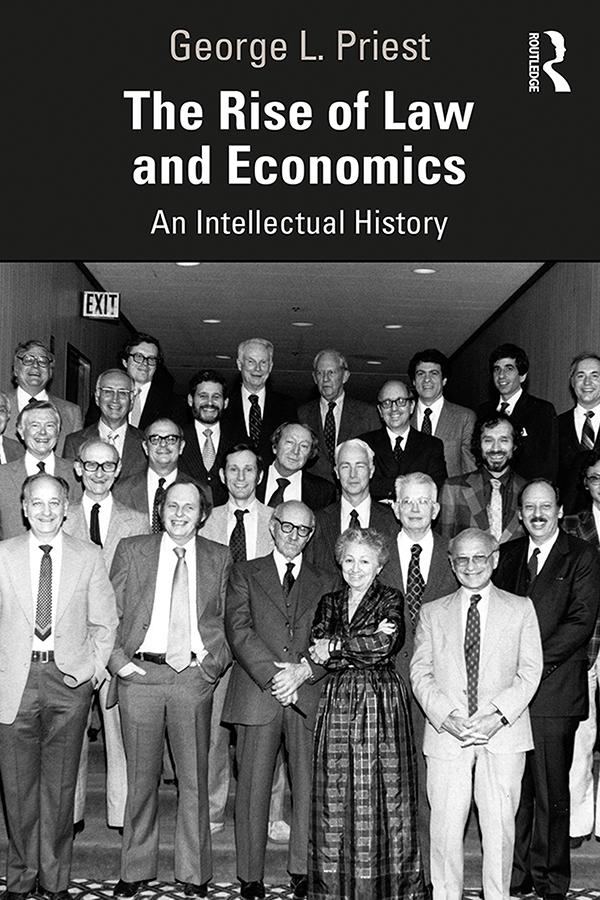
This is a history—though, intentionally, a brief history—of the rise of law and economics as a field of thought in the U.S. college and law school academy, though the field has expanded to Europe and South America and will expand further as other legal systems develop.
This book explains the origins of the field and the sources of its growth during its formative period. It describes the intellectual roots of the field, and the field’s relationship to the understanding of the role of the legal system in directing the functioning of the economy. It describes the effect of the Great Depression and the expansion of governmental power on advancing the functional approach. The book then addresses the work of Aaron Director, during the late 1950s, on focusing economic analysis as a means of understanding the effects of the legal and regulatory system on the allocation of resources in the society. Then it turns to the subsequent intellectual founders of the field—Ronald Coase, Guido Calabresi, and Richard Posner—and attempts to explain the significance of their work. It also discusses the efforts of Robert Bork and Henry Manne toward the influence of law and economics on public policy. The book ends with the founding of the American Law and Economics Association in 1991.
This is an essential companion to law and economics texts for undergraduate law and economic students and, especially, a general supplement to first-year casebooks for law school students.
Pay easily by card, Klarna, Apple Pay or Google Pay. Not happy? You always have a 14-day money-back guarantee. Read more in our terms. If you have any questions, email us at hello@memmo.org.
Memmo makes studying easier – wherever you are in the world. We bring your course books and smart study tools together in one place: summaries, quizzes, podcasts and flashcards. Plus Ted, your study buddy who answers anything you wonder. Over 50,000 students already study here – built to help you learn faster and stress less.