
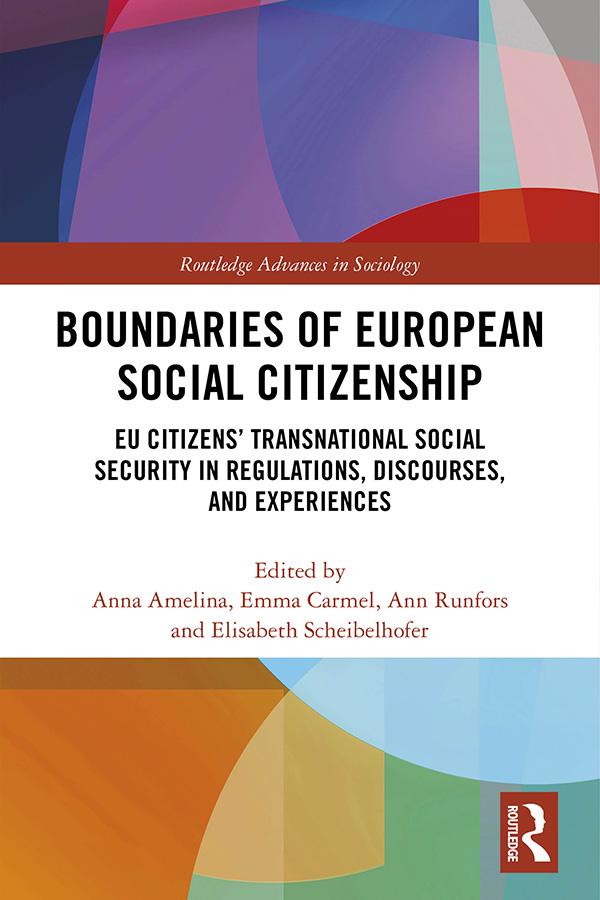
This edited collection contributes to studies of intra-EU migration and mobility, welfare, and European social citizenship by focusing on transnational labour movements from new to the old EU member states (Hungary–Austria, Bulgaria–Germany, Poland–UK and Estonia–Sweden).
The volume provides a comparative analysis of formal organization and mobile individuals’ use of European social security coordination, which involves mobile Europeans' access to and portability of social security rights from the sending to the receiving country (and back). The book discloses the selectivity criteria of welfare provision in four areas (unemployment, family benefits, health insurance, and pensions) that lay at heart of European cross-border social security governance. It also identifies specific discourses of belonging (gendered, ethnicized/racialized and class-related images of ‘Us’ and ‘Them’) that frame the institutional selectivity by constructing images of mobile EUcitizens' ‘deserving’ or ‘non-deserving’ social membership.
The collection offers a detailed examination of inequality experiences mobile EU citizens from the new EU countries encounter while accessing and porting social security rights across borders. It will be of interest to a wide range of social science and interdisciplinary researchers, students, and practitioners as well as those interested in intra-EU migration and mobility, social security, European social citizenship, and transnational studies.
Pay easily by card, Klarna, Apple Pay or Google Pay. Not happy? You always have a 14-day money-back guarantee. Read more in our terms. If you have any questions, email us at hello@memmo.org.
Memmo makes studying easier – wherever you are in the world. We bring your course books and smart study tools together in one place: summaries, quizzes, podcasts and flashcards. Plus Ted, your study buddy who answers anything you wonder. Over 50,000 students already study here – built to help you learn faster and stress less.