
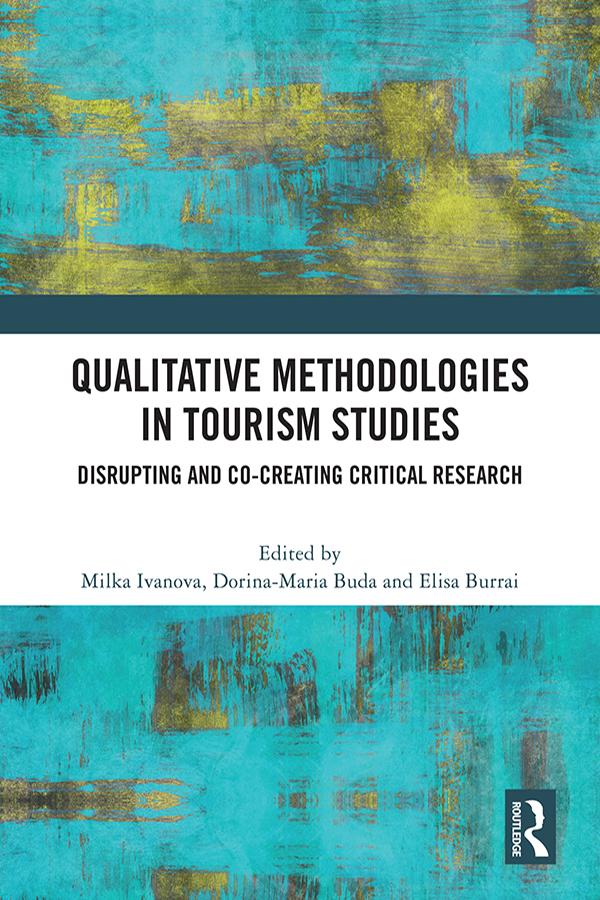
Disruptive and creative research methodologies proposed in this book are designed to dismantle neoliberal narratives deployed in tourism studies and wider social sciences. Progressing criticality in tourism studies, this volume showcases cutting-edge contributions ranging from reflexivity, subjectivities, and dreams; to messy emotions in auto-ethnographic accounts of fieldwork; ‘motherhood capital’ accessing Inuit communities; collective memory work; ethnodrama and creative non-fiction, amongst others.
Disruption and creativity are the two ideas around which tourism geographers challenge and begin dismantling hegemonic ideologies in tourism studies. The chapters in this book provide a vantage point from where to disrupt first, before tourism geographers can engender progress and transformation within and outside of the field. In tourism studies in general, and tourism geography in particular, the years of the 2000s have witnessed an emphasis on qualitative methodological research, both in terms of the topics addressed and the types of methodological tools. In many ways, this legitimisation of qualitative work mirrors developments in other areas such as human geography, sociology and anthropology, in which this book is anchored. The authors debate in more depth how tourism studies offer multidimensional, multilogical and multi-emotional approaches to research design.
The chapters were originally published as a special issue of the journal, Tourism Geographies.
Pay easily by card, Klarna, Apple Pay or Google Pay. Not happy? You always have a 14-day money-back guarantee. Read more in our terms. If you have any questions, email us at hello@memmo.org.
Memmo makes studying easier – wherever you are in the world. We bring your course books and smart study tools together in one place: summaries, quizzes, podcasts and flashcards. Plus Ted, your study buddy who answers anything you wonder. Over 50,000 students already study here – built to help you learn faster and stress less.