
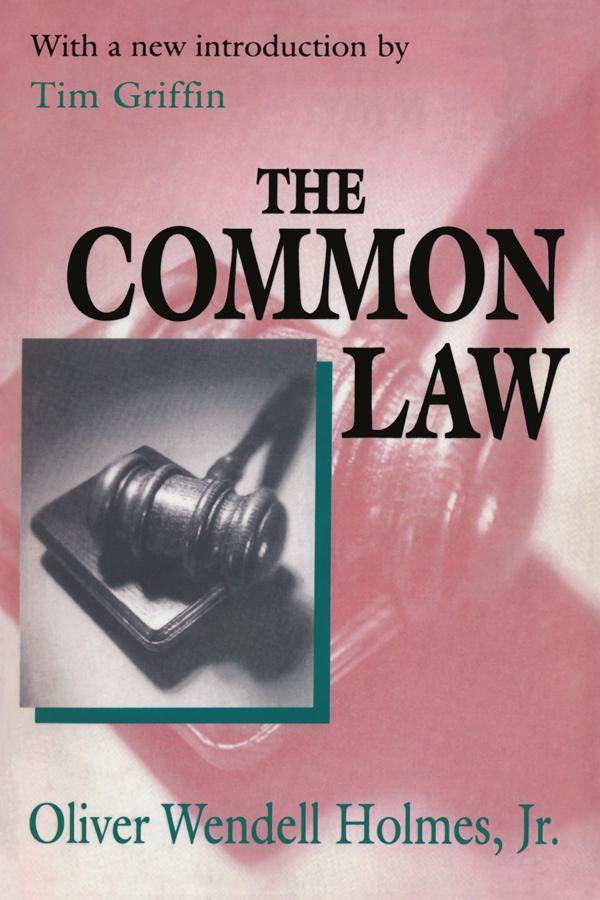
The Common Law is Oliver Wendell Holmes' most sustained work of jurisprudence. In it the careful reader will discern traces of his later thought as found in both his legal opinions and other writings. At the outset of The Common Law Holmes posits that he is concerned with establishing that the common law can meet the changing needs of society while preserving continuity with the past. A common law judge must be creative, both in determining society's current needs and in discerning how best to address these needs in a way that is continuous with past judicial decisions. In this way, the law evolves by moving out of its past, adapting to the needs of the present, and establishing a direction for the future. To Holmes' way of thinking, this approach is superior to imposing order in accordance with a philosophical position or theory because the law would thereby lose the flexibility it requires in responding to the needs and demands of disputing parties as well as society as a whole.
Pay easily by card, Klarna, Apple Pay or Google Pay. Not happy? You always have a 14-day money-back guarantee. Read more in our terms. If you have any questions, email us at hello@memmo.org.
Memmo makes studying easier – wherever you are in the world. We bring your course books and smart study tools together in one place: summaries, quizzes, podcasts and flashcards. Plus Ted, your study buddy who answers anything you wonder. Over 50,000 students already study here – built to help you learn faster and stress less.