
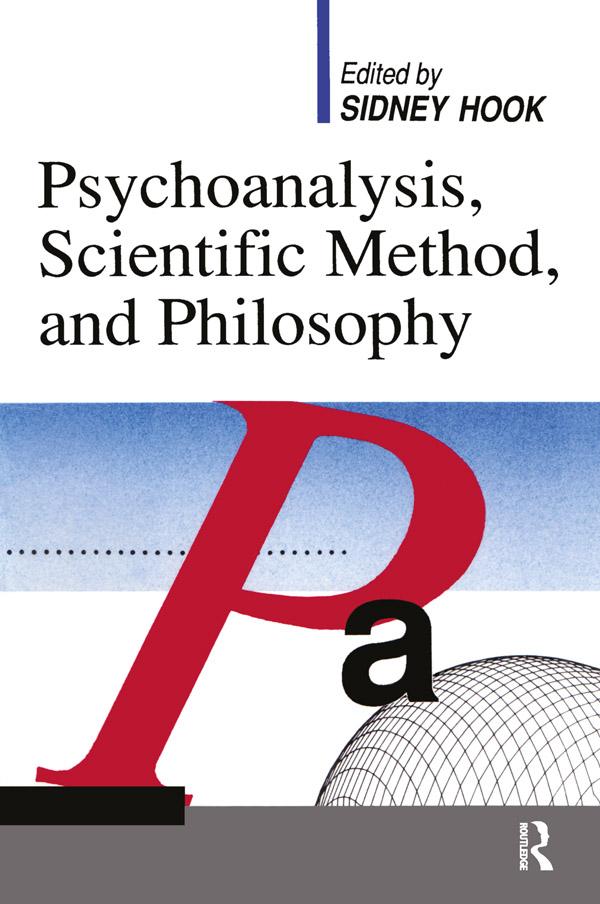
This by now well-known pioneering dialogue on Freudian analysis is concerned not with therapeutic implications, individual or social, of psychoanalysis or of any other brand of psychology, but solely with the status of psychoanalysis as a scientific theory. Matching talents with a distinguished group of philosophers and social scientists, psychoanalysts made their claims and willingly subject them to the methodological scrutiny common to the sciences and the philosophy of science. This book records one of the few times in the United States that a distinguished group of psychoanalysts met with an equally distinguished group of philosophers of science in a free, critical interchange of view on the scientific status of the field. While a sense of the event’s excitement is captured here, it also had clear results, such as an expanded notion of psychoanalysis as a scientific theory, and a clear realization that certain elements in psychoanalysis are substantially beyond the boundaries of causal inference or the rules of logic.
Two opening statements by Heinz Hartmann and Ernest Nagel set the tone for the debate and discussion that followed. These are followed by social scientific statements of Abram Kardiner, Ernest van den Haag, and Alex Inkeles, followed by the philosophers Morris Lazerowitz, Donald C. Williams, and Anthony Flew. Such distinguished scholars as Adolf Grunbaum, Michael Scriven, Gail Kennedy, Arthur Pap, Philipp Frank. Arthur C. Danto, Max Black and others, round out this pioneering effort in the literature of intellectual combat.
Sidney Hook applies to his vision of psychoanalysis the same compelling rigor he applied to other would-be advocates of a science beyond ordinary scientific method or safeguards. He nonetheless points out that even therapeutic success is not the last word, but must itself be tested on a variety of measures: statistical no less than analytical. This remains a courageous and disturbing work, one that commands attention among practicing psychiatrists, psychoanalysts—and their would-be patients.
Pay easily by card, Klarna, Apple Pay or Google Pay. Not happy? You always have a 14-day money-back guarantee. Read more in our terms. If you have any questions, email us at hello@memmo.org.
Memmo makes studying easier – wherever you are in the world. We bring your course books and smart study tools together in one place: summaries, quizzes, podcasts and flashcards. Plus Ted, your study buddy who answers anything you wonder. Over 50,000 students already study here – built to help you learn faster and stress less.