
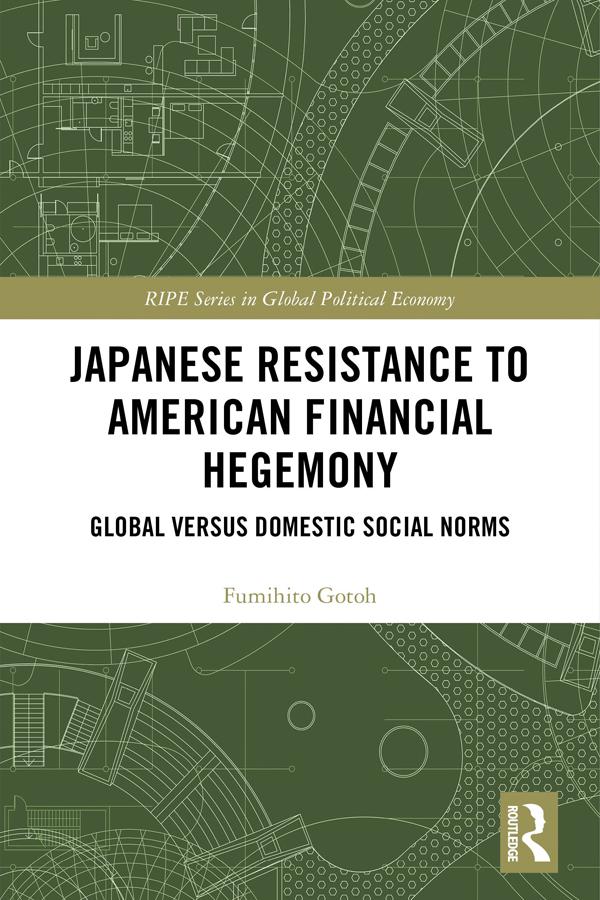
This book investigates why the convergence of Japan’s bank-centered financial system to an American-style capital market-based model has lost steam since the mid-2000s, despite financial deregulation during the 1980s and 1990s.
Examining the ideational conflict within Japanese elites between the market liberalization and anti-free market camps, it scrutinizes the American and Japanese credit rating agencies operating in Tokyo and explores the differences between the two major industrial associations, Keidanren and Doyukai, which have played a key role as "ideational platforms" for Japanese corporate society. The book emphasizes the concept of "systemic support", whose broadened definition incorporates dominant elites’ support and protection of subordinates in exchange for the latter’s obedience and loyalty. It argues that Japanese society’s anti-liberal, anti-free market norms centered on systemic support are a form of counter-hegemony, and this has resisted American financial hegemony, promoting international capital mobility and capital markets, and prevented capitalist dominance from severing long-term social ties such as management-labor cooperation and corporate group alliances. Yet this resistance has generated growing problems for Japan.
With a focus on social norms, bureaucracy, credit rating agencies, industrial associations and corporate governance, this book will provide useful insights for scholars and students of international political economy, sociology, cultural studies, and business studies.
Pay easily by card, Klarna, Apple Pay or Google Pay. Not happy? You always have a 14-day money-back guarantee. Read more in our terms. If you have any questions, email us at hello@memmo.org.
Memmo makes studying easier – wherever you are in the world. We bring your course books and smart study tools together in one place: summaries, quizzes, podcasts and flashcards. Plus Ted, your study buddy who answers anything you wonder. Over 50,000 students already study here – built to help you learn faster and stress less.