
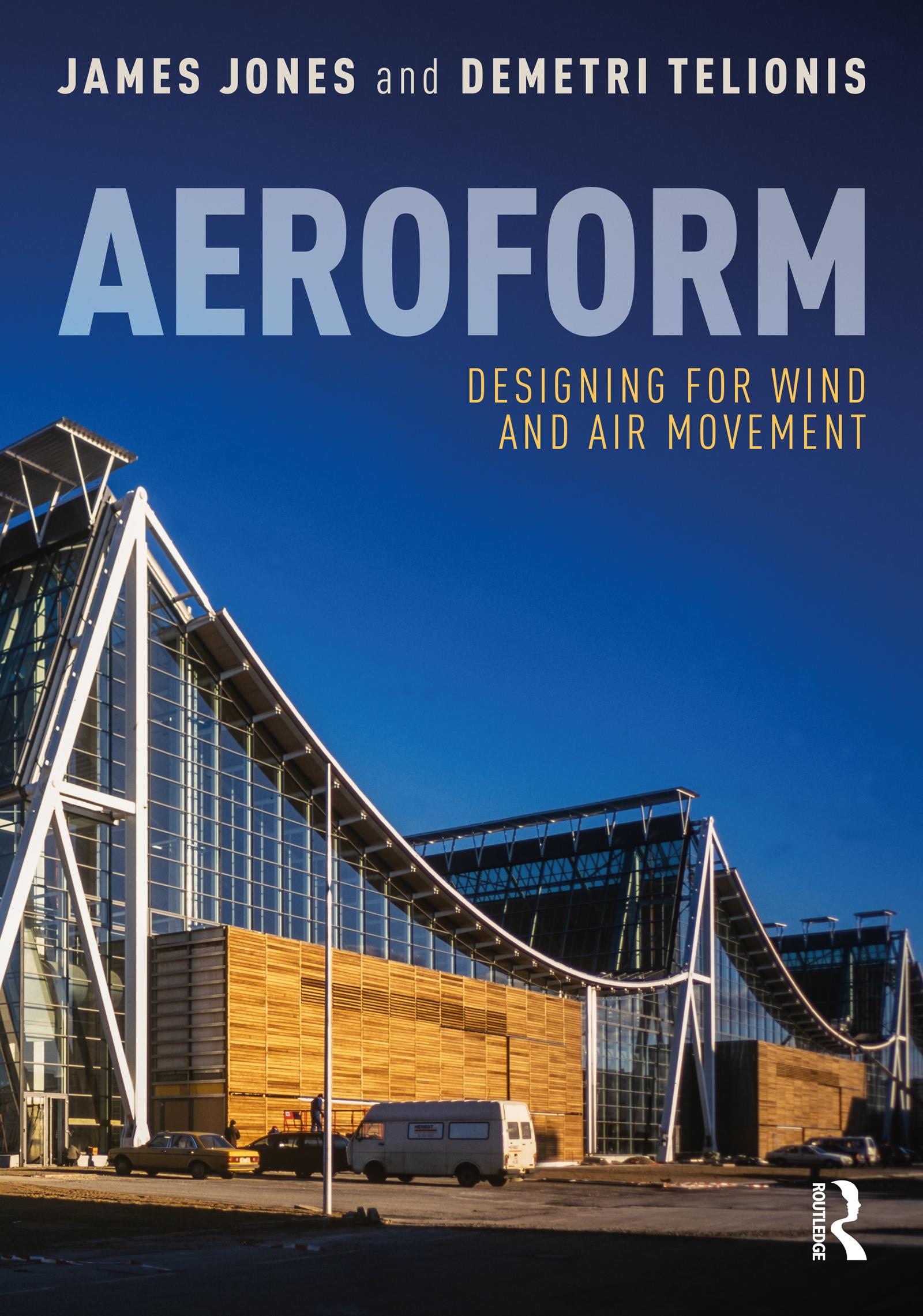
Aeroform: Designing for Wind and Air Movement provides a comprehensive introduction to applying aerodynamic principles to architectural design. It presents a challenge to architects and architectural engineers to give shape to the wind and express its influence on architectural form.
The wind pushes and pulls on our buildings, infiltrates and exfiltrates through cracks and openings, and lifts roofs during storm events. It can also offer opportunities for resource conservation through natural ventilation or a biophilic connection between indoors and out. This book provides basic concepts in fluid mechanics such as materials, forces, equilibrium, pressure, and hydrostatics; introduces the reader to the concept of airflow; and provides strategies for designing for wind resistance, especially in preventing uplift. Natural ventilation and forced airflow are explored using examples such as Thomas Herzog’s Hall 26 in Hanover, RWE Ag building in Essen Germany, and the Kimbell Art Museum in Texas. Finally, issues of wind and airflow measurement are addressed.
A reference for students and practitioners of architecture and architectural engineering, this book is richly illustrated and presents complex concepts of aerodynamic engineering in easy-to-understand language. It prepares the architect or architectural engineer to design buildings that are visually expressive of a dialogue between wind and built form.
Pay easily by card, Klarna, Apple Pay or Google Pay. Not happy? You always have a 14-day money-back guarantee. Read more in our terms. If you have any questions, email us at hello@memmo.org.
Memmo makes studying easier – wherever you are in the world. We bring your course books and smart study tools together in one place: summaries, quizzes, podcasts and flashcards. Plus Ted, your study buddy who answers anything you wonder. Over 75,000 students already study here – built to help you learn faster and stress less.