
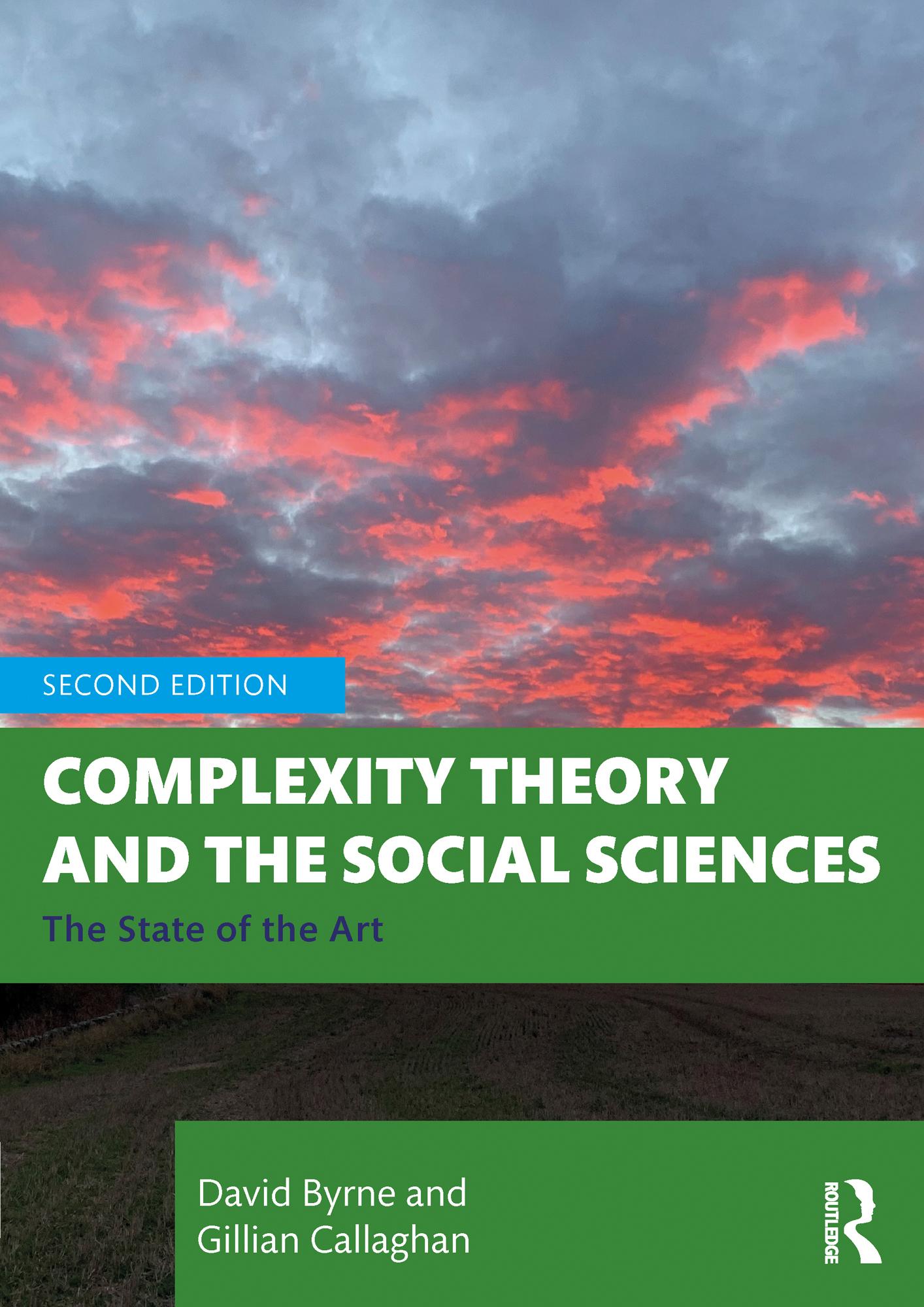
This expanded and updated edition of Complexity Theory and the Social Sciences: The State of the Art revisits the use of complexity theory across the social sciences and demonstrates how complexity informs approaches to various contemporary issues in the context of the COVID-19 pandemic, widening social inequality, and impending social and ecological catastrophe wrought by global warming.
The book reviews complexity theory in the practice of the social sciences and at their interface with ecological science. It outlines how social theory can be reconciled with complexity thinking and presents a review of the way research can be done using complexity theory. The book suggests how complexity theory can be used to understand and evaluate governance processes, particularly with regard to social inequality and the climate crisis. The impact of the COVID-19 pandemic is also examined through a complexity lens, reviewing how complexity thinking has been employed in relation to the pandemic and how implementing a complexity framework can transform health and social care. The book concludes with a call to action and the use of complexity theory to inform critical thinking in the education system.
This textbook will be immensely useful to students and researchers interested in social research methods, social theory, business and organization studies, health, education, urban studies, and development studies.
Pay easily by card, Klarna, Apple Pay or Google Pay. Not happy? You always have a 14-day money-back guarantee. Read more in our terms. If you have any questions, email us at hello@memmo.org.
Memmo makes studying easier – wherever you are in the world. We bring your course books and smart study tools together in one place: summaries, quizzes, podcasts and flashcards. Plus Ted, your study buddy who answers anything you wonder. Over 50,000 students already study here – built to help you learn faster and stress less.