
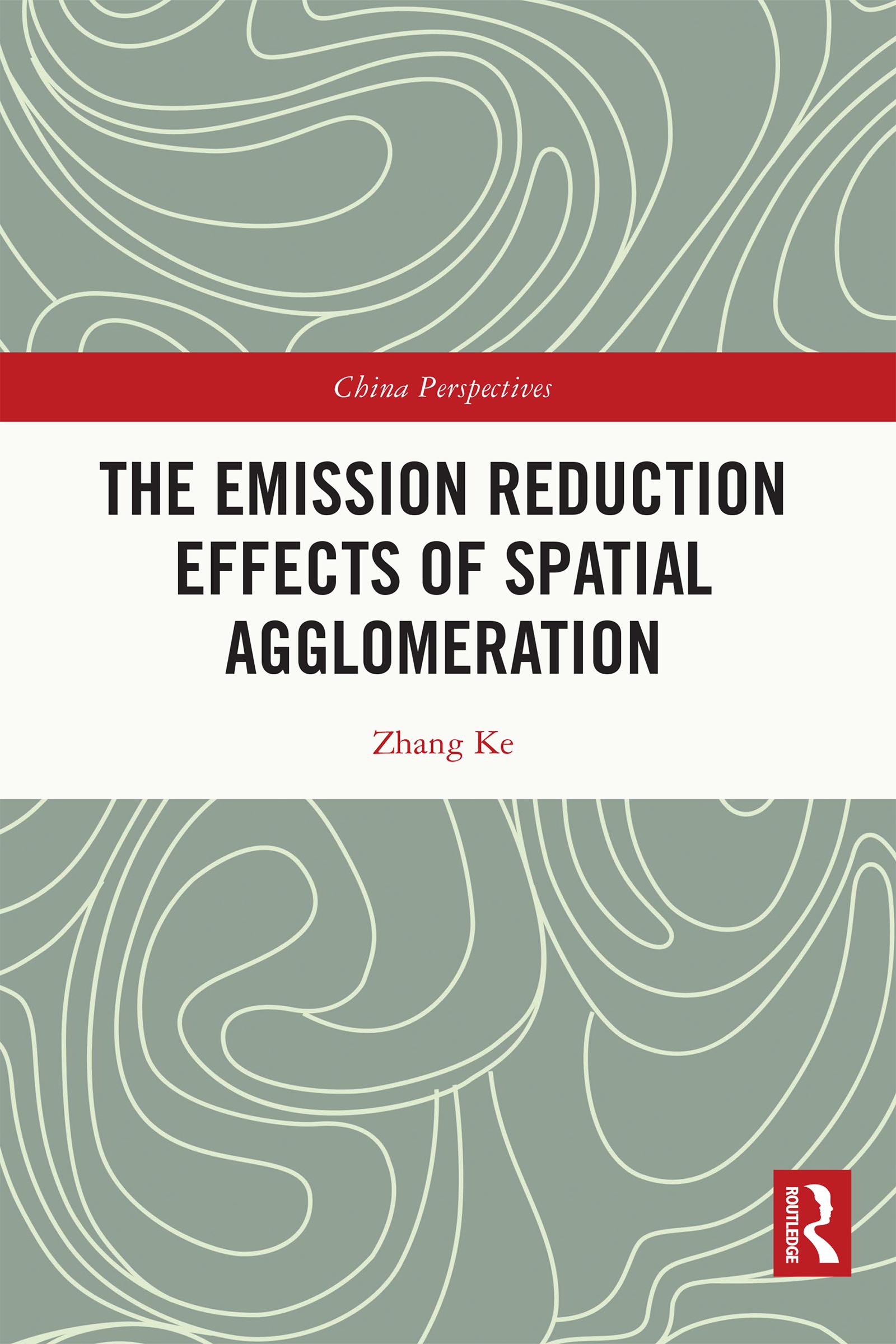
The book studies the relationship between economic agglomeration and environmental pollution from a spatial perspective through theoretical analyses and empirical discussions.
At both microscopic and macroscopic levels, the author first explores the impact mechanism of the agglomeration of economic activities on environmental pollution and proposes research frameworks based on spatial economic theory and output density theory. Drawing on descriptive statistics and explorative spatial data from 283 cities in China, the book investigates the current development, spatial characteristics, influence path, and environmental efficiency of urban economic agglomeration and pollution in the People’s Republic. The following empirical sections study spatial spillover effects, simultaneous bias and spatial interaction between agglomeration and pollution. The research findings give insight into interregional economic development, joint pollution control across regions, and the coordination of the two, especially in the context of developing countries.
The title will appeal to researchers, students, government officials and policymakers interested in development economics, regional economics, urban economics, and environmental economics.
Pay easily by card, Klarna, Apple Pay or Google Pay. Not happy? You always have a 14-day money-back guarantee. Read more in our terms. If you have any questions, email us at hello@memmo.org.
Memmo makes studying easier – wherever you are in the world. We bring your course books and smart study tools together in one place: summaries, quizzes, podcasts and flashcards. Plus Ted, your study buddy who answers anything you wonder. Over 50,000 students already study here – built to help you learn faster and stress less.