
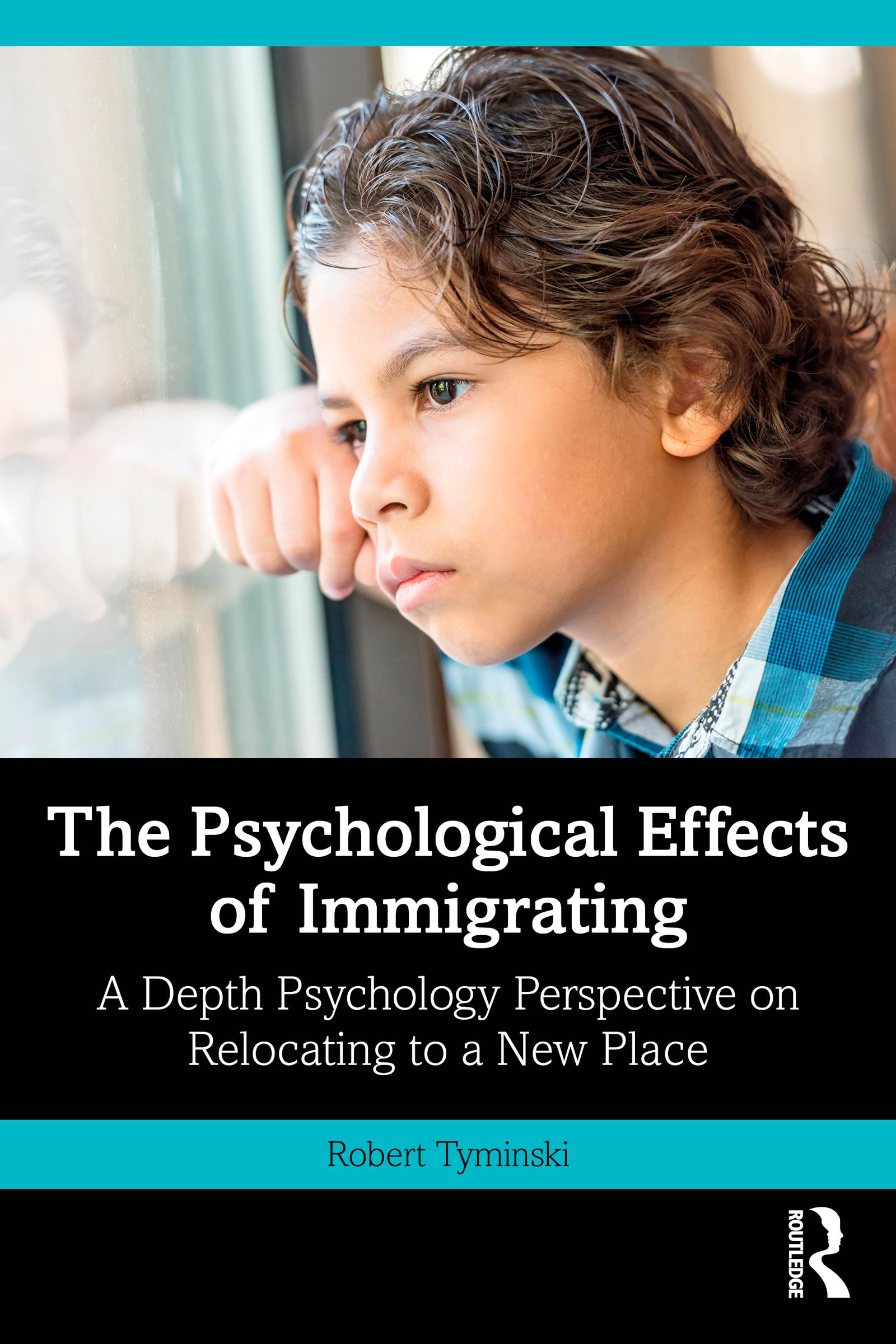
Exploring immigration from psychological, historical, clinical, and mythical perspectives, this book considers the varied and complex answers to questions of why people immigrate to entirely new places and leave behind their familiar surroundings and culture.
Using research reviews, extensive case material, and literary examples (such as Virgil’s The Aeneid), Robert Tyminski’s work will deepen readers’ understanding of what is both unique and universal about migratory experiences. He addresses the negative consequences of xenophobia, the acculturation experiences of children compared to adults, the trauma and psychological issues that arise when seeking refuge or relocating to a new country, and the more recent implications of COVID-19 upon border crossings. Tyminski also re-evaluates the term identity as a psychological shorthand, suggesting that it can flatten our understanding of human complexity and erase migrant and refugee life stories and differences. As one of few books to investigate immigration from a Jungian-oriented perspective, Robert Tyminski’s work offers a new and broad perspective on the mental health issues related to immigration.
This book will prove essential for clinicians working with refugees and migrants, when in training and in practice, as well as students and practitioners of psychoanalysis seeking to deepen their understanding of migratory experiences.
Pay easily by card, Klarna, Apple Pay or Google Pay. Not happy? You always have a 14-day money-back guarantee. Read more in our terms. If you have any questions, email us at hello@memmo.org.
Memmo makes studying easier – wherever you are in the world. We bring your course books and smart study tools together in one place: summaries, quizzes, podcasts and flashcards. Plus Ted, your study buddy who answers anything you wonder. Over 50,000 students already study here – built to help you learn faster and stress less.