
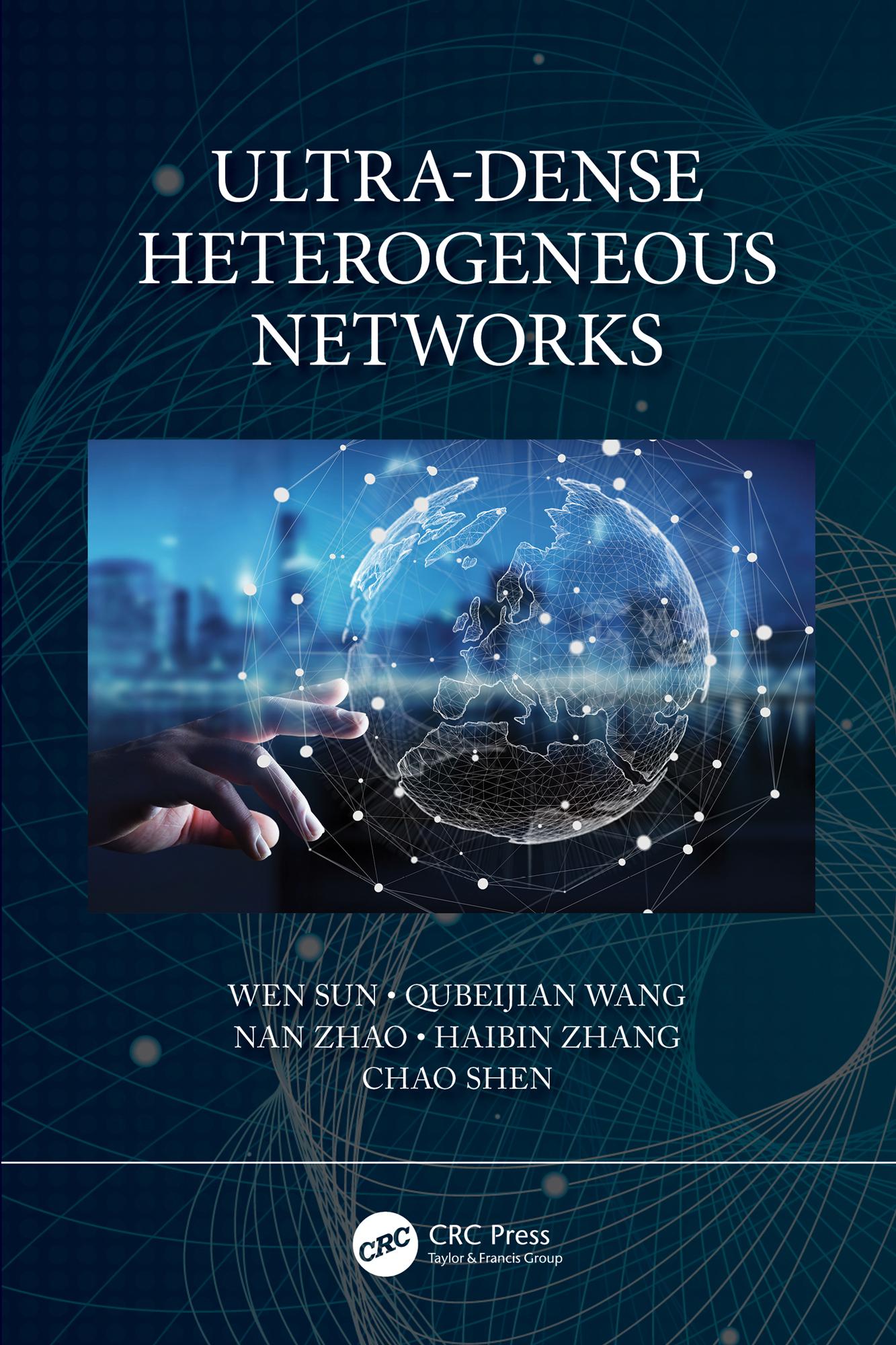
Driven by the ever-increasing amount of mobile data, cellular networks evolve from small cell network to ultra-dense heterogeneous networks, to provide high system capacity and spectrum efficiency. By bringing base stations (BSs) to the approximate spatial scale and number magnitude, ultra-dense heterogeneous networks would definitely bring unprecedented paradigm changes to the network design. Firstly, along with densification of small cells, inter-cell interference becomes severe and may deteriorate performance of mobile users. Assigning network resources including bandwidth and time slots, while avoiding interference, desires serious consideration. Secondly, the coverage area of BSs becomes small and irregular, resulting in much frequent and complicated handovers when mobile users move around. How to ensure continuous communication and implement effective mobility management, and inter-cell resource allocation and cooperation, remains a challenging issue. Thirdly, such dynamic change in spatial dimension enables us to re-investigate available and ongoing communications and networking techniques, such as massive MIMO, CoMP, millimeter waves (mmWaves), carrier aggregation, full duplex radio, and D2D communications.
To address the aforementioned challenging research issues, this book will investigate the service and QoE provisioning in ultra-dense heterogeneous networks. In particular, firstly we introduce ultra-dense heterogeneous networks by careful definition regarding spatial deployment, generic characteristics, and requirements of ultra-dense heterogeneous networks in order to ensure QoE of mobile users. Secondly, we depict the resource management among small cells in close proximity, mobility management for mobile users (address the super-frequent handovers), and interference management (dealing with the interference due to frequency-reuse in the vicinity). Thirdly, we study the enabling factors, and the integration of ultra-dense heterogeneous networks with enabling technologies, such as massive-MIMO, cloud-RAN, mmWaves, D2D, IoT. Finally, we conclude the book and indicate future directions and challenges.
Pay easily by card, Klarna, Apple Pay or Google Pay. Not happy? You always have a 14-day money-back guarantee. Read more in our terms. If you have any questions, email us at hello@memmo.org.
Memmo makes studying easier – wherever you are in the world. We bring your course books and smart study tools together in one place: summaries, quizzes, podcasts and flashcards. Plus Ted, your study buddy who answers anything you wonder. Over 50,000 students already study here – built to help you learn faster and stress less.