
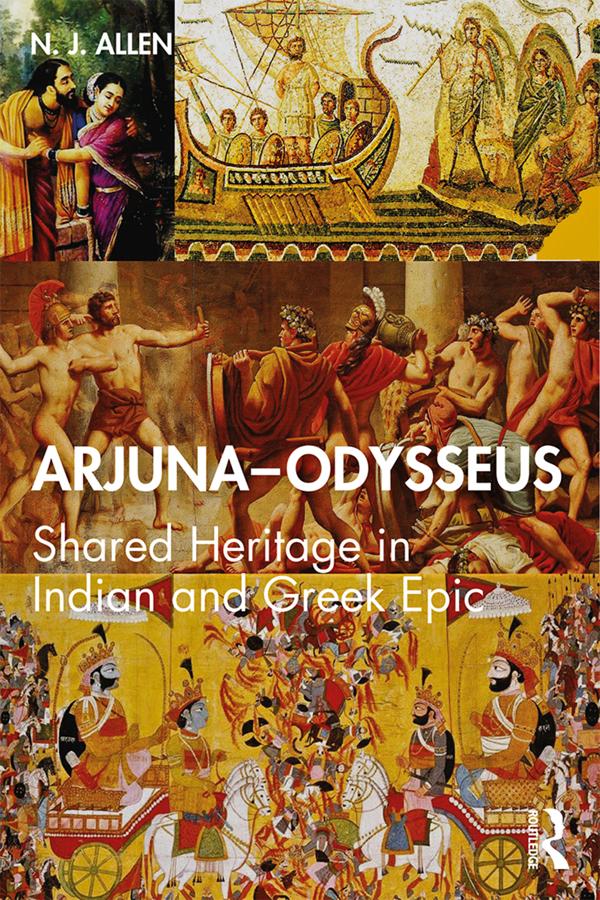
Bringing together the study of the Greek classics and Indology, Arjuna–Odysseus provides a comparative analysis of the shared heritage of the Mahābhārata and early Greek traditions presented in the texts of Homer and Hesiod.
Building on the ethnographic theories of Durkheim, Mauss, and Dumont, the volume explores the convergences and rapprochements between the Mahābhārata and the Greek texts. In exploring the networks of similarities between the two epic traditions, it also reformulates the theory of Georges Dumézil regarding Indo-European cultural comparativism. It includes a detailed comparison between journeys undertaken by the two epic heroes – Odysseus and Arjuna – and more generally, it ranges across the philosophical ideas of these cultures, and the epic traditions, metaphors, and archetypes that define the cultural ideology of ancient Greece and India.
This book will be useful to scholars and researchers of Indo-European comparativism, social and cultural anthropology, classical literature, Indology, cultural and post-colonial studies, philosophy and religion, as well as to those who love the Indian and Greek epics.
Pay easily by card, Klarna, Apple Pay or Google Pay. Not happy? You always have a 14-day money-back guarantee. Read more in our terms. If you have any questions, email us at hello@memmo.org.
Memmo makes studying easier – wherever you are in the world. We bring your course books and smart study tools together in one place: summaries, quizzes, podcasts and flashcards. Plus Ted, your study buddy who answers anything you wonder. Over 75,000 students already study here – built to help you learn faster and stress less.