
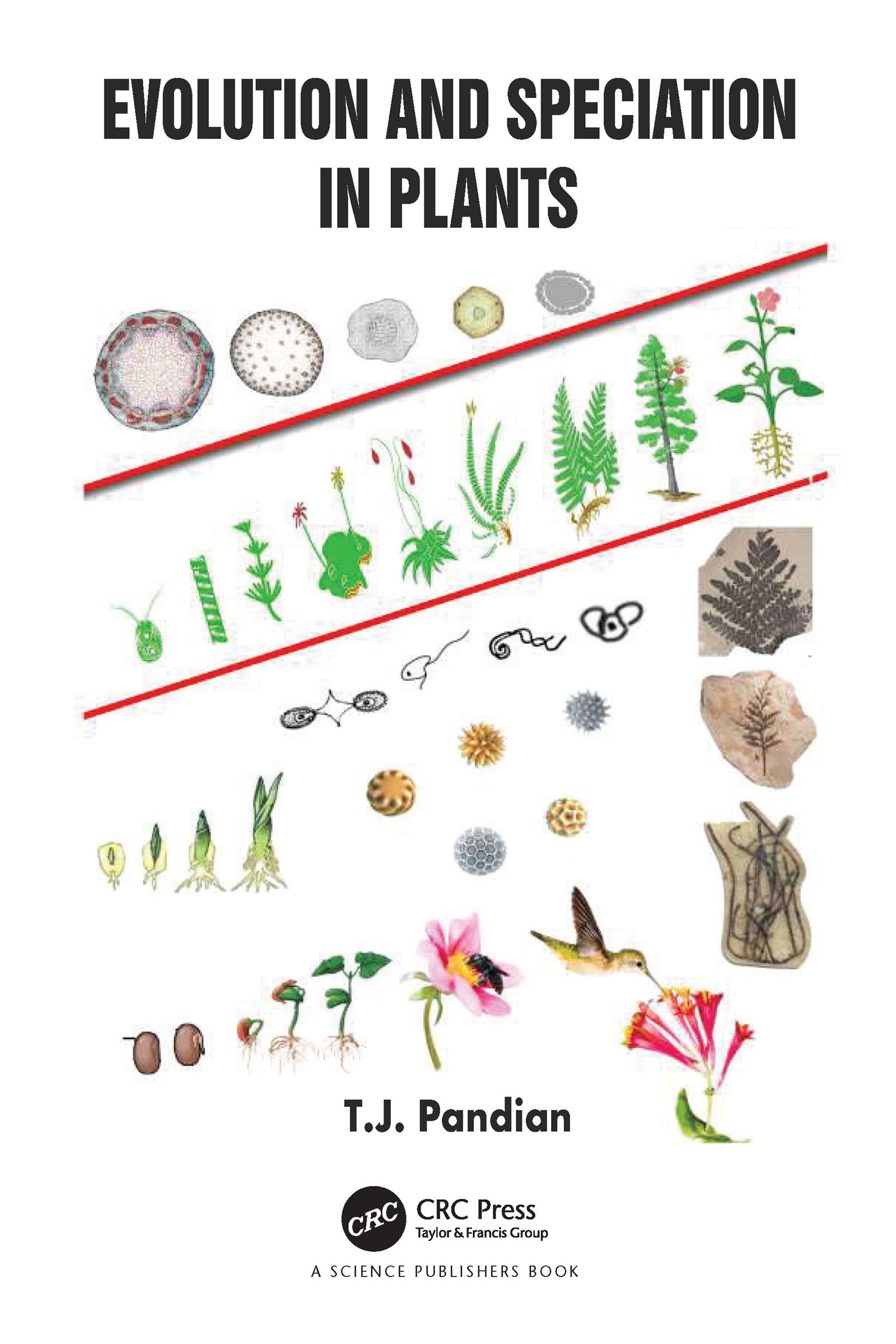
Plants are autotrophs and sessile, while animals are heterotrophs and motile. Sessility has imposed on plants 94% hermaphroditism, 23% selfing, 3% polyploidization and 39% clonality, in comparison to < 5% herma-phroditism, < 1% selfing and 2% clonality in motile animals. Whereas plants consist of 374,000 species but 1,664 variety/species, animals comprise 1,543,196 species and 210 variety/species. Hence, plants have undergone variety diversity, while animals have species diversity. In animals and plants, the species ratio is reduced from 4.1 animals : 1.0 plant to 1.4 for pollinating animals : 1.0 pollinated plants. In pollination, animals are benefited dietarily but plants are cross pollinated, generating new gene combinations – the raw material for evolution and speciation. For the reduced species diversity in plants, reasons are traced to 90% hermaphroditism, ~ 23% selfing and 39% clonality. Clonality decreases from 100% in 6-7 tissue typed sponges and 3 tissue typed algae drastically to 0.7% in 60 tissue typed worms but gradually to ~ 23% in 60 tissued typed angiosperms. About 12-15, 5-8 and 77-80% of all animal and plant species are distributed in marine, freshwater and terrestrial habitats, respectively. Animals have conserved the ‘right’ sequence of gametogenesis but plants have gone through a ‘wrong’ sequence prior to settling with right one albeit with double fertilization in angiosperms. Both animals and plants are 80% male heterogametics. Only 0.5% of them can afford semelparity. While 20 and 57% angiosperms are perennial trees and herbs, annual herbs make up 23% only. In all of them, 85, > 19 and < 1% are pollinated by fast flying animals, wind and water, respectively. Increasing pollen load enhances fruit- and seed-set. In contrast to animals, the life cycle of plants is direct but complicated. Unlike animals, plants have greatly contributed to weathering of rocks and the atmospheric gas composition during the geological past. From dormant spores and seeds of plants, life can be restored after thousands of years.
Pay easily by card, Klarna, Apple Pay or Google Pay. Not happy? You always have a 14-day money-back guarantee. Read more in our terms. If you have any questions, email us at hello@memmo.org.
Memmo makes studying easier – wherever you are in the world. We bring your course books and smart study tools together in one place: summaries, quizzes, podcasts and flashcards. Plus Ted, your study buddy who answers anything you wonder. Over 50,000 students already study here – built to help you learn faster and stress less.