
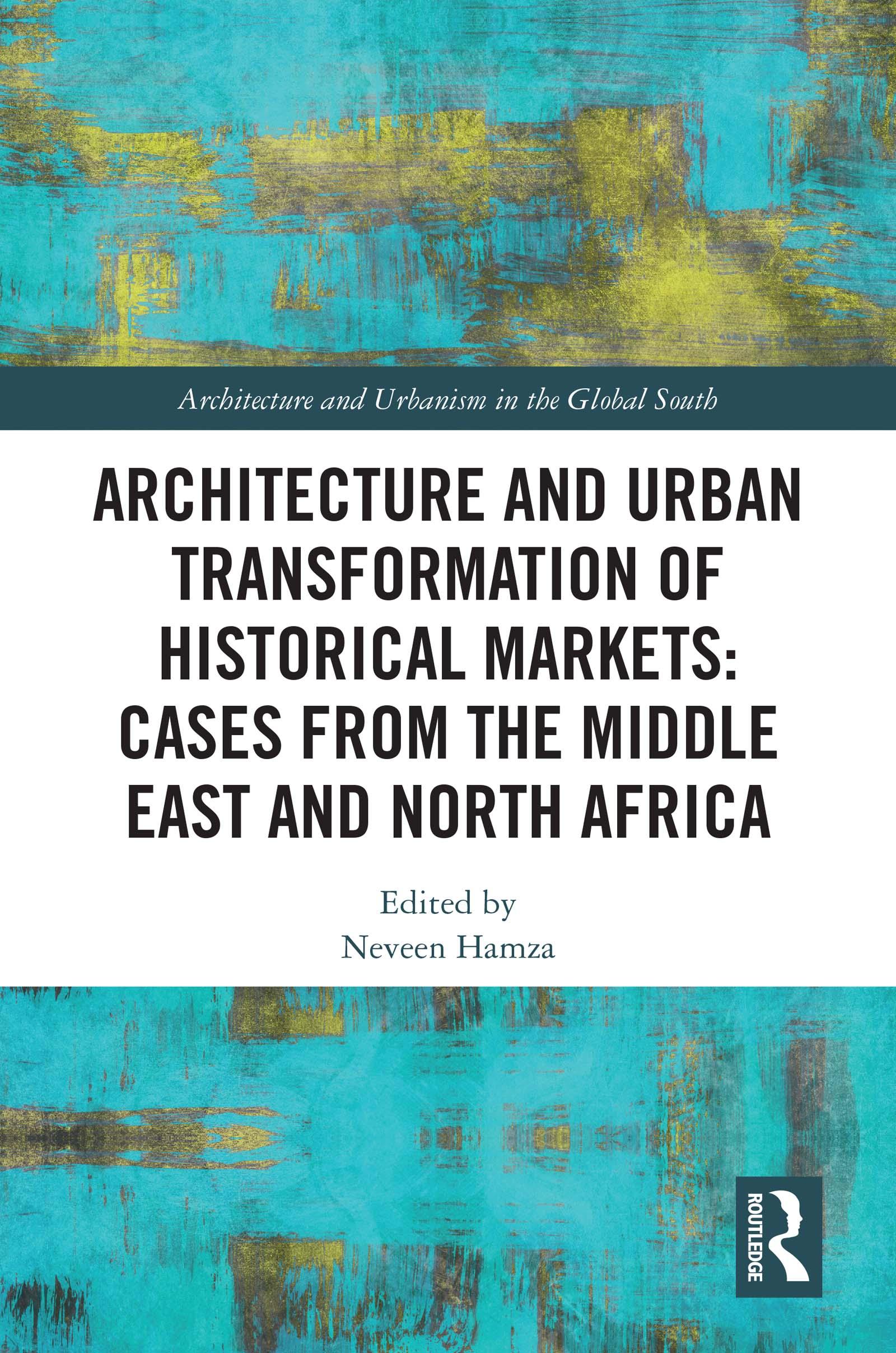
This book explores the complex relationship between societies, architecture, and urbanism of market halls, traditional souqs, bazaars, and speciality street markets in the Middle East and North Africa. It addresses how these trading environments influence perceptions of place and play an extended social, political, and religious role while adapting to their local climates.
Through Archival research and social science methodologies, this book records and maps markets in urban fabrics, expanding on practices underlying the push towards historical listings and the development of markets as landmarks in the urban fabric. The role of markets in delivering sustainable place-making strategies and influencing the development of cities’ socio-economic and historical strength is addressed as key to their survival in the urban fabric and as place-making landmarks for preserving tangible and intangible heritage. Going beyond heritage and conservation studies, this book discusses how positioning and restoring markets challenges urban renewal policies, access to public space planning, environmental sustainability, security of food supply, cultural heritage, and tourism.
This is an ideal read for those interested in the history of urban development, architecture and urban planning, and architectural heritage.
Pay easily by card, Klarna, Apple Pay or Google Pay. Not happy? You always have a 14-day money-back guarantee. Read more in our terms. If you have any questions, email us at hello@memmo.org.
Memmo makes studying easier – wherever you are in the world. We bring your course books and smart study tools together in one place: summaries, quizzes, podcasts and flashcards. Plus Ted, your study buddy who answers anything you wonder. Over 50,000 students already study here – built to help you learn faster and stress less.