
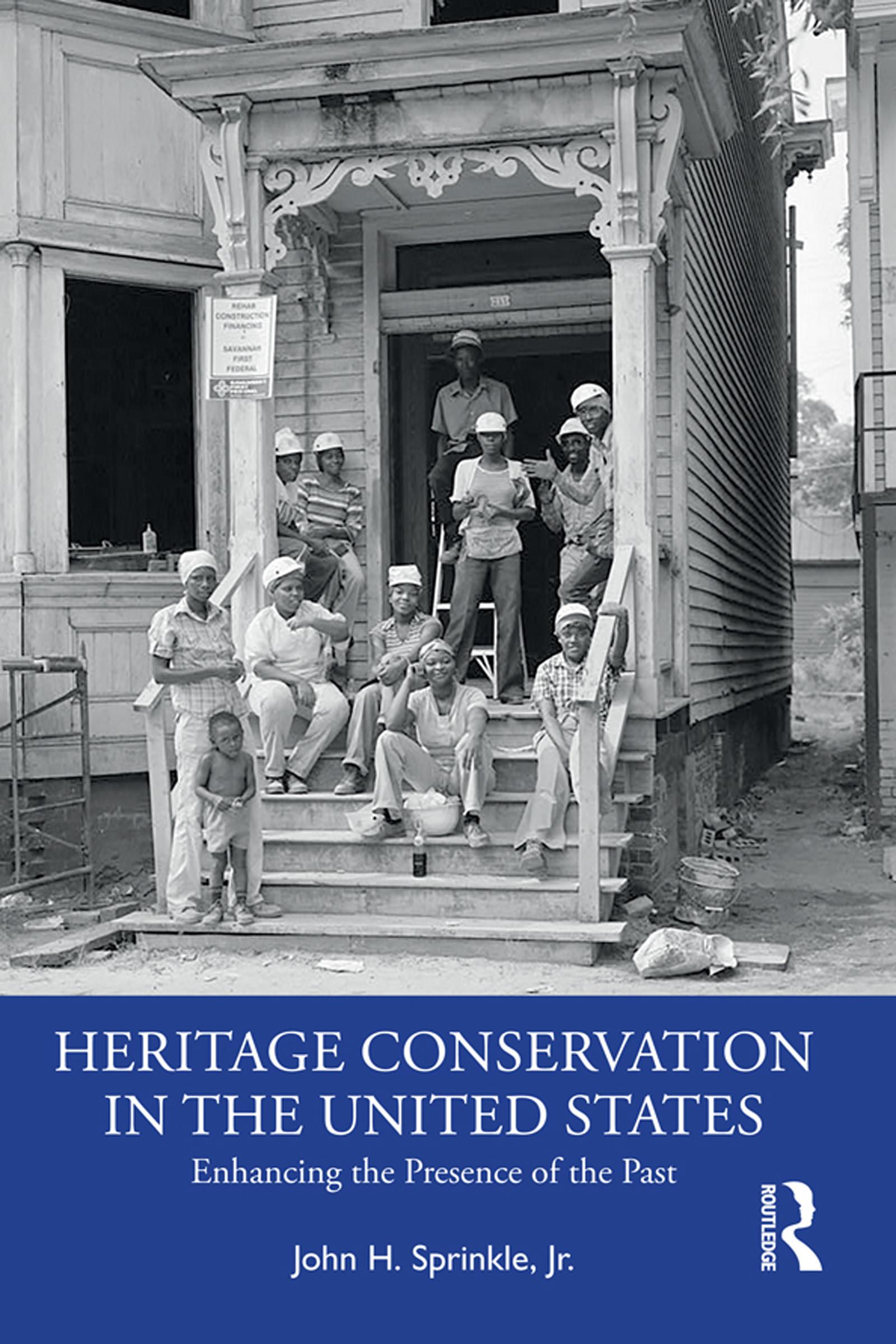
Heritage Conservation in the United States begins to trace the growth of the American historic preservation movement over the last 50 years, viewed from the context of the civil rights and environmental movements.
The first generation of the New Preservation (1966-1991) was characterized by the establishment of the bureaucratic structures that continue to shape the practice of heritage conservation in the United States. The National Register of Historic Places began with less than a thousand historic properties and grew to over 50,000 listings. Official recognition programs expanded, causing sites that would never have been considered as either significant or physically representative in 1966 now being regularly considered as part of a historic preservation planning process. The book uses the story of how sites associated with African American history came to be officially recognized and valued, and how that process challenged the conventions and criteria that governed American preservation practice.
This book is designed for the historic preservation community and students engaged in the study of historic preservation.
Pay easily by card, Klarna, Apple Pay or Google Pay. Not happy? You always have a 14-day money-back guarantee. Read more in our terms. If you have any questions, email us at hello@memmo.org.
Memmo makes studying easier – wherever you are in the world. We bring your course books and smart study tools together in one place: summaries, quizzes, podcasts and flashcards. Plus Ted, your study buddy who answers anything you wonder. Over 50,000 students already study here – built to help you learn faster and stress less.