
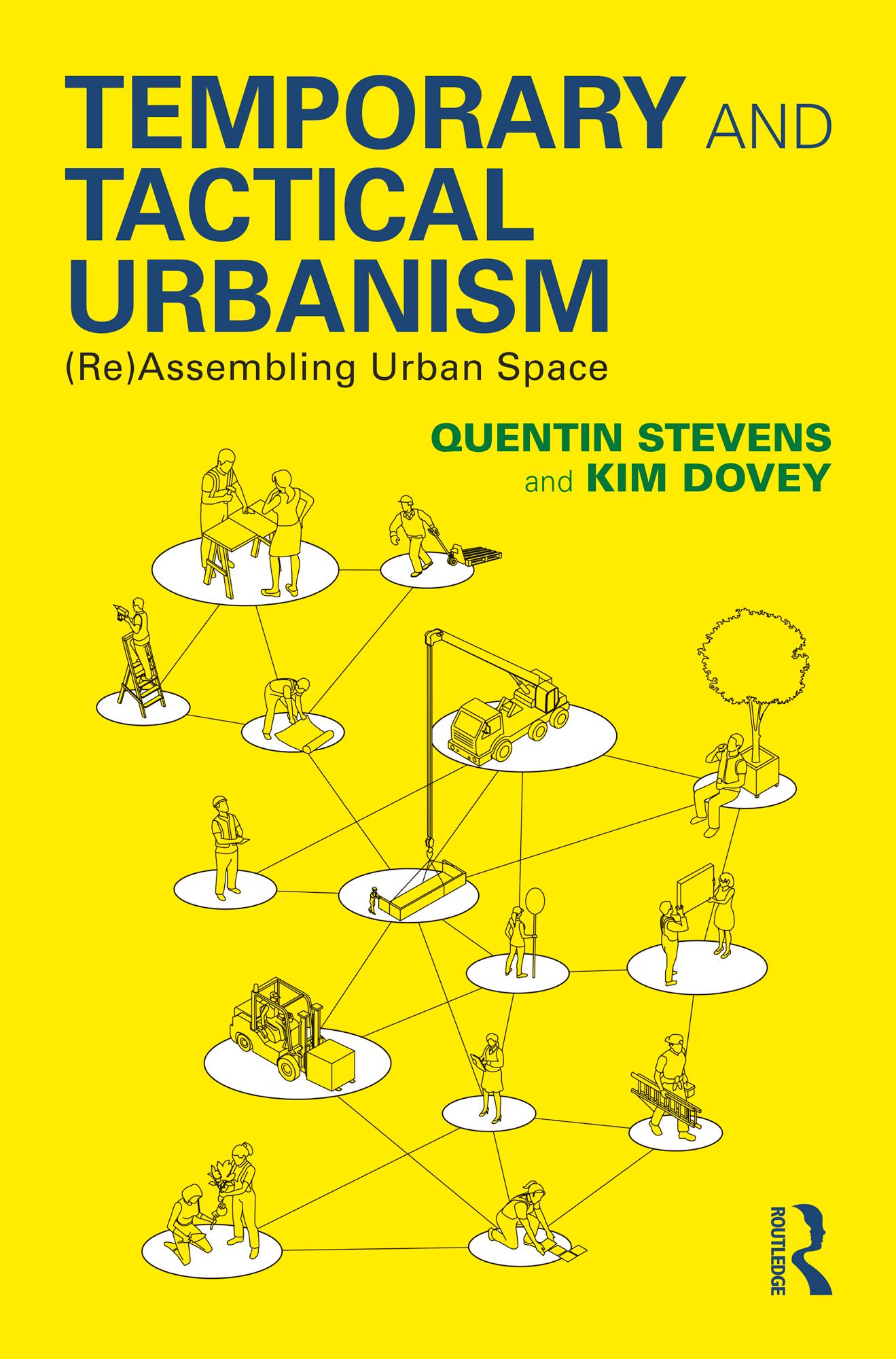
Temporary and Tactical Urbanism examines a key set of urban design strategies that have emerged in the twenty-first century. Such projects range from guerrilla gardens and bike lanes to more formalised temporary beaches and swimming pools, parklets, pop-up plazas and buildings and container towns.
These practices enable diverse forms of economic, social and artistic life that are usually repressed by the fixities of urban form and its management. This book takes a thematic approach to explore what the scope of this practice is, and understand why it has risen to prominence, how it works, who is involved, and what its implications are for the future of city design and planning. It critically examines the material, social, economic and political complexities that surround and enable these small, ephemeral urban interventions. It identifies their short-term and long-term implications for urban intensity, diversity, creativity and adaptability.
The book's insights into temporary and tactical urbanism have particular relevance in the context of the COVID-19 pandemic, which has highlighted both the need and the possibility of quickly transforming urban spaces worldwide. They also reveal significant lessons for the long-term planning and design of buildings, landscapes and cities.
Pay easily by card, Klarna, Apple Pay or Google Pay. Not happy? You always have a 14-day money-back guarantee. Read more in our terms. If you have any questions, email us at hello@memmo.org.
Memmo makes studying easier – wherever you are in the world. We bring your course books and smart study tools together in one place: summaries, quizzes, podcasts and flashcards. Plus Ted, your study buddy who answers anything you wonder. Over 75,000 students already study here – built to help you learn faster and stress less.