
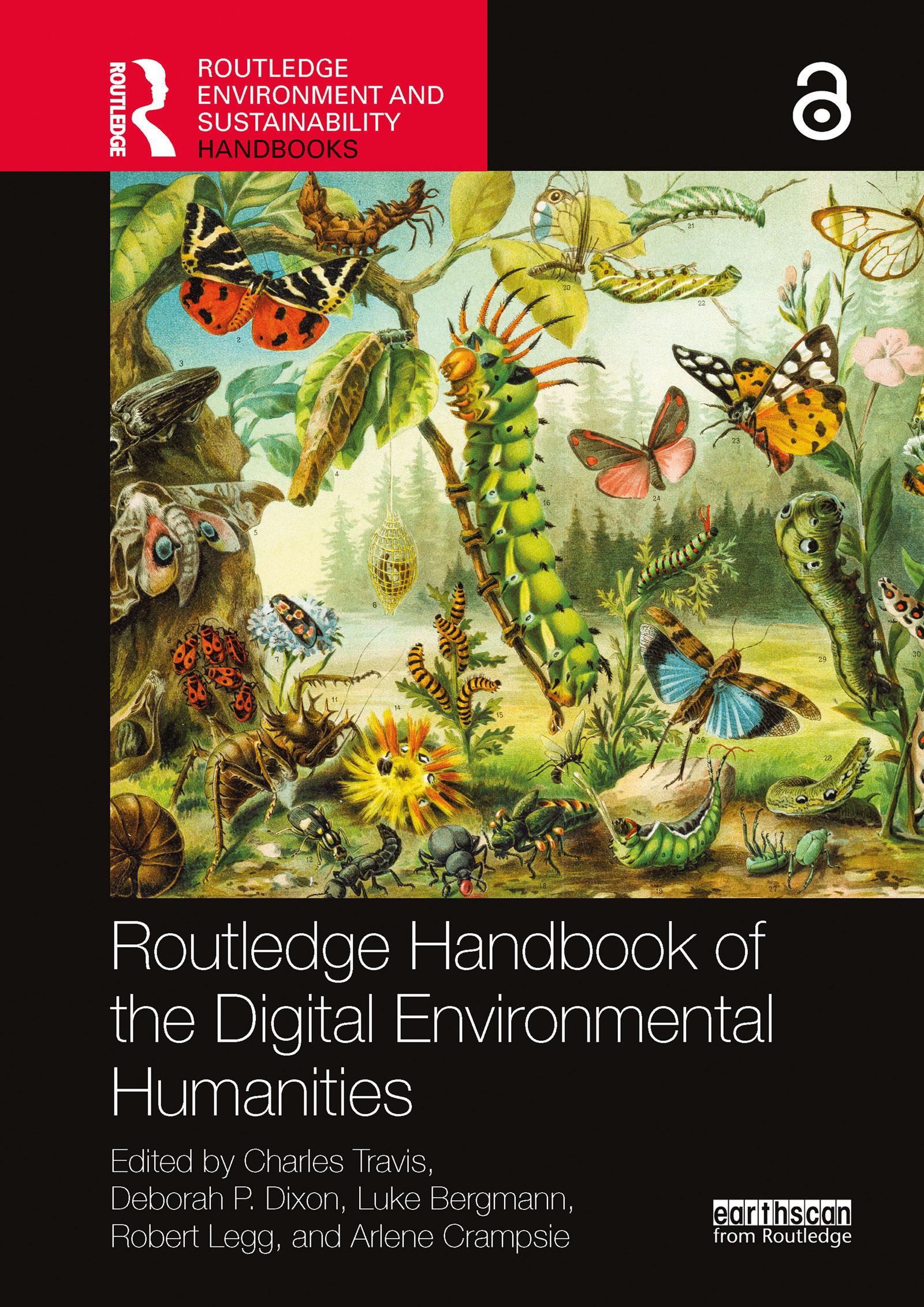
The Routledge Handbook of the Digital Environmental Humanities explores the digital methods and tools scholars use to observe, interpret, and manage nature in several different academic fields.
Employing historical, philosophical, linguistic, literary, and cultural lenses, this handbook explores how the digital environmental humanities (DEH), as an emerging field, recognises its convergence with the environmental humanities. As such, it is empirically, critically, and ethically engaged in exploring digitally mediated, visualised, and parsed framings of past, present, and future environments, landscapes, and cultures. Currently, humanities, geographical, cartographical, informatic, and computing disciplines are finding a common space in the DEH and are bringing the use of digital applications, coding, and software into league with literary and cultural studies and the visual, film, and performing arts. In doing so, the DEH facilitates transdisciplinary encounters between fields as diverse as human cognition, gaming, bioinformatics and linguistics, social media, literature and history, music, painting, philology, philosophy, and the earth and environmental sciences.
This handbook will be essential reading for those interested in the use of digital tools in the study of the environment from a wide range of disciplines and for those working in the environmental humanities more generally.
Pay easily by card, Klarna, Apple Pay or Google Pay. Not happy? You always have a 14-day money-back guarantee. Read more in our terms. If you have any questions, email us at hello@memmo.org.
Memmo makes studying easier – wherever you are in the world. We bring your course books and smart study tools together in one place: summaries, quizzes, podcasts and flashcards. Plus Ted, your study buddy who answers anything you wonder. Over 50,000 students already study here – built to help you learn faster and stress less.