
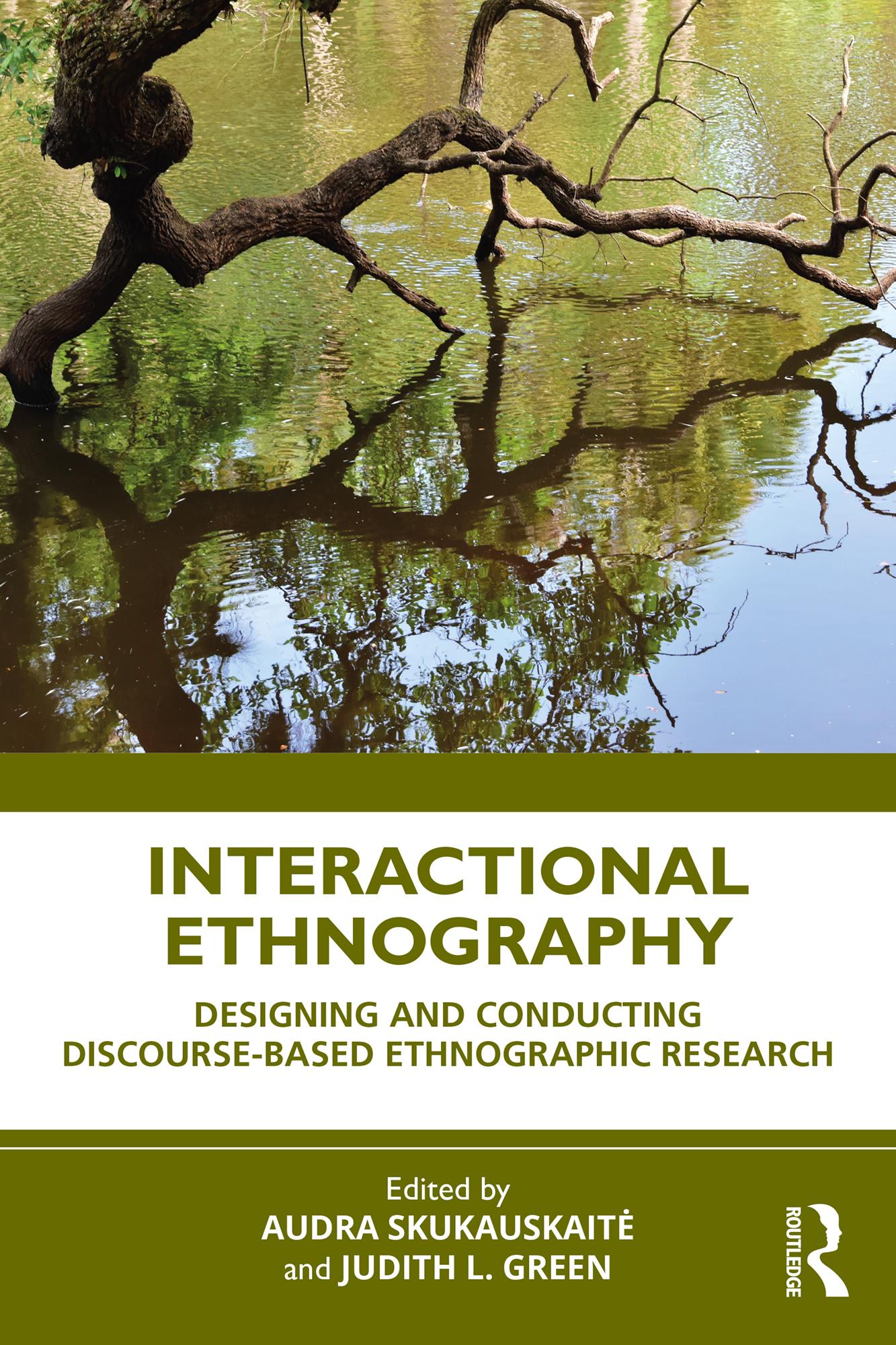
Focusing specifically on Interactional Ethnography (IE) as a distinct, discourse-based form of ethnography, this book introduces readers to the logic and practice behind IE and exemplifies the logic of ethnographic inquiry through a range of example-based chapters.
Edited by two of the foremost scholars in the field of IE, this book brings together a body of work that has until now been largely dispersed. Illustrating how IE intersects with ethnographic methods – including observation, interviews, and fieldwork – the book highlights considerations relating to data analysis, researcher positionality, and the ethics of engaging participants in research. Offering examples of IE in international contexts and across a range of social science and educational settings, the book provides foundational principles and key examples of IE to guide readers’ work.
This book offers researchers, scholars, and teacher educators a definitive, novel contribution to current methodological literature on IE broadly, and will be of particular use to ethnographers starting out in their career. Due to the interdisciplinary nature of the volume in illustrating the use of IE in a range of educational sub-disciplines, the book’s relevance extends to the fields of medical education, teacher education, arts and literacy research, as well as providing situated examples of IE in settings with relevance to the social sciences, anthropology, and cultural studies.
Pay easily by card, Klarna, Apple Pay or Google Pay. Not happy? You always have a 14-day money-back guarantee. Read more in our terms. If you have any questions, email us at hello@memmo.org.
Memmo makes studying easier – wherever you are in the world. We bring your course books and smart study tools together in one place: summaries, quizzes, podcasts and flashcards. Plus Ted, your study buddy who answers anything you wonder. Over 50,000 students already study here – built to help you learn faster and stress less.