
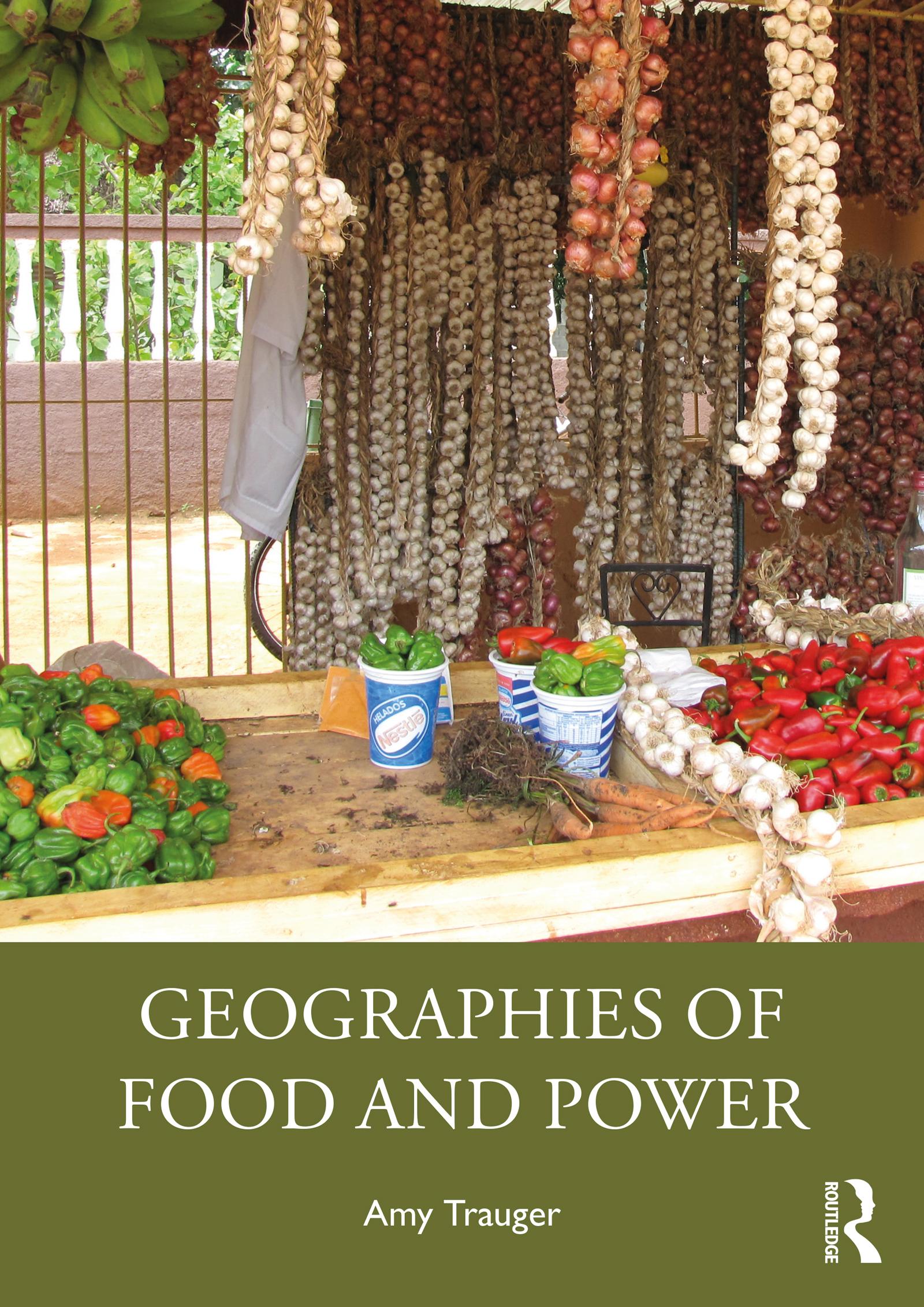
This book provides a comprehensive overview of the production and consumption of food, suitable for use in undergraduate classrooms, either at the intermediate or advanced level.
It takes an intersectional approach to difference and power and approaches standard subjects in the geography of food with a fresh perspective focusing on inequality, uneven production and legacies of colonialism. The book also focuses on places and regions often overlooked in conventional narratives, such as the Americas in the domestication of plants. The topics covered in the textbook include:
- descriptions and analyses of food systems
- histories of agricultural development with a focus on the roles of different regions
- major commodities such as meat, grains and produce with a focus on the place of production
- contemporary challenges in the food system, including labor, disasters/conflict and climate change
- recent and emerging trends in food and agriculture such as lab-grown meat and vertical urban farms
Geographies of Food and Power takes a synthetic approach by discussing food as something produced within an interconnected system, in which labor, food quality and the environment are considered together. It will be a valuable resource for students of human geography, environmental geography, economic geography, food studies and development.
Pay easily by card, Klarna, Apple Pay or Google Pay. Not happy? You always have a 14-day money-back guarantee. Read more in our terms. If you have any questions, email us at hello@memmo.org.
Memmo makes studying easier – wherever you are in the world. We bring your course books and smart study tools together in one place: summaries, quizzes, podcasts and flashcards. Plus Ted, your study buddy who answers anything you wonder. Over 50,000 students already study here – built to help you learn faster and stress less.