
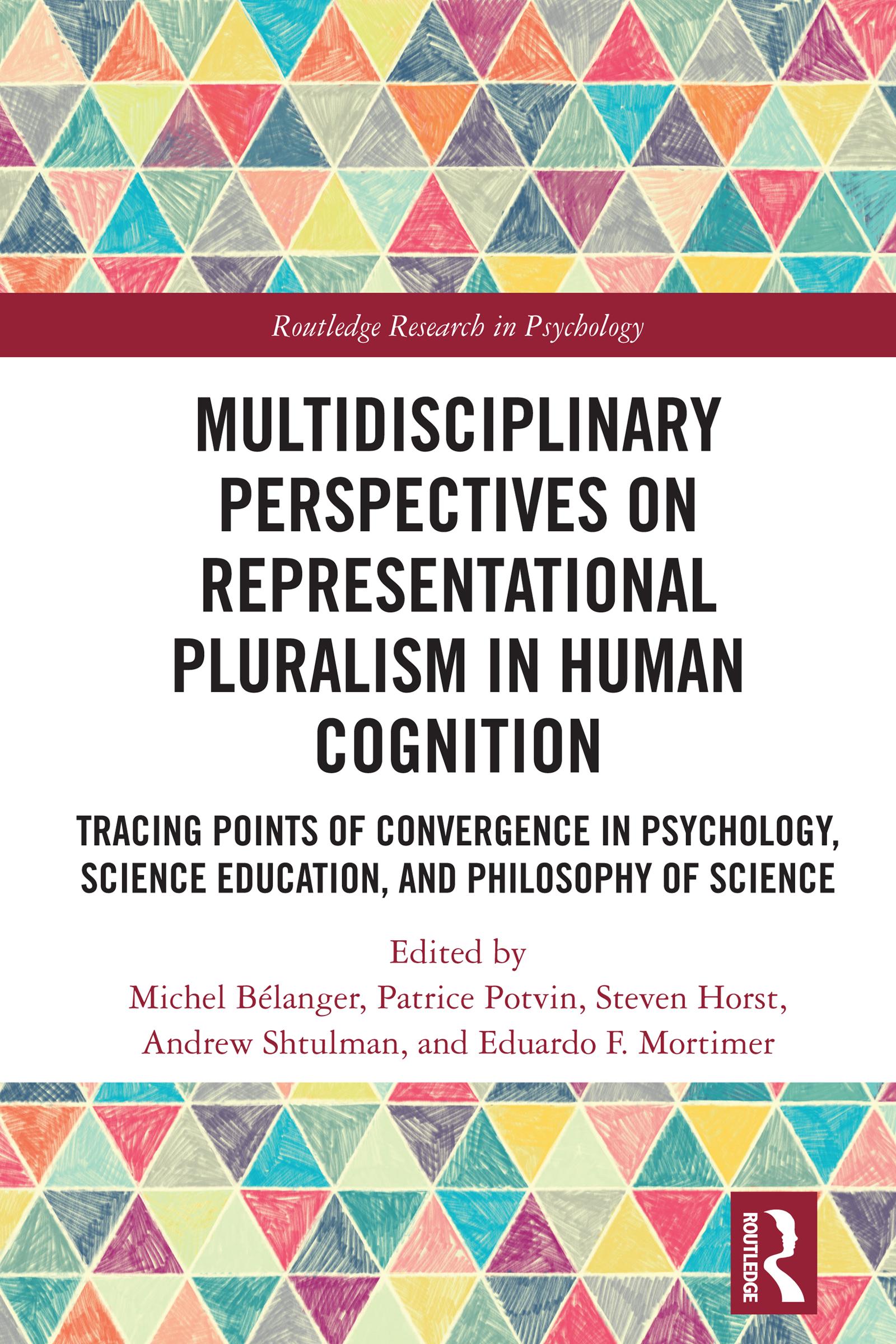
Bringing together diverse theoretical and empirical contributions from the fields of social and cognitive psychology, philosophy and science education, this volume explores representational pluralism as a phenomenon characteristic of human cognition.
Building on these disciplines’ shared interest in understanding human thought, perception and conceptual change, the volume illustrates how representational plurality can be conducive to research and practice in varied fields. Particular care is taken to emphasize points of convergence and the value of sharing discourses, models, justifications and theories of pluralism across disciplines. The editors give ample space for philosophers, cognitive scientists and educators to explicate the history and current status of representational pluralism in their own disciplines.
Using multiple forms of research from the relational perspective, this volume will be of interest to students, scholars and researchers with an interest in cognitive psychology, as well as educational psychology and philosophy of science.
Pay easily by card, Klarna, Apple Pay or Google Pay. Not happy? You always have a 14-day money-back guarantee. Read more in our terms. If you have any questions, email us at hello@memmo.org.
Memmo makes studying easier – wherever you are in the world. We bring your course books and smart study tools together in one place: summaries, quizzes, podcasts and flashcards. Plus Ted, your study buddy who answers anything you wonder. Over 50,000 students already study here – built to help you learn faster and stress less.