
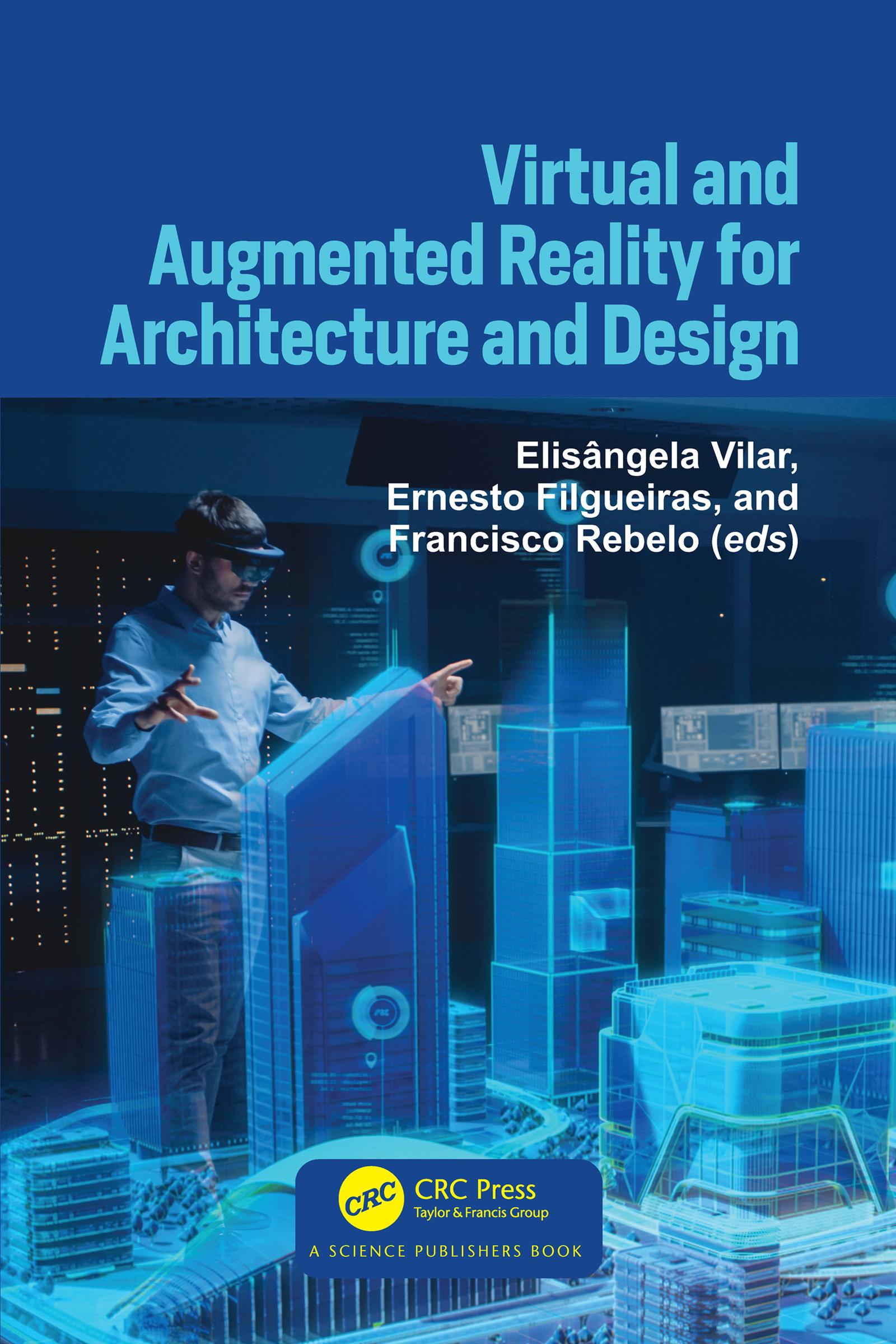
Virtual Reality (VR) is the paradigm wherein people use a computer to interact with something which is not real but provides a real-life experience. It is one of the most advanced interfaces between users and computers, where people can interact with a virtual model in real-time allowing them to visualize and manipulate representations of the real world. Together with Augmented Reality (AR), which adds layers of information to the real environment, VR is a powerful tool for designers and architects in the development of new responsive products, systems and built environments, that meets user's needs. VR and AR are tools that enhance design and architecture students' comprehension about complex and abstract concepts.
Informative and accessible, this publication presents, analyses, and discusses the integration and use of Virtual and Augmented Reality within the process of planning, development and research for Design and Architecture. The book also presents case studies with multidisciplinary collaborative work.
This book is meant for practitioners and academics alike, as it examines specific aspects related to the use of new technologies in the field of Architecture and Design, highlighting its application in areas such as education, heritage, research, and methodologies, bridging the gap between Architectural and Design abstraction and human requirements through technology.
Pay easily by card, Klarna, Apple Pay or Google Pay. Not happy? You always have a 14-day money-back guarantee. Read more in our terms. If you have any questions, email us at hello@memmo.org.
Memmo makes studying easier – wherever you are in the world. We bring your course books and smart study tools together in one place: summaries, quizzes, podcasts and flashcards. Plus Ted, your study buddy who answers anything you wonder. Over 75,000 students already study here – built to help you learn faster and stress less.