
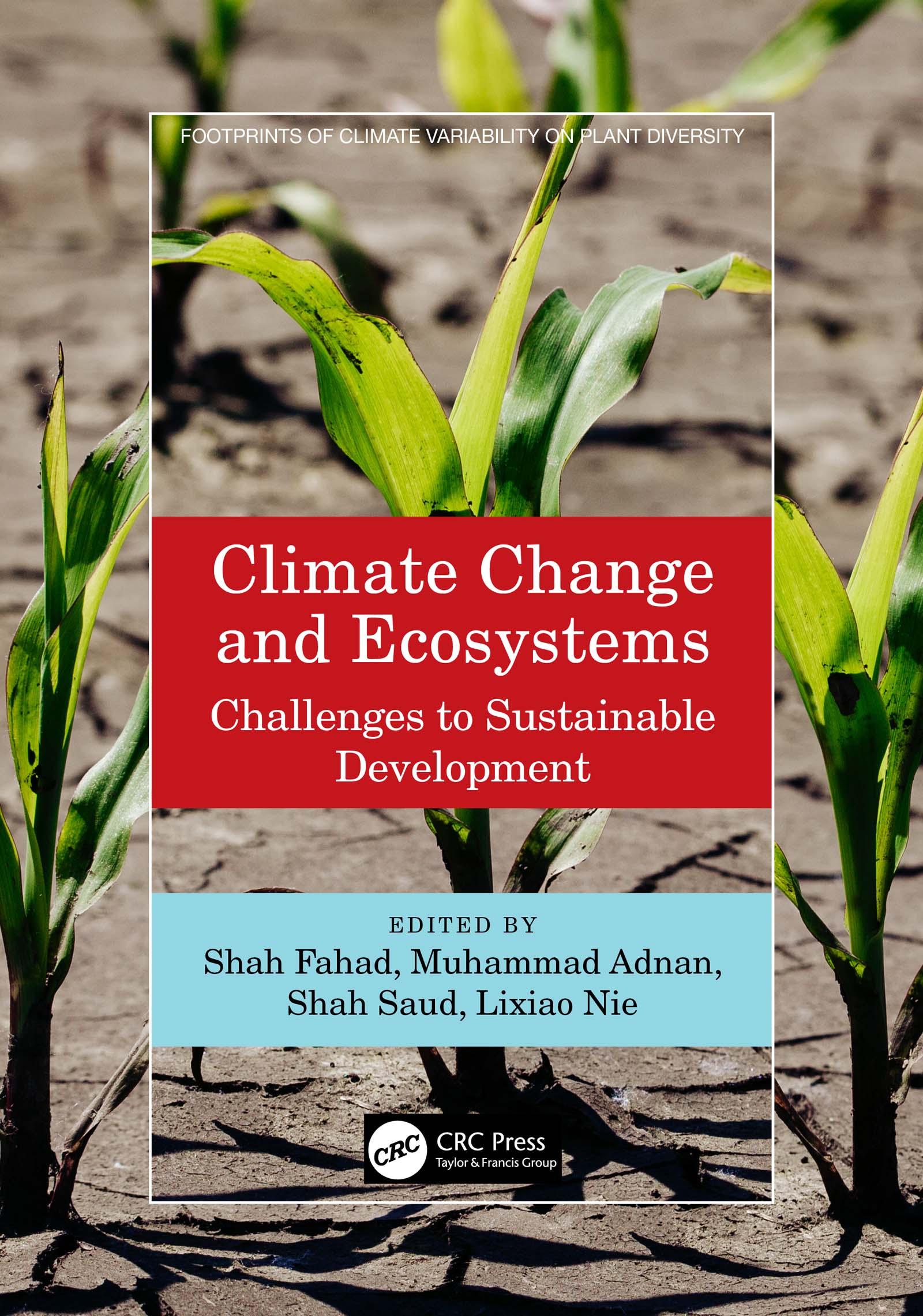
The global population is projected to increase by 3.3 billion from 6.7 billion in 2008 to 10 billion in 2100. As a result, soil degradation and desertification are growing due to the increasing demand for food, feed, fiber, and fuel on finite soil resources. The problem of global food insecurity may be further worsened by the threat of global warming. Climate change is showing its impacts in terms of increasing temperatures, variable rainfall, and an increase in climate-related extremes such as floods, droughts, cyclones, sea-level rise, salinity, and soil erosion. The agriculture sector is the most sensitive to climate change because the climate of a region/country determines the nature and characteristics of vegetation and crops. Increase in the mean seasonal temperature and decrease in effective precipitation can reduce the duration of many crops, may lead to outbreaks of pests and diseases, and hence reduce final yield ultimately affecting the food security of the country. Despite the positive impact of CO2 fertilization, the net productivity may decrease because of an increase in respiration rate, drought stress, and nutrient deficiency. For example, for every 75 ppm increase in CO2 concentration, rice yields will increase by 0.5 t/ha, but the yield will decrease by 0.6 t/ha for every 1°C increase in temperature. The global agricultural productivity is expected to decrease from 3% to 16% by 2080. The estimated decrease in agricultural productivity in the developing countries is 10%–25% in the 2080s, where average air temperature is already near or above crop tolerance levels. This book is intended to serve as a stimulating collection that will contribute to debate and reflection on the sustainable future of agriculture and food production in the face of global change.
Features:
- This book brings together a multidimensional group of international scholars exploring the ethical dimensions of climate change and ecosystem.
- New strategies have been pointed out in this book for better sustainable development.
-
This book has been designed to provide a good overview of major challenges facing policymakers, researchers, and ultimately humankind in dealing with climate change.
-
This book summarizes the diverse features of vulnerability, adaptation, and amelioration of climate change in respect to plants, crops, soil, and microbes for the sustainability of the agricultural sector, and, ultimately, food security for the future.
-
This book provides a state-of-the-art description of the physiological, biochemical, and molecular status of the understanding of abiotic stress in plants.
Pay easily by card, Klarna, Apple Pay or Google Pay. Not happy? You always have a 14-day money-back guarantee. Read more in our terms. If you have any questions, email us at hello@memmo.org.
Memmo makes studying easier – wherever you are in the world. We bring your course books and smart study tools together in one place: summaries, quizzes, podcasts and flashcards. Plus Ted, your study buddy who answers anything you wonder. Over 50,000 students already study here – built to help you learn faster and stress less.