
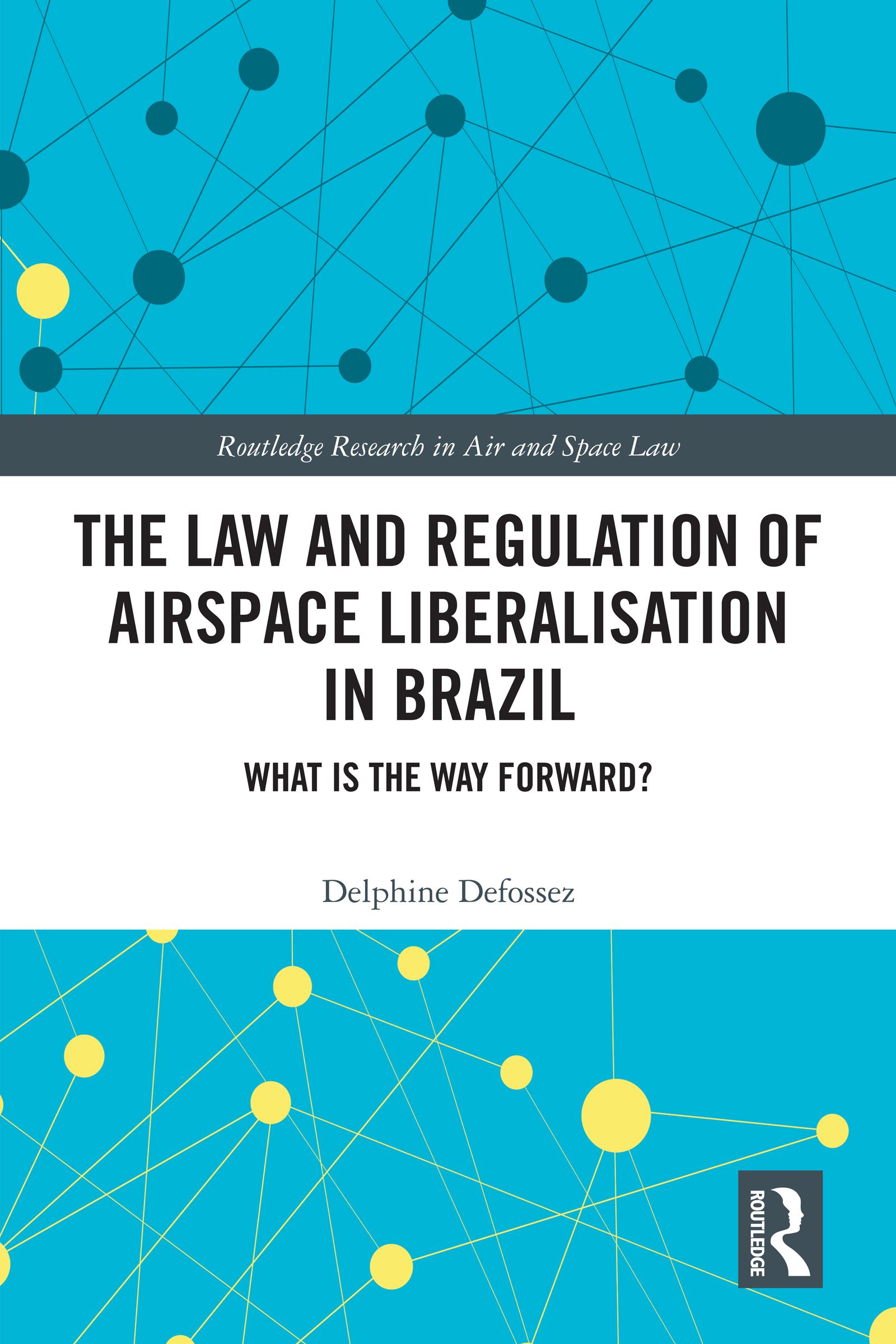
The book starts from the premise that the current aviation framework, in Brazil, cannot sustain a full liberalisation in the long run. While the competition rules in place offer a strong framework, which only requires small modifications, these rules are not "enough" to foster a "healthy" liberalisation. In fact, until recently, Brazilian airlines were operating in a homogenous market, where competition was artificial. This artificial competition, obtained through the imposition of a legal obligation to provide water and a snack and grant a 23kg bag allowance, has resulted in a highly concentrated domestic market with very few players. Compared to other same size markets, such as China or India, Brazil is far behind in terms of airlines operating at national level. Consequently, the opening of the domestic market must be closely regulated to avoid national carriers suffocating under external pressure. For this reason, state intervention during the liberalisation process is crucial. State intervention is also with regard to the protection of passengers.
The other major problem is the protection framework for passengers which is much too uncertain and burdensome. In a sense, it is detrimental to the domestic market and passengers. Indeed, there is no harmonisation of passenger compensation leading to contradictory judgments and possible high moral damages which hinders legal certainty for airlines. Compared to the situation in the EU, in Brazil, airlines have a limited range of defences, which are often dismissed by courts.
This book, therefore, critically analyses the policies and regulations in place by mainly comparing the Brazilian framework to the European one. This choice has been motivated by the fact that European liberalisation is considered the best so far, and as Brazil is starting this process much later, it could benefit from the European experience.
This book will be of particular interest to scholars and practitioners interested in the Brazilian system.
Pay easily by card, Klarna, Apple Pay or Google Pay. Not happy? You always have a 14-day money-back guarantee. Read more in our terms. If you have any questions, email us at hello@memmo.org.
Memmo makes studying easier – wherever you are in the world. We bring your course books and smart study tools together in one place: summaries, quizzes, podcasts and flashcards. Plus Ted, your study buddy who answers anything you wonder. Over 50,000 students already study here – built to help you learn faster and stress less.