
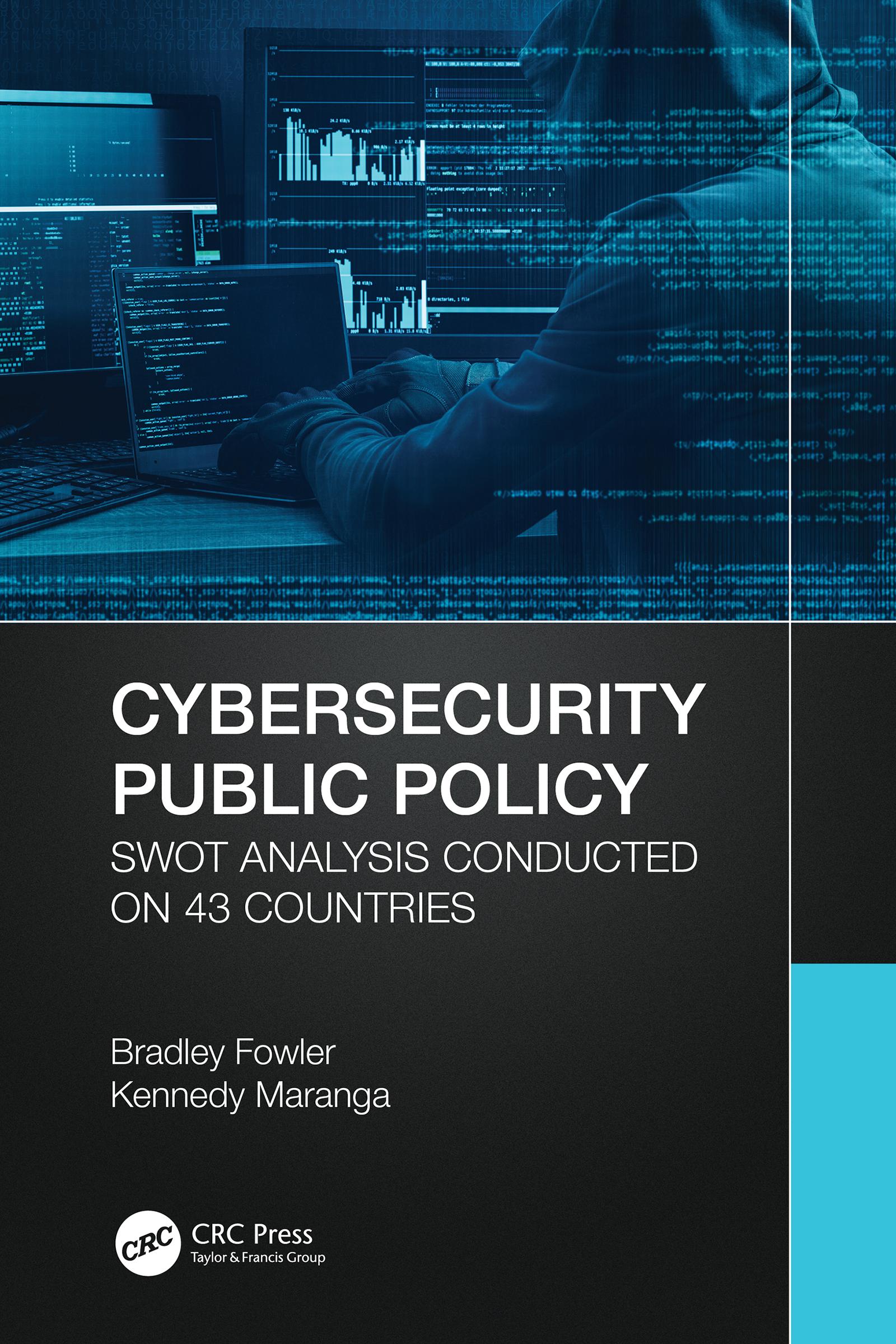
Since 2000, many governments, parliaments, and ministries have worked diligently to define effective guidelines that safeguard both public and private sector information systems, as well as information assets, from unwanted cyberattacks and unauthorized system intrusion. While some countries manage successful cybersecurity public policies that undergo modification and revision annually, other countries struggle to define such policies effectively, because cybersecurity is not a priority within their country. For countries that have begun to define cybersecurity public policy, there remains a need to stay current with trends in cyber defense and information system security, information not necessarily readily available for all countries. This research evaluates 43 countries' cybersecurity public policy utilizing a SWOT analysis; Afghanistan, Australia, Bermuda, Canada, Chili, Croatia, Cyprus, Czech Republic, Dubai, Egypt, Estonia, European Union, Finland, Gambia, Germany, Greece, Hungary, Iceland, Ireland, Italy, Japan, Kenya, Kosovo, Kuwait, Luxemburg, Malaysia, Nepal, Netherlands, New Zealand, Norway, Poland, Samoa, Singapore, Slovakia, South Africa, Sweden, Switzerland, Thailand, Trinidad, Uganda, United Arab Emirates, United Kingdom, and Vietnam; to transparently discuss the strengths, weaknesses, opportunities, and threats encompassing each of these 43 countries' cybersecurity public policies.
The primary vision for this title is to create an educational resource that benefits both the public and the private sectors. Without clarity on cybersecurity public policy, there remains a gap in understanding how to meet these needs worldwide. Furthermore, while more than 43 countries have already enacted cybersecurity public policy, many countries neglect translating their policy into English; this impacts the ability of all countries to communicate clearly and collaborate harmoniously on this subject matter. This book works to fill the “gap”, stop the spread of misinformation, and become the gateway to understanding what approaches can best serve the needs of both public and private sectors. Its goals include educating the public, and, in partnership with governments, parliaments, ministries, and cybersecurity public policy analysts, helping mitigate vulnerabilities currently woven into public and private sector information systems, software, hardware, and web interface applications relied upon for daily business activities.
Pay easily by card, Klarna, Apple Pay or Google Pay. Not happy? You always have a 14-day money-back guarantee. Read more in our terms. If you have any questions, email us at hello@memmo.org.
Memmo makes studying easier – wherever you are in the world. We bring your course books and smart study tools together in one place: summaries, quizzes, podcasts and flashcards. Plus Ted, your study buddy who answers anything you wonder. Over 75,000 students already study here – built to help you learn faster and stress less.