
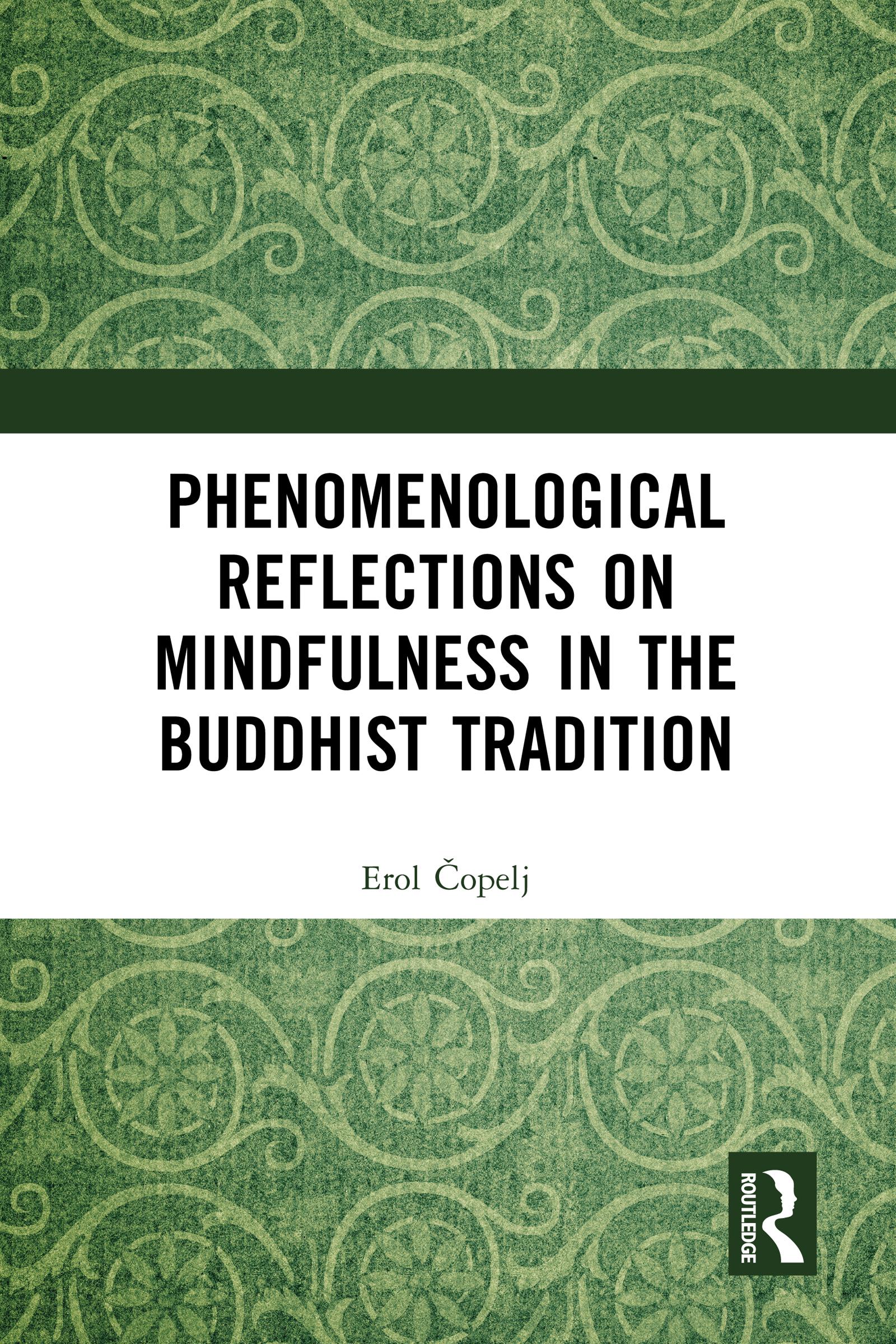
This book offers an original phenomenological description of mindfulness and related phenomena, such as concentration (samādhi) and the practice of insight (vipassanā). It demonstrates that phenomenological method has the power to reanimate ancient Buddhist texts, giving new life to the phenomena at which those texts point.
Beginning with descriptions of how mindfulness is encountered in everyday, pre-philosophical life, the book moves on to an analysis of how the Pali Nikāyas of Theravada Buddhism define mindfulness and the practice of cultivating it. It then offers a critique of the contemporary attempts to explain mindfulness as a kind of attention. The author argues that mindfulness is not attention, nor can it be understood as a mere modification of the attentive process. Rather, becoming mindful involves a radical shift in perspective. According to the author’s account, being mindful is the feeling of being tuned-in to the open horizon, which is contrasted with Edmund Husserl’s transcendental horizon. The book also elucidates the difference between the practice of cultivating mindfulness with the practice of the phenomenological epoché, which reveals new possibilities for the practice of phenomenology itself.
Phenomenological Reflections on Mindfulness in the Buddhist Tradition will appeal to scholars and advanced students interested in phenomenology, Buddhist philosophy, and comparative philosophy.
Pay easily by card, Klarna, Apple Pay or Google Pay. Not happy? You always have a 14-day money-back guarantee. Read more in our terms. If you have any questions, email us at hello@memmo.org.
Memmo makes studying easier – wherever you are in the world. We bring your course books and smart study tools together in one place: summaries, quizzes, podcasts and flashcards. Plus Ted, your study buddy who answers anything you wonder. Over 50,000 students already study here – built to help you learn faster and stress less.