
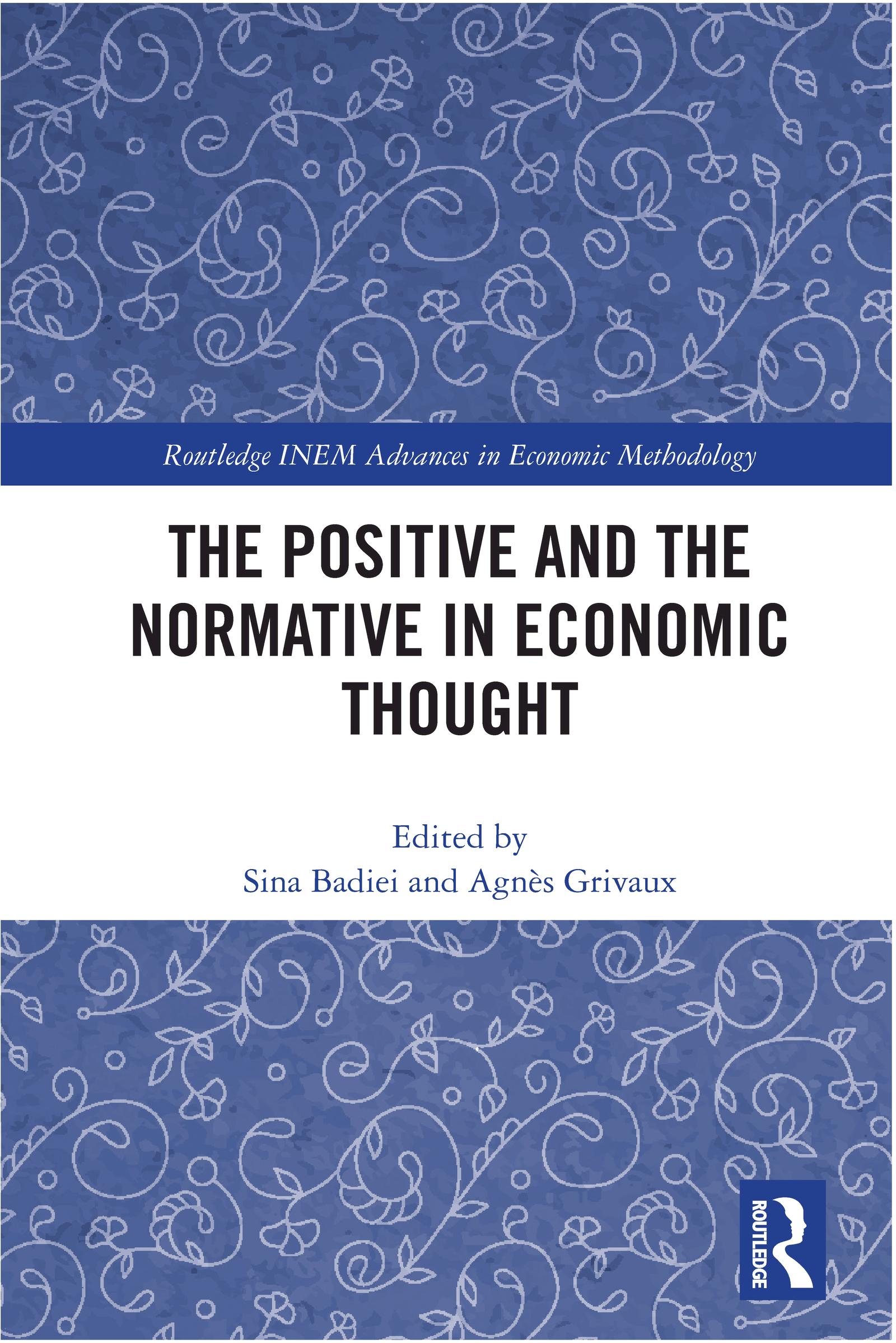
The book responds to the need for greater clarity regarding the relationship between descriptive, evaluative and prescriptive approaches within positive and normative economics. It also analyses the entanglement between evaluative and prescriptive perspectives within several theoretical frameworks in normative economics such as social choice theory, the capability approach, behavioural welfare economics and various theories of justice.
It provides a forum for discussion between various schools of economic thought and several theoretical frameworks on the relationship between the study of facts, norms and values, with particular emphasis on classical political economy, the Marxian school of economics, the Frankfurt School, the Austrian school, the Chicago school, rational choice theory, expected utility theory, behavioural economics, experimental economics, development economics, welfare economics, public economics, constitutional political economy, the capability approach and politico-economic theories of justice.
Given the scope of questions treated in this book, it will be of interest to economists, historians of economic thought, political philosophers and philosophers of science, especially those interested in the philosophy and epistemology of economics.
Pay easily by card, Klarna, Apple Pay or Google Pay. Not happy? You always have a 14-day money-back guarantee. Read more in our terms. If you have any questions, email us at hello@memmo.org.
Memmo makes studying easier – wherever you are in the world. We bring your course books and smart study tools together in one place: summaries, quizzes, podcasts and flashcards. Plus Ted, your study buddy who answers anything you wonder. Over 50,000 students already study here – built to help you learn faster and stress less.