
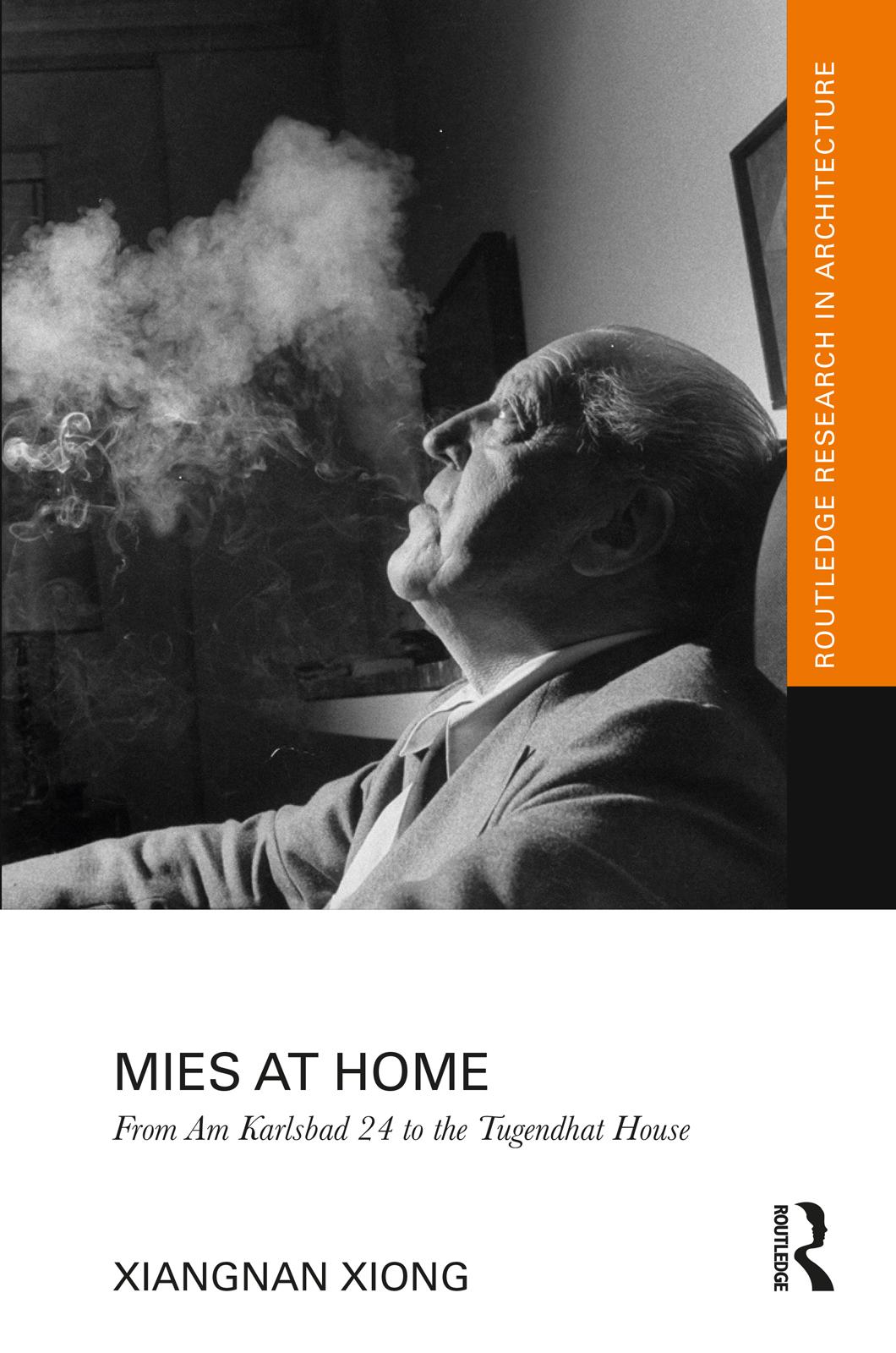
Mies at Home is a radical rereading of one of the most significant periods in Mies van der Rohe’s career, from the mid- to late 1920s when he was developing his seminal spatial ideas— ideas that would culminate in his celebrated design of the Tugendhat House.
The book examines how Mies’s experience of residing in his apartment, doubling as a studio, in central Berlin had an impact on his spatial concepts. It uncovers one of the most profound but virtually untold aspects of Mies’s development: how his visions of an ideal lifestyle came out of his own living experience and how they, in turn, informed his domestic architecture. Mies’s quest featured two breakthroughs. In the Weissenhof apartment building, he conveyed a flexible and manifold lifestyle that many of the avant-garde artists, including himself, were practicing. Later, in the Tugendhat House, he put forward an alternative way of living that centered on contemplation.
Beautifully illustrated throughout, Mies at Home offers a fresh investigation of the diverse intentions and strategies the architect used in creating his iconic open spaces. It will be an insightful read for researchers, academics, and students in architectural history and theory.
Pay easily by card, Klarna, Apple Pay or Google Pay. Not happy? You always have a 14-day money-back guarantee. Read more in our terms. If you have any questions, email us at hello@memmo.org.
Memmo makes studying easier – wherever you are in the world. We bring your course books and smart study tools together in one place: summaries, quizzes, podcasts and flashcards. Plus Ted, your study buddy who answers anything you wonder. Over 75,000 students already study here – built to help you learn faster and stress less.