
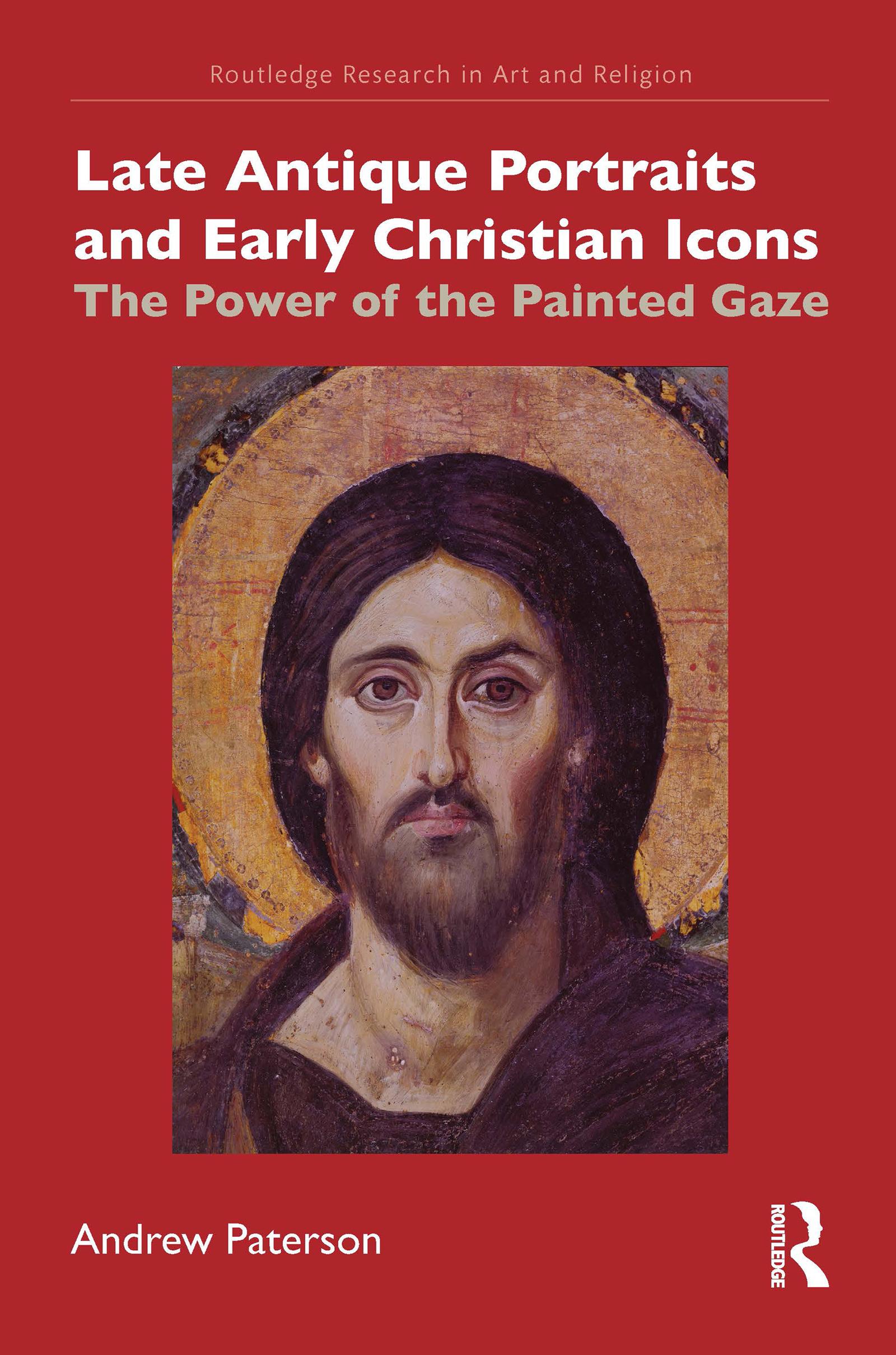
This book focuses on the earliest surviving Christian icons, dated to the sixth and seventh centuries, which bear many resemblances to three other well-established genres of ‘sacred portrait’ also produced during late antiquity, namely Roman imperial portraiture, Graeco-Egyptian funerary portraiture and panel paintings depicting non-Christian deities.
Andrew Paterson addresses two fundamental questions about devotional portraiture – both Christian and non-Christian – in the late antique period. Firstly, how did artists visualise and construct these images of divine or sanctified figures? And secondly, how did their intended viewers look at, respond to, and even interact with these images? Paterson argues that a key factor of many of these portrait images is the emphasis given to the depicted gaze, which invites an intensified form of personal encounter with the portrait’s subject.
The book will be of interest to scholars working in art history, theology, religion and classical studies.
Pay easily by card, Klarna, Apple Pay or Google Pay. Not happy? You always have a 14-day money-back guarantee. Read more in our terms. If you have any questions, email us at hello@memmo.org.
Memmo makes studying easier – wherever you are in the world. We bring your course books and smart study tools together in one place: summaries, quizzes, podcasts and flashcards. Plus Ted, your study buddy who answers anything you wonder. Over 50,000 students already study here – built to help you learn faster and stress less.